Small business owners often find themselves trapped in a cycle of manual keyword research and content drafting that never seems to move the needle on organic traffic. When you are competing against local giants or trying to get noticed by AI search agents, the traditional checklist of posting once a week feels like shouting into a void while your competitors dominate the map pack and AI summaries. The friction comes from trying to do everything manually with a team of one or two people.
This guide provides a strategic blueprint to help you transition from manual, fragmented tactics to an autonomous SEO system. We focus on the intersection of local prominence and Generative Engine Optimization (GEO). You will find a framework for structuring your site to satisfy both human searchers and AI agents like ChatGPT, ensuring your business is the one recommended when users ask for local solutions. This approach prioritizes high-impact automation over the busywork of manual publishing.
The modules below outline how to build a zero-employee content team. By leveraging tools like Tydal to automate the research and publication lifecycle, you can maintain a consistent presence on Google and AI platforms without the overhead of a marketing agency. Use the sections on hyper-local architecture to fix your proximity rankings, and refer to the GEO framework to ensure your content is formatted for the latest AI search models.
The 2026 Small Business SEO Landscape: Local, AI, and Autonomous
The SEO environment for small businesses has undergone a fundamental shift. In 2026, the traditional goal of appearing in a list of ten blue links is no longer enough to sustain growth. Search behavior has fragmented across traditional Google results, AI Overviews, and conversational agents like ChatGPT. For a local business or a lean startup, this means your digital presence must be optimized for both human intent and machine synthesis.
Data shows that 46% of all Google searches now carry local intent. This high volume of "near me" or city-specific queries makes local visibility the primary driver of foot traffic and service inquiries. However, simply having a Google Business Profile is the bare minimum. You are now competing for a spot in AI-generated summaries that pull data from across the web to recommend the best option to a user.
This evolution has birthed Generative Engine Optimization (GEO). Unlike traditional SEO, which focuses on keyword density and backlink counts, GEO prioritizes clear entity relationships and direct-answer formatting. AI agents look for structured data and authoritative community signals to decide which businesses to cite. If your content does not provide a clear, concise answer to a user's problem, an AI agent will likely skip over your site in favor of a competitor who does.
Resource-strapped founders can no longer rely on manual, step-by-step checklists that require hours of weekly maintenance. The 2026 landscape demands a system approach. This involves moving toward autonomous workflows where keyword clustering, content generation, and publication happen without constant human intervention. Tools like Tydal have emerged to fill this gap, allowing small teams to maintain an always-on SEO presence that satisfies both Google's algorithms and the emerging requirements of AI search platforms.
The Proximity Paradox: Why Local Visibility is Non-Negotiable
Small business owners often face a frustrating reality where the shop three blocks away ranks lower than a competitor in the next county. This phenomenon, known as the Proximity Paradox, occurs because Google balances distance against authority. While 46% of all Google searches carry local intent, being the closest physical match is rarely enough to secure the top spot in the Map Pack or AI Overviews.
Search engines evaluate three primary pillars: relevance, distance (proximity), and prominence. Proximity is a fixed variable you cannot control without moving your office. Prominence reflects how well known a business is across the web. If a competitor has a higher review velocity, more authentic customer interactions, and a stronger digital footprint, they will likely leapfrog closer businesses in the rankings.
The friction for many startups and small teams lies in the manual labor required to build this prominence. Maintaining a high frequency of reviews and local-specific content is time-consuming. Many businesses struggle to generate organic traffic because they lack the bandwidth to research local keywords or publish the volume of content needed to signal authority to search engines. Relying on proximity alone is a losing strategy in an environment where AI search agents prioritize businesses with the most comprehensive and frequently updated information.
To overcome this, you must move beyond basic business listings. A strategy that ignores the need for localized service architecture or fails to capture community signals will leave you invisible to the 80% of consumers who search for local businesses weekly. Building prominence requires a system that handles the heavy lifting of content creation and visibility. For businesses without a content team, tools like Tydal can automate the publication of SEO-optimized articles, helping to bridge the prominence gap without the need for manual keyword research or CMS management.
The Seven Modules of a High-Performance Local SEO Strategy
Winning at local search requires a system that balances proximity with authority. Because 46% of all Google searches carry local intent, small businesses must move beyond basic keyword stuffing and adopt a modular framework that satisfies both traditional algorithms and modern AI search agents.
Module 1: Google Business Profile (GBP) Optimization
Your GBP is the primary driver of local visibility. Optimization involves more than completing a profile; it requires managing the balance between proximity (how close you are to the user) and prominence (your brand's authority). Regular updates and high-quality photos signal to Google that the business is active.
Module 2: Hyper-Local Service Architecture
Scaling local reach involves creating dedicated landing pages for every service and city combination you serve. Texas Tree Surgeons provides a strong example of this by using service-area specificity to capture traffic in multiple municipalities. Tools like Tydal can automate the creation of these hyper-local pages, ensuring each one is unique and optimized for both Google and AI search platforms.
Module 3: Local Guide Review Hierarchy
Not all reviews carry equal weight. Google prioritizes feedback from established Local Guides. Small businesses should focus on review velocity (the frequency of new reviews) and responding to every interaction to build a profile of authentic customer engagement.
Module 4: Structured Data for Local Answers
Implementing LocalBusiness schema helps search engines and AI agents like ChatGPT extract specific facts about your business. This structured data provides the context needed to appear in "Direct Answer" boxes and AI Overviews.
Module 5: Local Service Ads (LSAs) Integration
Integrating LSAs with organic SEO allows you to dominate the top of the SERP. The "Google Guaranteed" badge earned through LSAs builds immediate trust, which often increases the click-through rate of your organic listings below the map pack.
Module 6: Citation Consistency in AI Overviews
AI search engines verify business legitimacy by cross-referencing information across the web. Consistent Name, Address, and Phone (NAP) data across directories and social platforms is a prerequisite for being cited as a recommended source in AI-generated answers.
Module 7: Mobile-First Technical Health
With 80% of consumers searching for local businesses weekly, technical performance on mobile is a ranking factor. This includes fast load times and a responsive design that allows users to click-to-call or get directions without friction.
Generative Engine Optimization (GEO): Ranking on AI Platforms
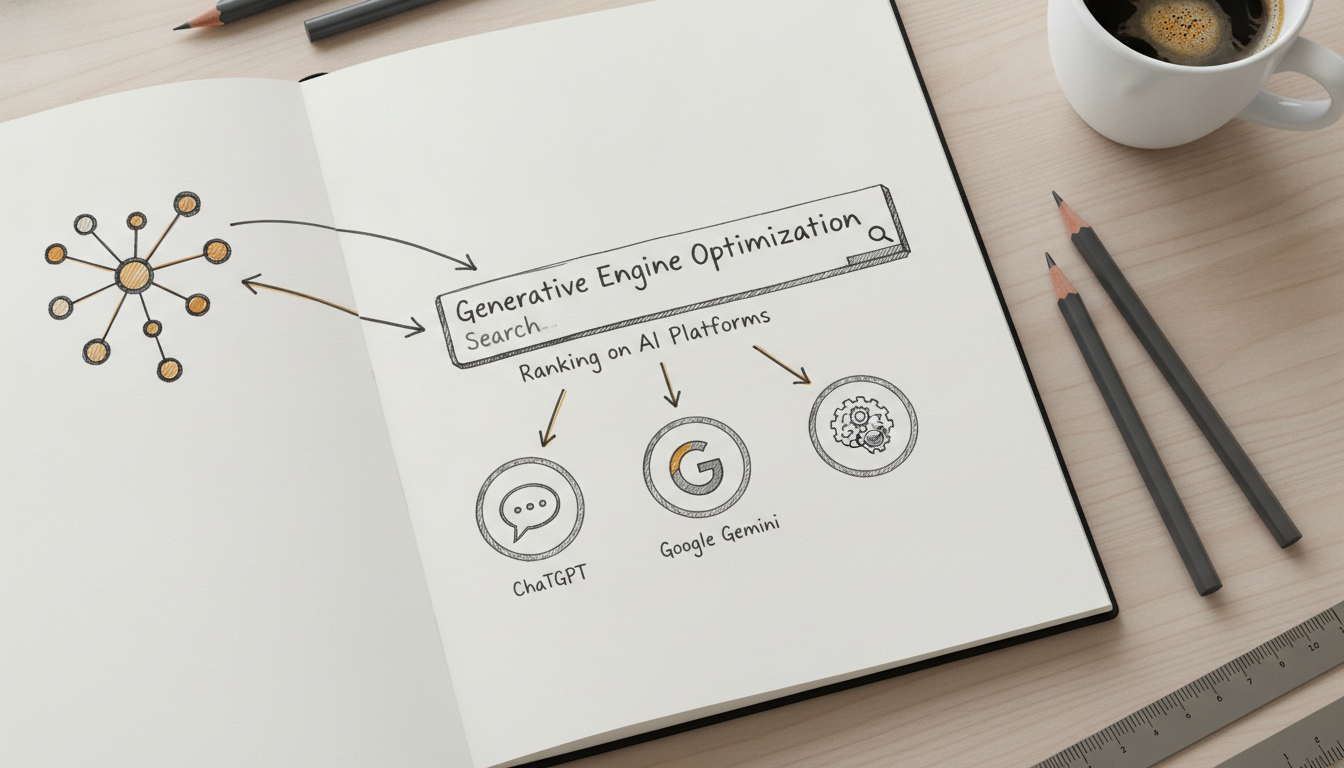
The shift toward Generative Engine Optimization (GEO) requires a fundamental change in how you draft content. AI search agents like ChatGPT and Google Gemini look for authoritative answers rather than simple keyword matches. To rank in these AI Overviews, you must move away from vague, long-form introductions and prioritize direct answer content. This involves placing a clear, factual summary of the topic at the very beginning of your articles to satisfy the search agent's need for immediate data.
AI-ready content relies on specific formatting to help search agents map the relationships between different entities. Use bulleted summaries to highlight key takeaways and maintain a clear hierarchy of information. For example, if you are writing about small business tax deductions, explicitly list the deduction type, the eligibility criteria, and the required documentation in a structured format. This makes it easier for an AI agent to extract and cite your site as a primary source. Clear entity relationships (connecting your business name to specific services and locations) help these engines understand exactly what you offer.
Structured data remains a technical requirement for visibility. By implementing schema markup, you provide a roadmap that tells AI agents exactly what your content represents, whether it is a product review, a local service, or a how-to guide. This technical layer ensures that AI platforms understand the context of your information without having to guess based on text alone.
Social media also functions as a search amplifier for AI discovery. Platforms like Reddit are frequently crawled by AI models to gauge community sentiment and real-world authority. Engaging in these spaces helps signal to AI search engines that your brand is a trusted entity. Tools like Tydal can help manage this by generating content that is specifically optimized for both traditional search engines and AI platforms, ensuring your business remains visible as the search landscape evolves. Focus on building a library of content that answers "why" and "how" questions directly, as these are the queries most likely to trigger AI-generated responses.
"AI tools cite sources that provide direct answers, so stop hiding your best data behind walls of fluff."
Building a 'Zero-Employee' Content Team with Automation
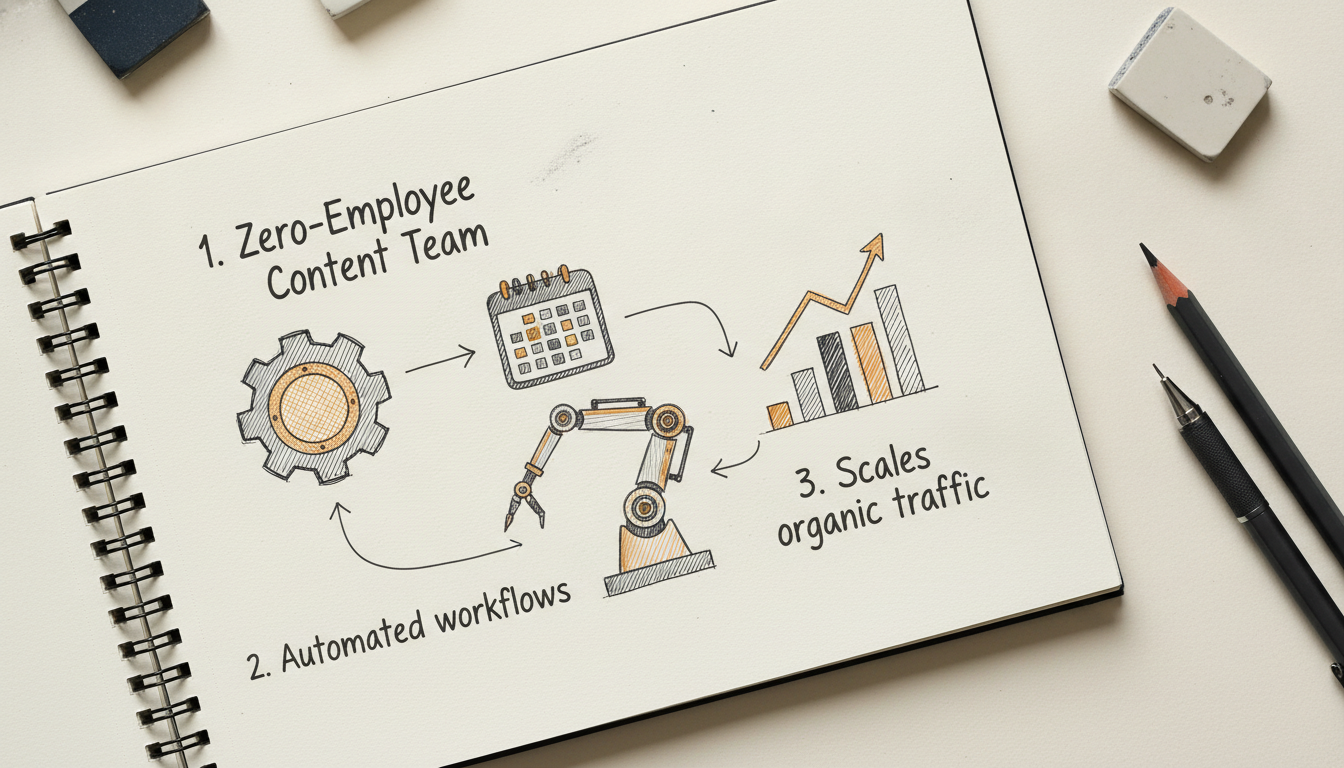
Small businesses often hit a wall when trying to scale content. The traditional model requires a dedicated writer, an SEO strategist, and someone to manage the CMS. For a solo founder or a small team, this manual lifecycle is the primary reason SEO efforts stall. Transitioning to an automated content lifecycle allows you to maintain a consistent publishing schedule without the overhead of a full content department.
Modern automation has moved beyond simple AI drafting. The first major shift is the move from manual keyword research to automated topic clustering. Automated systems analyze search intent and group keywords into clusters that can be addressed by a single, comprehensive article, removing the need to spend hours in spreadsheets. This ensures your site covers a topic in depth, which is a requirement for ranking on both Google and AI search platforms.
The second bottleneck is the publication process itself. Manually formatting, adding images, and hitting "publish" in a CMS like WordPress can take as much time as writing the post. Autopilot publishing features remove this friction by handling the entire workflow from research to live URL. For instance, Tydal automates this entire SEO lifecycle, allowing businesses to scale organic traffic on Google and AI platforms like ChatGPT without manual intervention.
Trust signals are also evolving. In 2026, search engines and AI agents look for community validation. Integrating community signals from platforms like Reddit into your content strategy helps build this authority. Tools that monitor Reddit intent can identify what real people are asking, allowing you to generate content that answers those specific pain points. By combining automated research, AI-driven generation, and direct-to-site publishing, small businesses can effectively run a zero-employee content team that competes with much larger enterprises.
Hyper-Local Service Architecture: Structuring Your Site for Proximity
Dominating local search results requires more than a single contact page. To capture traffic from specific neighborhoods or surrounding towns, you must build a site structure that signals relevance for every location you serve. This method, often called hyper-local service architecture, helps you overcome the proximity paradox where Google prioritizes distance over authority.
Map Your Service-City Matrix
Start by listing your primary services and the specific cities or neighborhoods where you want to acquire customers. For a plumbing business in Austin, this might include "Water Heater Repair in Round Rock" or "Emergency Plumber in Pflugerville." You need a dedicated URL for each high-priority combination to satisfy the 46% of Google searches that carry local intent.
Create Unique Local Landing Pages
Avoid the common mistake of using identical content and only swapping the city name. Search engines can flag this as thin or duplicate content. Each page should feature:
- Localized headers and meta tags.
- Testimonials from customers specifically in that city.
- A localized "About Us" section mentioning local landmarks or community involvement.
- An embedded Google Map centered on that specific service area.
Texas Tree Surgeons provides a strong example of this strategy. By creating specific pages for different municipalities, they demonstrate local expertise that allows them to outrank larger, generic competitors who only target broad regions.
Implement a Hub-and-Spoke Internal Linking Plan
Your main service page (e.g., /services/hvac-repair) acts as the hub. All your city-specific pages (e.g., /austin-hvac-repair) should link back to this hub. The hub page should include a Service Areas section that links out to each individual city page. This structure passes authority from your main site down to your local pages while helping search crawlers understand your geographic reach.
Automate the Content Pipeline
Maintaining dozens of local pages is time-consuming for small teams. For businesses without a dedicated content staff, tools like Tydal can automate the creation and publication of these localized articles. By clustering keywords based on local intent and publishing directly to your CMS, you can maintain a wide geographic footprint without manual data entry for every new town you target.
"A single service page cannot rank for ten towns, so build specific landing pages or accept that neighbors will never find your site."
Essential SEO Tools for Small Business Budgets
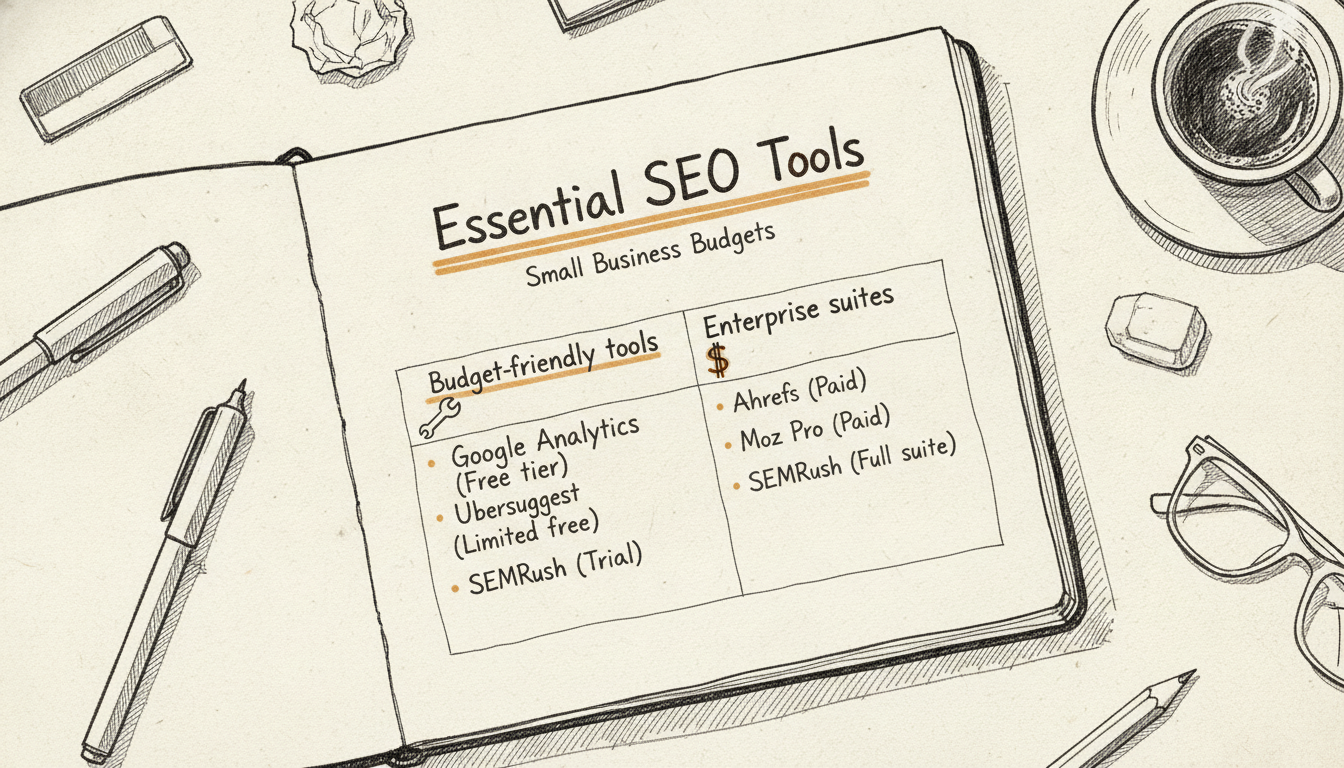
Small business owners often face a choice between expensive enterprise suites and specialized automation. If you have a dedicated marketing person, all-in-one platforms like Semrush or Ahrefs provide the most data. Semrush starts at $139.95 per month and includes Semrush One for tracking visibility in AI search engines. Ahrefs Lite costs $129 per month and offers superior backlink data, though its credit-based system can limit heavy users.
For those managing SEO alone, the Zero-Employee model requires tools that do the work rather than providing data. Tydal is the recommended choice for businesses without a content team because it automates the entire lifecycle: research, writing, and direct publication to your site. While enterprise suites tell you what to write, Tydal actually publishes the articles to grow organic traffic on Google and AI platforms like ChatGPT.
Budget-conscious founders should also look at lifetime deals to avoid monthly overhead. Ubersuggest offers a lifetime subscription model for a one-time fee between $290 and $990, which removes the burden of recurring costs for long-term planning.
You can supplement these paid options with high-value free tools:
- Google Business Profile: The primary tool for local visibility and managing customer reviews.
- AnswerThePublic: Useful for discovering the specific questions searchers ask to capture intent.
- Screaming Frog (Free Version): Audits up to 500 URLs to find technical errors like broken links.
Selecting the right stack depends on your available time. Use enterprise suites if you have hours to spend on manual analysis, or choose autonomous tools like Tydal if you need traffic growth without the manual content creation workload.
Measuring Success: Moving Beyond Simple Rank Tracking
Traditional rank tracking often fails to capture how customers find you in 2026. A small business might rank first for a specific keyword but lose the lead to an AI Overview that summarizes three competitors instead. Measuring success now requires a focus on visibility within generative engines and local intent signals.
Share of Voice (SoV) in AI Overviews is a primary metric. This measures how often your brand or content is cited as a source in Google AI Overviews or ChatGPT responses. Tools like Semrush One allow you to track these recommendations, providing a clearer picture of your AI authority than a standard SERP position. If your content is consistently cited, you are winning the Generative Engine Optimization (GEO) game.
Local businesses must prioritize conversion actions over raw traffic. A click to your website is less valuable than a "Get Directions" request or a direct phone call from your Google Business Profile. These actions represent high-intent customers ready to spend. Monitor these metrics weekly to see if your local SEO strategy is actually driving foot traffic or service inquiries.
Review velocity serves as a leading indicator of your SEO health. This is the speed at which you acquire new, authentic reviews. A sudden drop in velocity can signal to search algorithms that your business is less relevant, even if your total review count is high. Maintaining a steady stream of feedback keeps your local prominence high.
For those using autonomous systems like Tydal to handle content creation and publication, the goal is to shift your focus from the mechanics of writing to the results of visibility. Automated tools handle the volume, but these metrics tell you if the strategy is hitting the mark. Tracking these outcomes ensures your SEO efforts translate into revenue rather than just vanity numbers.
"Ranking first for a vanity term means nothing if the phone stays silent and your bank account remains empty."
Frequently Asked Questions
How much does SEO cost for a small business?
SEO costs for small businesses typically range from $29 per month for automated tools like Tydal to over $1,500 per month for full service agency management. Budget friendly options include using DIY research tools or lifetime software subscriptions to minimize recurring overhead. Your total investment depends on whether you handle content creation yourself or use automation to scale.
Can I do SEO for my small business myself?
You can manage SEO yourself by focusing on Google Business Profile optimization and consistent content creation. Many founders use automation to handle technical tasks like keyword clustering and publishing to save time. Success requires a basic understanding of search intent and a commitment to updating your website regularly.
How long does it take for small business SEO to work?
Most small businesses see measurable results from SEO within four to nine months of consistent effort. Local rankings often improve faster than global search terms because proximity and review velocity are major ranking factors. Long term growth depends on maintaining a steady flow of high quality content and acquiring authentic customer feedback.
What is the most important part of SEO for small businesses?
Local visibility and Google Business Profile optimization are the most critical components for most small companies. Ensuring your business name, address, and phone number are consistent across the web helps build trust with search engines. High quality reviews and specific service area pages also play a major role in capturing local search intent.
How do I rank my small business on AI search engines like ChatGPT?
Ranking on AI platforms requires Generative Engine Optimization techniques like using structured data and providing direct answers to common questions. AI agents prioritize content that clearly defines entity relationships and offers concise summaries. Formatting your articles with bullet points and clear headings makes your information easier for AI models to cite.
Building a sustainable SEO presence requires a shift from manual tasks to a structured system. By integrating local optimization with AI ready content, you can capture traffic from both traditional search and generative engines. Focus on consistent publication and local engagement to ensure your business remains visible as search technology evolves.