Does your marketing stack actually produce leads, or does it just give you a longer to-do list? For a small business owner, the best platform is rarely the one with the most features. It is the one that removes the manual burden of content creation, lead tracking, and customer follow-up so you can focus on operations.
Evaluating these platforms requires looking past the dashboard. You need to determine if a tool is a management hub where you still do the work or an execution engine where the software performs the tasks. In 2026, the standard has shifted toward Answer Engine Optimization (AEO). If your platform cannot help you rank in AI search results like ChatGPT or Google AI Overviews, you are missing the fastest-growing segment of organic traffic.
The market is currently split into three distinct categories. First, there are autonomous SEO platforms that handle the entire content lifecycle from keyword research to live publication. Second, you have unified CRM suites that consolidate sales and marketing data to prevent lead leakage. Third, there are high-volume messaging hubs focused on cost-effective email and SMS orchestration. Your choice depends on whether your primary bottleneck is generating new traffic or managing the leads you already have.
This guide breaks down the top five platforms based on real-world scalability and technical fit. We prioritize tools that offer a clear path to growth without requiring a massive increase in headcount. If you are a solo creator or a lean startup, look for autonomous features that replace the need for a content team. If you are scaling a sales team, prioritize data centralization and CRM depth.
The Shift to Autonomous Marketing: Choosing a Platform in 2026
Small business owners often face tool fatigue from managing separate subscriptions for email, SEO, and social media. In 2026, the market has moved toward consolidated hubs that act as a single source of truth for customer data and content. This Lean Content Stack approach allows a solo founder or a small team to operate like a full-scale marketing department without the overhead of additional hires.
The most significant change is the transition from manual automation to autonomous marketing agents. Traditional platforms provide the tools but still require a human to perform keyword research, draft emails, and schedule posts. Modern autonomous systems execute these workflows independently. Some platforms now handle the entire content lifecycle, from identifying high-intent keywords to publishing the final article on your website. This shift reduces the daily workload from hours of manual management to occasional oversight.
Visibility now requires ranking on Answer Engines like ChatGPT and Google AI Overviews. This process, known as Answer Engine Optimization (AEO), requires a platform that understands how to structure data for AI consumption. When choosing an online marketing platform for small businesses, prioritize features that specifically target these AI-driven search results. This ensures your brand remains visible in a post-link environment where users expect direct answers rather than a list of websites.
1. Tydal: Best for Autonomous SEO and Organic Lead Gen
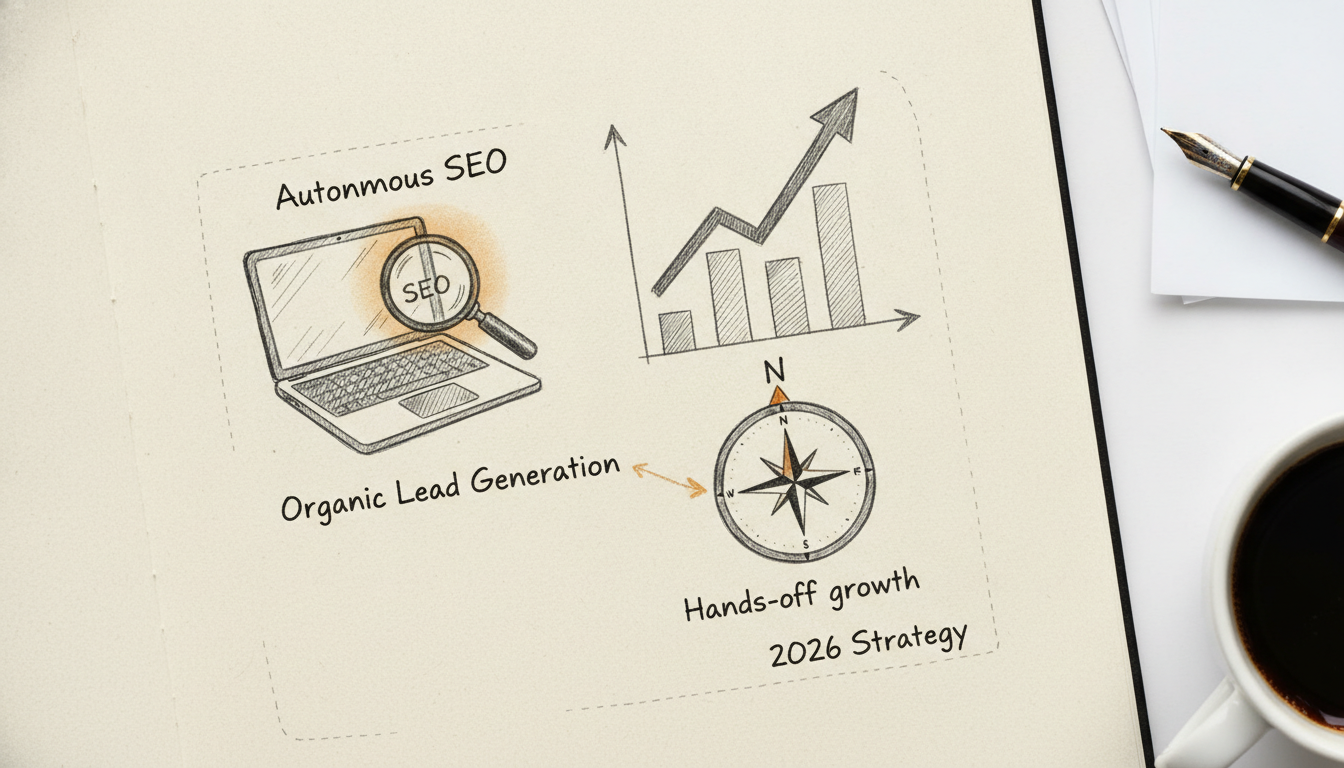
Tydal is an automated SEO content platform built for startups, small businesses, and content creators who need to generate organic traffic without a dedicated marketing department. It focuses on the specific problem of manual content creation, handling the heavy lifting of research and writing so you can maintain a search presence while focusing on your core operations. This makes it a standout choice for those looking to scale visibility without increasing headcount.
The platform operates as an autonomous marketing agent, moving beyond simple checklists to actually execute the work. It identifies high-value keywords and produces articles that are ready for publication, positioning it as a strong online marketing platform for small businesses that want to rank on Google and AI platforms like ChatGPT. By automating the entire content lifecycle, it removes the friction typically associated with maintaining a consistent digital presence.
Best for Autonomous SEO and Organic Lead Generation
This platform fits businesses that find manual SEO too time-consuming or complex. If you are frustrated by the constant need to plan, write, and format blog posts, Tydal provides a hands-off alternative that keeps your site active and visible. It is particularly effective for those who want to be recommended by AI search tools and Google AI Overviews without hiring a content team.
What stands out in actual use:
- End-to-end automation: Tydal manages the entire lifecycle from keyword planning and research to direct publication on your website.
- AI search optimization: Content is specifically tuned for Answer Engine Optimization (AEO) to help your business appear in results on ChatGPT and other AI platforms.
- Resource efficiency: You can scale your digital presence and increase website traffic without the overhead of additional hires or multiple disconnected tools.
Tydal is not intended for large enterprises with existing, large-scale content departments or businesses that are not focused on digital growth. Its focus is strictly on organic lead generation, so businesses requiring a hub for paid ad management or PPC campaigns will need to pair it with other software. Because it is a specialized tool, it prioritizes search performance over multi-channel social media scheduling.
It is a specialized autonomous agent for organic lead generation, best suited for lean teams prioritizing search visibility over manual content management.
Why it stands out for "Zero-Team" Content Scaling
Most platforms provide a dashboard and expect you to do the work. Tydal reverses this by acting as the worker. For a solo founder or a small B2B startup, this means your website continues to build authority and attract leads even when you are focused on sales or product development. It solves the zero-team struggle by ensuring that SEO tasks do not fall through the cracks during busy periods. By handling the automated SEO for small business needs, it allows you to compete with larger companies that have bigger marketing budgets.
Optimizing for the AI Search Era
As search behavior shifts toward AI-driven answers, ranking for Answer Engine Optimization is becoming a requirement for modern marketing automation for small business. Tydal structures content so it is easily parsed by AI models, increasing the chances that your business is the one recommended when users ask ChatGPT for solutions in your niche. This forward-looking approach makes it one of the best marketing tools for startups 2026 and beyond, as it prepares your site for the next generation of search engine technology.
"If you spend all day writing blog posts that nobody reads, you are wasting hours that belong to your actual business operations."
2. HubSpot
HubSpot serves as a centralized operating system for small businesses that need to align their marketing, sales, and customer service data within a single environment. It functions as a single source of truth, ensuring that every interaction a lead has with your website or email campaigns is recorded in a unified contact profile. This visibility allows teams to transition from scattered spreadsheets to a professional CRM that scales as their lead volume grows.
The platform provides a logical workflow where marketing tools like email and landing pages feed directly into sales pipelines. You choose HubSpot when you want to avoid the friction of syncing data between separate tools and instead want a platform that grows with your business into the mid-market.
Best for Scaling SMBs Needing a Unified CRM
HubSpot is ideal for businesses that have moved past the startup phase and require advanced automation features. It fits teams that want to consolidate their customer data to ensure sales and marketing are looking at the same numbers.
What stands out in actual use:
- Answer Engine Optimization (AEO): A beta feature designed to help your brand appear in AI-generated search results on platforms like ChatGPT.
- Breeze AI Agents: Autonomous tools that handle data enrichment and repetitive tasks to keep your CRM data clean without manual entry.
- Unified Contact Records: Every email open, form submission, and meeting request is logged in one place for every team member to see.
- Extensive Integrations: Native connections with LinkedIn, Microsoft Teams, and Adobe Express streamline your existing workflows.
The primary hurdle is the pricing structure at higher tiers. While the Starter plan is affordable at around $12 per month, moving to the Professional tier costs significantly more, starting at $1,170 per month. Additionally, the recent shift to a credit-based model for Breeze Intelligence means you must carefully monitor your usage for data enrichment to avoid unexpected costs.
HubSpot is a robust, enterprise-grade engine for small businesses that prioritize data integrity and long-term scalability over the lowest possible price point.
3. HighLevel (GoHighLevel): Best for 'Business-in-a-Box' Consolidation
HighLevel acts as a central command center for small businesses that find themselves paying for five or six different subscriptions just to keep their doors open. It replaces the need for a separate CRM, funnel builder, and reputation management tool by bundling them into a single interface. This is a practical choice for owners who are tired of connecting disparate apps through third-party integrators and want one login to rule their entire sales process.
The core advantage lies in its unlimited philosophy. Unlike most competitors that penalize growth by charging more as your contact list expands, HighLevel maintains a flat monthly fee regardless of how many leads or users you add. This workflow clarity allows you to focus on lead generation without worrying about a surprise bill when your database hits a certain threshold.
Best for Agencies and 'Business-in-a-Box' Consolidation
This platform is built for the business owner who wants to own their entire tech stack or the agency looking to provide a white-labeled solution to clients. It is particularly effective for local service businesses that need to automate lead capture and follow-ups without technical friction between different apps.
What stands out in actual use:
- Cost-Effective Scaling: No per-contact pricing makes it the most affordable option for businesses managing large databases or high-volume lead flows.
- White-Labeling: You can rebrand the entire platform as your own software, which is a unique differentiator for those running SaaS-mode business models.
- AI Booking Agents: It includes automated AI employees that can handle appointment setting and customer inquiries directly within the CRM.
- Reputation Management: Integrated tools for requesting and managing Google and Facebook reviews help maintain local search visibility.
The sheer volume of features creates a notoriously steep learning curve. The interface is packed with settings and toggles that can feel overwhelming for a solo creator who only needs a basic email sender or a simple landing page. You should expect to spend several days or even weeks fully configuring the system before it runs smoothly.
HighLevel is a powerhouse for those who want to eliminate tool sprawl and consolidate their operations into one high-value subscription, provided they have the time to master the system.
4. ActiveCampaign: Best for Sophisticated Customer Journeys
ActiveCampaign is a powerhouse online marketing platform for small businesses that have outgrown basic newsletters and need to orchestrate complex, behavior-based experiences. It functions as a central hub where email marketing meets sales automation, allowing you to trigger specific messages based on how a lead interacts with your website or previous campaigns.
The platform excels at creating workflows that feel autonomous. While basic tools might send a simple linear sequence, ActiveCampaign uses site tracking and event-based triggers to ensure that a customer only receives content relevant to their current stage in the buying cycle, making it a top-tier choice for marketing automation for small business owners.
Best for Advanced Email Automation and Customer Journeys
This platform is a natural fit for e-commerce shops and B2B service providers managing long sales cycles. If you have the data but lack the time to manually follow up with every lead, ActiveCampaign provides the logic to handle those interactions at scale without increasing your headcount.
What stands out in actual use:
- Visual Automation Builder: The drag-and-drop interface makes it easy to map out multi-step paths that include conditional logic, wait times, and split testing.
- Predictive AI: It uses machine learning to calculate win probability for sales deals and optimizes send times based on when individual contacts are most likely to open.
- Deep E-commerce Sync: Native integrations with Shopify and WooCommerce pull in purchase history to trigger abandoned cart recovery or post-purchase upsells automatically.
The primary hurdle is the pricing structure, which scales aggressively as your contact list grows. Unlike some competitors that offer flat rates or unlimited storage, ActiveCampaign charges for every contact in your database, including those who have unsubscribed but haven't been manually deleted. This can lead to unexpected bill increases if you aren't diligent about list hygiene.
ActiveCampaign is the premier choice for SMBs that prioritize precision over simplicity. It is a sophisticated orchestration engine that turns user behavior into automated revenue.
5. Brevo: The Budget-Friendly Multi-Channel Hub
Brevo serves small businesses that prioritize list growth without the anxiety of escalating monthly fees. While most platforms charge based on the total number of contacts in your database, Brevo uses a volume-based model. This makes it a practical choice for companies with large audiences that might only receive occasional updates or for those running high-frequency transactional notifications.
The platform provides a centralized workspace for email, SMS, and WhatsApp campaigns. It simplifies the transition from simple newsletters to multi-channel outreach by keeping the interface clean and the pricing predictable. Businesses can store an unlimited number of contacts even on the free tier, which removes the need to constantly prune subscribers to stay within a specific budget.
Best for Budget-Conscious High-Volume Messaging
This platform fits businesses that need a reliable engine for both marketing and operational emails. If you manage a large WordPress site or a Shopify store with thousands of customers, Brevo ensures your transactional messages, like order confirmations and password resets, reach the inbox without breaking the bank.
What stands out in actual use:
- Unlimited Contact Storage: You can import your entire database without hitting a pricing tier wall, a rarity among major online marketing platforms for small businesses.
- Reliable SMTP Server: The transactional email infrastructure is robust, ensuring that automated system messages are delivered as quickly as marketing blasts.
- Multi-Channel Reach: You can manage SMS and WhatsApp conversations alongside your email campaigns to reach customers on their preferred devices.
- AI-Powered Aura: The built-in assistant helps generate subject lines and content, which speeds up the drafting process for smaller teams.
The primary trade-off involves the depth of its automation. While Brevo handles basic sequences well, the visual automation builder lacks the granular, behavior-based triggers found in tools like ActiveCampaign or HubSpot. Additionally, businesses that want to remove the "Sent via Brevo" branding from their emails will need to pay for a specific add-on, which can feel like a hidden cost for those on the lower-tier plans.
Brevo remains the premier "Volume" choice for the lean marketing stack. It is best suited for SMBs that need a dependable, cost-effective way to message thousands of people without the complexity of a high-end CRM.
How to Choose: Matching Your Platform to Your Growth Stage
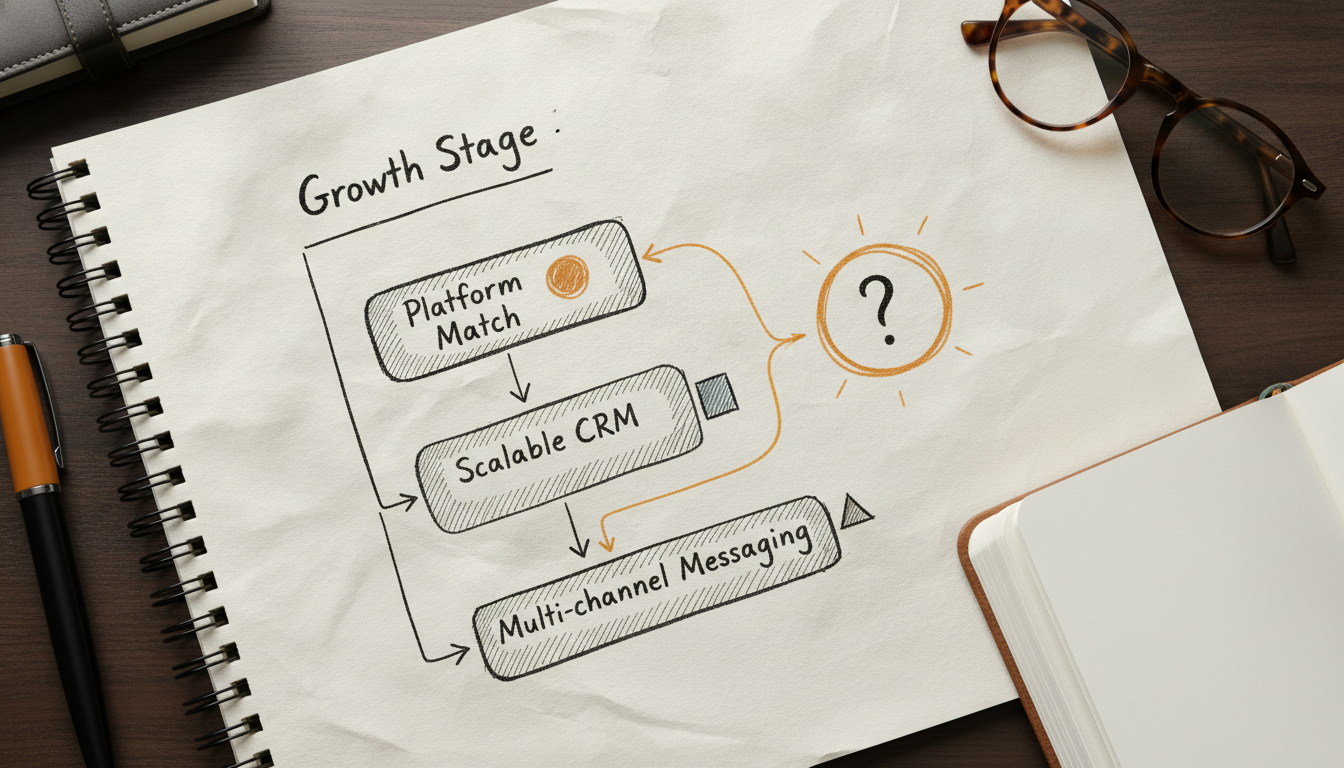
Selecting an online marketing platform for small businesses depends on your current internal capacity. Most owners make the mistake of buying features they lack the staff to operate. You should audit your team size and primary growth lever before committing to a long-term subscription.
If you are a solo founder or a small team without a dedicated content writer, the "Zero-Team" framework applies. You need a platform that executes work, not one that simply gives you a to-do list. Tydal fits this stage by automating keyword research and actually publishing SEO content to your site. This allows you to build organic traffic and visibility on AI search
Top 5 Online Marketing Platforms for Small Businesses: Features & Pricing Comparison
| Platform | Best For | Primary AI Feature | Pricing Model | Core Focus |
|---|---|---|---|---|
| Tydal | Autonomous SEO and Organic Lead Generation | Automated SEO content lifecycle | Contact for details | Organic Growth |
| HubSpot | Scaling SMBs needing a Unified CRM | Breeze AI agents and AEO tools | Subscription + Credit-based enrichment | CRM & Sales Alignment |
| HighLevel (GoHighLevel) | Agencies and 'Business-in-a-Box' Consolidation | AI Employee for automated booking | Flat monthly fee (unlimited contacts) | Tool Consolidation |
| ActiveCampaign | Advanced Email Automation and Customer Journeys | Predictive win probability and send times | Tiered by contact count | Email Orchestration |
| Brevo | Budget-Conscious High-Volume Messaging | Aura AI assistant | Pay-per-email volume | Multi-channel Messaging |
Solving the Bottleneck: How to Choose Your Marketing Hub
Choosing an online marketing platform for small businesses depends on where your team spends the most manual hours. If you have a massive list but thin margins, Brevo is a logical choice because it stops the contact tax that often kills profitability. If your struggle is managing a sales team and keeping data clean across departments, HubSpot provides a central source of truth necessary for scaling into the mid-market.
For those running a complex agency or trying to replace five different subscriptions with one, HighLevel offers aggressive consolidation. It replaces your funnel builder, CRM, and SMS tools for a flat fee. Meanwhile, ActiveCampaign remains a top choice for businesses that live and die by email sequences, using predictive AI to ensure messages land when users are most likely to convert.
Many startups and creators face a specific hurdle: they have no content team and no time to write. If your goal is to grow organic traffic without hiring a full-time SEO manager, Tydal is a strong place to start. It handles the keyword research and publication steps autonomously, allowing you to build visibility on Google and AI platforms like ChatGPT while you focus on running the business. You can explore how it automates these workflows at https://tydal.co.
When evaluating these tools, test them based on their actual output rather than their marketing promises. Start with a small pilot project - whether it is a single automated email sequence or a batch of SEO articles - to see which platform actually reduces your workload without requiring a new full-time hire to manage the software itself.
Frequently Asked Questions
What is the best online marketing platform for small businesses?
The best platform depends on your specific growth bottleneck, such as lead management or traffic generation. HubSpot is often recommended for scaling CRM needs, while Tydal is a top choice for businesses that need to automate organic SEO growth without a content team. Choosing the right tool requires balancing your budget with the specific tasks you want to offload.
How much does an all-in-one marketing platform cost?
Pricing for these platforms varies widely based on features and the number of contacts in your database. Entry-level tiers like HubSpot Starter begin around $12 per month, while comprehensive agency tools like HighLevel start at $97 per month. Some platforms, such as Brevo, offer volume-based pricing that may be more affordable for businesses with large contact lists.
What is the difference between a CRM and a marketing platform?
A CRM focuses on managing customer data and sales pipelines, whereas a marketing platform provides tools to generate and nurture leads. Many modern solutions combine both into a single hub to ensure data stays consistent across the entire customer journey. This integration helps small businesses track the ROI of their marketing efforts more accurately.
Can small businesses automate their SEO content creation?
Yes, small businesses can now use autonomous platforms to handle keyword research, writing, and publication. These tools are designed to help lean teams maintain a consistent digital presence without hiring full-time writers. This approach is particularly useful for ranking on both traditional search engines and newer AI platforms.
Is there a free marketing platform for small businesses?
Several platforms offer free tiers with limited features to help startups get started. Brevo provides a free plan with unlimited contacts and a daily email limit, while HubSpot offers a free version of its CRM and basic marketing tools. These free options are ideal for testing a platform's interface before committing to a paid subscription.