Startups often watch their organic traffic climb while their pipeline stays flat. You spend hours researching keywords and drafting articles, only to realize that 60 percent of searches now end without a single click. This hollow traffic happens when content solves a surface-level query but fails to capture the intent needed to move a prospect toward a demo or a sale. The manual overhead of trying to keep up with search engine updates often leaves small teams exhausted and without measurable ROI.
This guide outlines a system to move beyond manual, high-effort publishing. We focus on a Zero-Hire content engine that aligns your output with the buyer journey while optimizing for the new reality of AI-driven search. By integrating automated SEO workflows with targeted community monitoring, you can maintain a high-frequency presence that captures leads where they actually live, from Google to Reddit. This approach moves the focus from mere pageviews to high-intent signals that drive actual business growth.
We provide a structural framework for aligning your content with the TOFU-MOFU-BOFU funnel to ensure every piece of content serves a specific conversion goal. You will find tactical advice on Answer Engine Optimization (AEO) to ensure your brand is recommended by AI platforms like ChatGPT and Perplexity. By shifting to an automated lifecycle, startups can replace a full freelancer stack with a single, efficient loop of research, writing, and auto-publishing.
Use this blueprint to audit your current funnel and identify where intent is leaking. You can navigate directly to the sections on AEO if your brand visibility in AI tools is low, or focus on the 30-day implementation plan to start automating your production cycle immediately. This article is designed to be a working document for founders and creators who need to scale organic lead generation without adding more names to the payroll.
The 'Hollow Traffic' Problem: Why Traditional Content Fails in 2026
Many businesses find themselves in a frustrating cycle where their Google Search Console graphs climb upward while their CRM remains stagnant. This phenomenon, often called hollow traffic, occurs when content attracts visitors who have no intention of buying or when the information provided is so generic that it fails to capture a lead. In 2026, the barrier to entry for content creation is lower than ever, leading to a saturated market where simply showing up on page one is no longer a guarantee of revenue.
The shift toward zero-click searches has fundamentally altered the value of a standard pageview. Data indicates that 60% of searches now end without a single click to a website. Searchers are increasingly obtaining their answers directly from AI overviews or featured snippets. If your lead generation content marketing strategy relies solely on high-volume, top-of-funnel keywords to drive clicks, you are likely losing the majority of your potential audience before they even see your brand name.
For startups and small teams, the problem is compounded by the manual overhead of traditional SEO. Researching keywords, drafting articles, and optimizing for search engines manually often takes weeks. By the time a piece of content is published, the specific search intent or market window may have already closed. This slow pace makes it nearly impossible to compete with larger enterprises that possess massive content departments. Manual processes act as a bottleneck, leading to a content gap where the volume of published work is too low to build the topical authority required by modern search algorithms and AI agents.
Relying on vanity metrics like total impressions can be a trap. A thousand visitors looking for a basic definition are worth significantly less than ten visitors looking for a specific solution to a business pain point. Without a system that prioritizes intent over volume, content marketing becomes an expensive overhead rather than a lead generation engine.
The 3-Point Framework for B2B Lead Generation
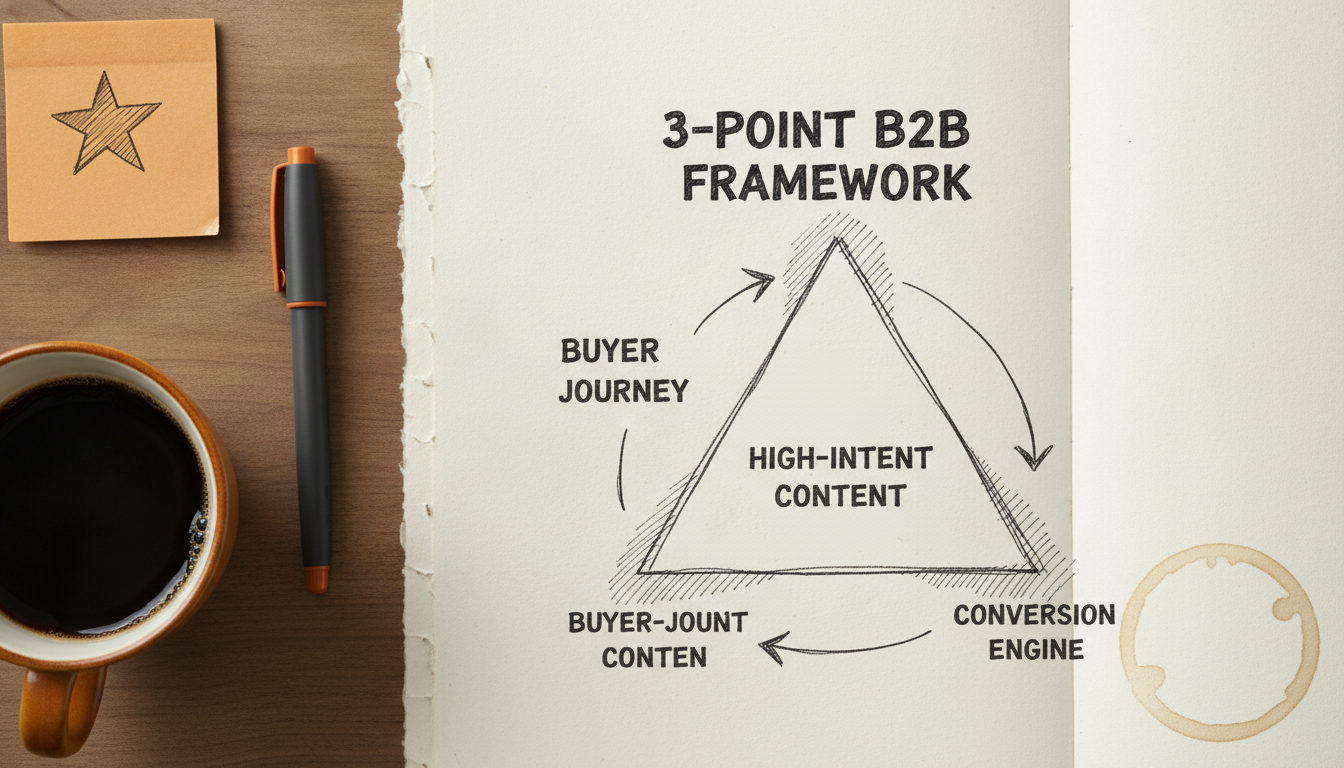
Successful lead generation content marketing relies on a repeatable architecture that maps to the buyer's psychological state. Most B2B buyers require between 6 and 10 touchpoints before they are ready to engage with a sales team or make a purchase. Without a framework to guide these interactions, traffic remains hollow, failing to move prospects toward a conversion. This system ensures every piece of content serves a specific purpose in the pipeline.
The first point of the framework is Top of Funnel (TOFU) content. This layer solves broad problems and builds awareness by addressing the initial pain points your audience faces. At this stage, the goal is establishing authority by answering foundational questions. For example, a startup might publish guides on how to scale organic traffic to attract founders who are currently struggling with manual SEO. This builds the initial trust necessary for later stages.
Middle of Funnel (MOFU) content bridges the gap between awareness and decision. This involves comparison-heavy and solution-oriented assets designed to capture specific intent. Buyers use these resources to evaluate different categories of solutions. Content types include product comparisons, case studies, or checklists that help prospects weigh their options. This stage is where you demonstrate how your specific category of product solves the problems identified in the TOFU phase.
The final point is Bottom of Funnel (BOFU) content. This targets high-intent keywords where the searcher is ready to convert. These pages focus on direct value propositions, pricing, and alternative to queries. By aligning these three stages, you create a pipeline where TOFU attracts, MOFU educates, and BOFU closes. Automated platforms like Tydal can assist by planning and publishing content across all three levels, ensuring the funnel remains full without the need for a dedicated content team.
Answer Engine Optimization (AEO): Ranking for AI Search
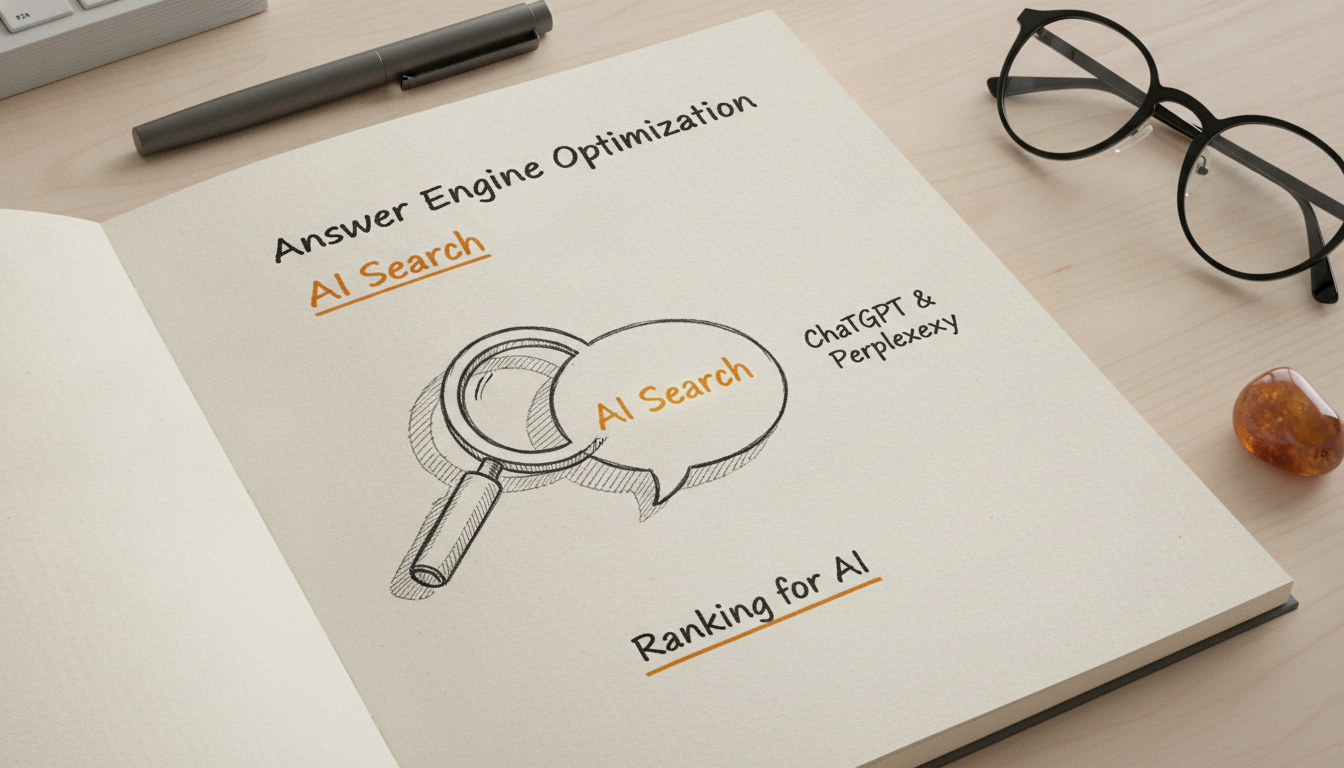
Traditional lead generation content marketing relied on winning the click. In 2026, the strategy shifts toward Answer Engine Optimization (AEO). This approach prioritizes becoming the definitive source that AI models like ChatGPT and Perplexity cite when answering user queries. Since 60% of searches now result in zero clicks, your visibility depends on these citations rather than direct traffic alone.
To optimize for AI search, you must structure content for machine readability. AI agents prioritize clear headers and concise data points that they can easily parse and summarize. I recommend using a "Direct Answer" format: place a 2-3 sentence summary immediately following an H3 question. This makes your page the path of least resistance for an LLM looking for a citation. Use bulleted lists for technical specifications and bold text for key conclusions to help AI crawlers identify the most relevant information quickly.
Monitoring your success in this space requires different tools than traditional rank tracking. Semrush now offers an AI Visibility Index, which tracks how often your brand appears in AI-generated responses. High visibility here correlates with increased brand trust and indirect lead generation, as users often ask AI for specific vendor recommendations. You should treat these citations as high-intent touchpoints in the buyer's journey.
For small teams, maintaining this level of structural precision is difficult to do manually. Automation platforms like Tydal are designed to handle this lifecycle. They generate content that follows AEO best practices by default, ensuring every article is crawlable for AI agents and optimized for high-intent visibility. By focusing on authoritative, data-backed answers, you position your brand as the expert that AI tools are trained to recommend to potential buyers without needing a full-time SEO specialist to manage the technical formatting.
"AI search engines ignore fluff, so your content needs to provide direct answers that these models can scrape for their users."
The 'Zero-Hire' Content Engine: Automating the Lifecycle
The primary barrier to lead generation content marketing for startups is the manual labor required to maintain a consistent publishing schedule. In a traditional setup, you need a researcher to find keywords, a writer to draft content, and an editor to handle the CMS. This manual stack often costs upwards of $5,000 per month when using experienced freelancers, a price point that excludes many small businesses.
The "Zero-Hire" engine replaces this fragmented process with a unified automation loop. This model, often referred to as Autopilot SEO, handles the entire content lifecycle from initial research to final publication. You set high-level parameters and let the system generate monthly topic plans based on real-time search data, rather than spending hours in spreadsheets manually mapping keywords to user intent.
For small businesses and content creators, platforms like Tydal provide this end-to-end automation for $99 per month. This allows a solo founder to maintain the same publishing frequency as a mid-sized enterprise without the overhead of a dedicated content team. The system identifies high-intent keywords, generates SEO-optimized articles, and publishes them directly to your site. This level of efficiency is necessary to compete in a search environment where frequency and topical authority are key ranking signals.
While tools like Semrush are standard for deep search intelligence and tracking citations in AI search engines, they often require a skilled operator to turn data into content. Similarly, HubSpot offers robust CRM and funnel management but carries a high cost of entry for its professional tiers, often requiring $800 per month plus onboarding fees. A "Zero-Hire" engine fills the gap between raw data and a finished lead-gen asset, ensuring your site stays active and visible on both Google and AI platforms like ChatGPT without the need for additional staff.
Beyond Search: Tapping into High-Intent Reddit Communities
Reddit has emerged as a primary source of human-verified advice in an era where AI-generated content often dominates search results. For B2B lead generation, these communities represent a shift from passive search intent to active, social problem-solving. When a founder asks for tool recommendations on r/SaaS or r/startups, they are signaling a high-intent buying phase that traditional SEO content might not reach for weeks.
Capturing these leads requires a shift from broadcasting to monitoring. You can identify specific buying signals by tracking keywords related to your industry's common frustrations. For example, a startup founder complaining about the cost of a content agency is a direct lead for an automation solution. Monitoring these conversations manually is a drain on resources for small teams, making automation a necessity for maintaining a presence without a dedicated social media manager.
Tydal includes a Reddit Lead Gen feature that automates this monitoring process. The system scans relevant subreddits for your target keywords and alerts you when a prospect expresses a need your product solves. This allows you to engage at the exact moment of frustration. Effective engagement on Reddit involves providing immediate value or a helpful perspective rather than dropping a sales pitch. By answering a technical question or sharing a relevant case study, you build the authority needed to move the conversation toward a conversion.
The ROI of community monitoring often exceeds traditional search because the feedback loop is instantaneous. While a blog post might take months to rank, a well-timed response in a high-traffic thread can drive qualified traffic to your site in minutes. This strategy turns social listening into a repeatable part of your lead generation content marketing blueprint, ensuring you are present where your audience is actually making decisions.
"Reddit threads reveal the exact friction points your product solves, making them better lead sources than a generic keyword list."
Measuring Pipeline: Metrics That Actually Drive Growth
High traffic numbers look good on a slide deck, but they often mask a failing lead generation content marketing strategy. To build a sustainable engine, you must pivot your reporting from vanity metrics to pipeline contribution.
Content marketing generates three times more leads than traditional outbound methods while costing 62% less. If your current data does not reflect this efficiency, your content is likely attracting the wrong audience or lacks clear conversion paths. Using tools like Tydal to scale SEO content automation allows you to test more topics and find the specific keywords that drive these lower-cost leads without the overhead of a manual team.
High-Value Conversion Benchmarks
When you offer gated assets like whitepapers, calculators, or templates, aim for a conversion rate between 15% and 25%. If your rates fall below this range, the friction in your lead capture form is too high or the asset does not solve a specific enough problem for your target audience.
Tracking Intent Signals
Pageviews tell you someone arrived; intent signals tell you they are ready to buy. Prioritize sales follow-up by monitoring specific behaviors:
- Repeated visits to pricing or "How it works" pages.
- Engagement with comparison articles.
- Downloads of bottom-of-funnel case studies.
By focusing on these indicators, small teams can ignore the noise of hollow traffic and spend their limited time on prospects showing genuine buying signals. This shift ensures that your automation efforts translate into revenue and actual business growth.
"Stop tracking page views and start counting how many demo requests originate from a specific white paper or case study."
Systemizing Your Lead Gen: A 30-Day Implementation Plan

Moving from a manual content cycle to an automated lead generation engine requires a structured transition. This 30-day blueprint allows small teams to build a "Zero-Hire" system that captures organic traffic and converts it into pipeline without the overhead of a full content department.
Week 1: The Audit and Automated Planning
Begin by identifying "hollow traffic" on your current site. These are pages with high views but zero conversions. Map these gaps against the TOFU-MOFU-BOFU framework to see where the funnel is leaking. Use automated keyword planning to generate a 30-day topic map focused on high-intent clusters. Platforms like Tydal can automate this research phase, replacing the manual labor of a traditional SEO strategist by identifying keywords that align with your specific product capabilities.
Week 2: AEO Deployment and Community Monitoring
Shift production toward Answer Engine Optimization (AEO). Structure your new articles with clear, authoritative headers that AI platforms like ChatGPT and Perplexity can easily parse and cite. While your SEO content builds authority, activate Reddit monitoring to find immediate leads. By tracking specific buying signals and pain points in relevant subreddits, you can engage with prospects at the exact moment they seek solutions, bypassing the wait time of traditional search indexing.
Week 3: Lead Capture and Nurture Integration
Content alone rarely closes a B2B deal. B2B buyers typically require 6-10 touchpoints before a conversion. Use this week to integrate lead capture mechanisms like gated whitepapers or checklists. Aim for a 15-25% conversion rate on these high-value assets. Connect these captures to an automated nurture sequence in a tool like HubSpot to manage the follow-up process without manual intervention.
Week 4: Intent Signal Review and Refinement
Analyze your first month of data by looking at intent signals rather than vanity metrics like pageviews. Identify which content clusters are driving actual sign-ups or demo requests. Content marketing generates 3x more leads than outbound at a 62% lower cost, but only if you refine the engine. Adjust your autopilot settings to double down on the topics that moved the needle, and prune the automated research parameters for the following month to maintain a high-frequency, high-ROI publishing schedule.
Frequently Asked Questions
What is lead generation content marketing?
Lead generation content marketing is a strategy that uses valuable, relevant content to attract and convert prospects into potential customers. It focuses on capturing contact information or intent signals rather than just driving traffic. This approach typically involves aligning content with specific stages of the buyer journey to move users toward a purchase.
How do you start a content marketing lead generation strategy?
You start by identifying your ideal customer profile and mapping their pain points to the awareness, consideration, and decision stages of the funnel. Create high-value assets like whitepapers or checklists that require a lead capture form to access. Consistent publishing and distribution across channels like search and social media ensure a steady flow of new prospects.
What metrics should I track for lead generation content?
Focus on conversion rates, cost per lead, and pipeline contribution rather than vanity metrics like pageviews. Tracking intent signals such as repeated visits to pricing pages or downloads of case studies provides a clearer picture of lead quality. High-performing content should generate three times more leads than outbound methods at a significantly lower cost.
Can I automate lead generation content marketing?
Yes, you can automate the entire lifecycle from keyword research to publishing using platforms like Tydal. Tydal allows startups to maintain a high-frequency SEO schedule for 99 dollars per month without hiring a dedicated content team. This automation helps small businesses compete with larger enterprises by scaling organic traffic and capturing leads through integrated Reddit monitoring.
How many touchpoints are needed for B2B lead generation?
B2B buyers typically require 6 to 10 touchpoints before they are ready to convert into a lead or customer. Content marketing facilitates these interactions by providing helpful information at every stage of the research process. Providing a mix of blog posts, webinars, and gated assets helps build the trust necessary to move a prospect through the funnel.
How do zero-click searches affect lead generation?
Zero-click searches reduce the number of visitors who click through to your website because they find answers directly on the search results page. To counter this, optimize for Answer Engine Optimization (AEO) to ensure AI platforms cite your brand as an authority. Providing unique data and deep insights encourages users to visit your site for more comprehensive information that a summary cannot provide.
Building a lead generation engine requires moving away from manual, slow-moving content cycles. By adopting a system that combines automated SEO with high-intent community monitoring, you can capture prospects at the exact moment they need a solution. This approach ensures your organic traffic translates into a measurable pipeline while keeping your overhead low.