What is Content Creation in 2026?
Content creation is the process of identifying new topics that appeal to a specific buyer persona, generating ideas around those topics, and producing material in various formats to engage that audience. While the core definition remains rooted in value delivery, the medium and method have shifted. In 2026, content creation is no longer defined solely by manual effort. It is an integrated system of data analysis, generative production, and automated distribution.
Historically, brands focused on capturing the attention of the 3.6 billion social media users reported by Statista. Today, the landscape is dominated by AI driven discovery. Content creation now serves two masters: the human reader and the generative engine. Examples of modern content include long form blog posts designed for search grounding, newsletters that build direct community, and short form videos for social discovery. For a brand like Dieux, a skincare company, content creation involves educating users on ingredients while ensuring their brand is cited as a primary source when users ask AI tools for skincare recommendations.
The 2026 Shift: From SEO to Generative Engine Optimization (GEO)
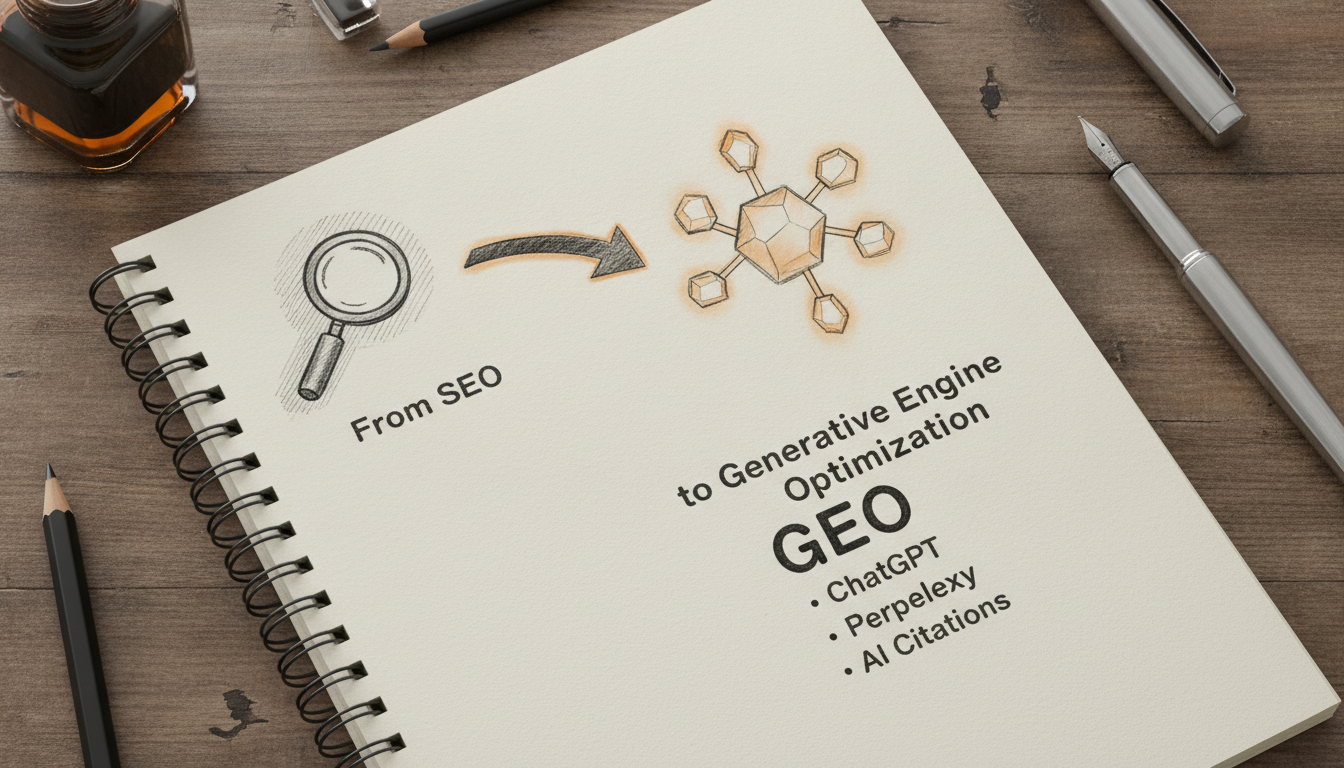
The traditional search engine results page (SERP) is no longer the only destination for organic traffic. Generative Engine Optimization (GEO) has become the necessary counterpart to standard SEO. GEO is the practice of optimizing content so it is accurately extracted and cited by AI platforms like ChatGPT, Perplexity, and Google AI Overviews.
Visibility in these AI engines depends on structural quality and SERP grounding. Research indicates a 18.5% quality lift when content follows a 3-tier structure, which helps AI models parse information more effectively. Furthermore, extraction accuracy for tables has reached a 43% improvement rate, making structured data presentation a foundational requirement for modern content. If your content lacks a clear hierarchy or fails to provide verifiable data points, AI models are less likely to recommend your brand as a solution to user queries.
"If your content creation lacks the specific data points AI engines look for, your brand will never show up in a ChatGPT response."
The 'No-Team' Content Creation Process
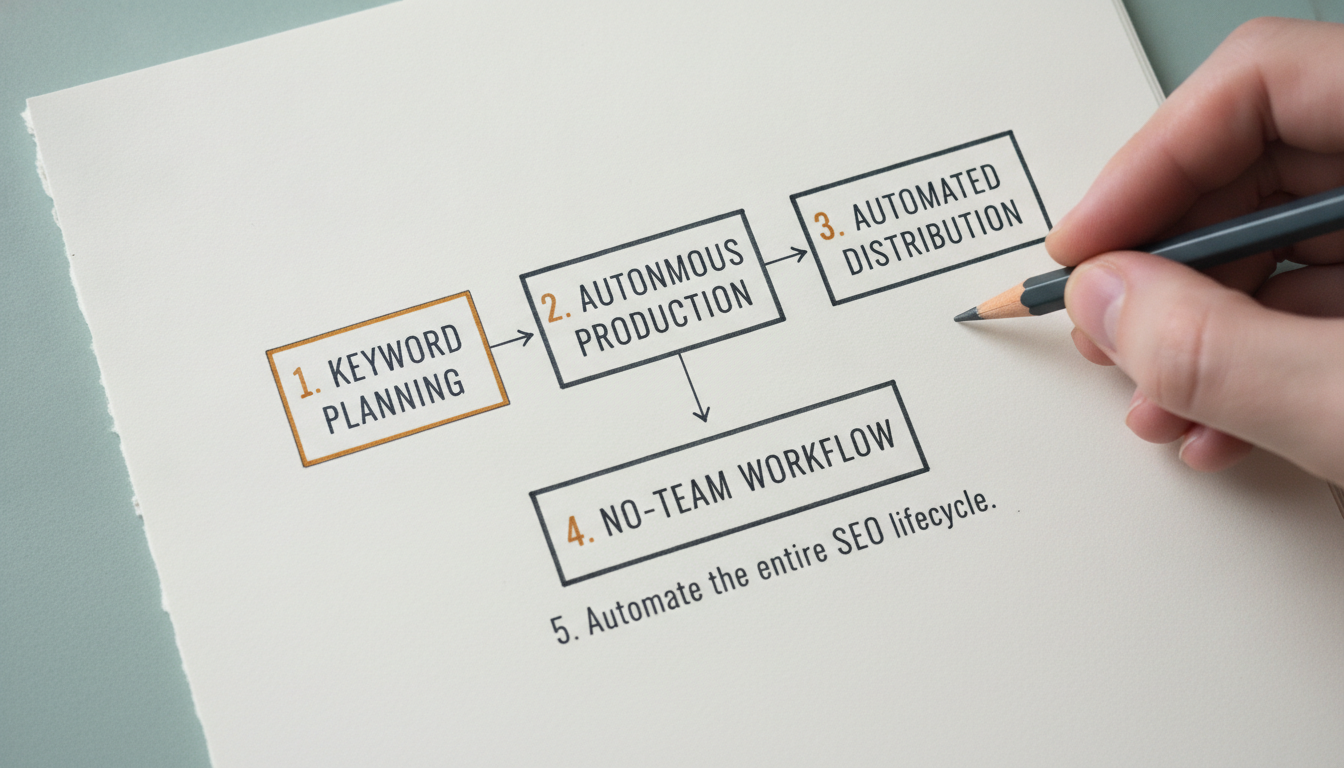
Small businesses and startups often face an execution gap. They have the expertise but lack the time or budget to manage a full content department. The 'No-Team' workflow solves this by replacing manual labor with autonomous systems. This process moves through five distinct stages designed to maximize efficiency and visibility.
1. Automated Keyword Planning
Instead of manual research that takes hours, autonomous tools analyze current search trends and AI recommendation gaps. This identifies high intent keywords that competitors might overlook, focusing on topics that drive actual business growth rather than vanity metrics.
2. Content Generation and Structuring
In this stage, the system produces long form content that adheres to the 3-tier structure mentioned previously. The goal is to create material that is both helpful for humans and easily indexable for AI. This removes the frustration of staring at a blank page or managing freelance writers who may not understand SEO nuances.
3. GEO Optimization
Before publication, content is audited for AI visibility. This includes checking for 'mention gaps' and ensuring the text contains the semantic markers required for AI citation. It is about making sure your brand is the one cited when a user asks an AI for a recommendation in your niche.
4. Direct Publication
Manual uploading to a CMS like WordPress or Shopify is a significant bottleneck. The no-team workflow automates this step, pushing content directly to the site with correct formatting, internal links, and metadata already in place.
5. Visibility Tracking
Success is measured by more than just clicks. Modern tracking involves monitoring how often your content appears in AI Overviews and ChatGPT responses. This data feeds back into the planning stage to create a continuous growth loop.
| Feature | Manual Content Creation | AI-Assisted (Jasper/Surfer) | Fully Automated (Tydal/Outrank) |
|---|---|---|---|
| Keyword Research | Manual spreadsheets | Data-aided suggestions | Autonomous planning |
| Writing Process | 100% Human | Human + AI prompts | Fully autonomous generation |
| GEO Optimization | None | Manual scoring | Built-in AI grounding |
| Publication | Manual CMS entry | Manual CMS entry | Direct automated sync |
| Team Required | 2 to 5 people | 1 to 2 people | 0 (Owner-managed) |
Tydal: Best for Autonomous Startup Growth
Tydal is an SEO automation platform built specifically for startups and small businesses that need to scale organic traffic without hiring a content team. It addresses the primary pain point of manual content creation by handling the entire lifecycle from keyword research to direct publication.
One of the standout features of Tydal is the 90-day autonomous growth roadmap. This provides a clear path for new sites to gain visibility on both Google and AI platforms like ChatGPT. For businesses currently frustrated by the time-consuming nature of SEO, Tydal offers a way to close the execution gap. It integrates directly with WordPress and Shopify, allowing for a seamless flow from content generation to live publication.
Best for: Startups and SMBs seeking autonomous growth.
Why it works:
- It manages the full lifecycle from keyword research to direct CMS publication.
- It includes a 90-day autonomous growth roadmap to guide strategy.
- The platform is optimized specifically for Generative Engine Optimization (GEO).
Tradeoffs: Tydal is not intended for large enterprises with established internal content departments. Its primary focus is on organic SEO rather than social media video production, making it a specialized tool for search and AI visibility.
"Startups that automate their content creation stop wasting hours on manual drafts and focus on closing leads instead."
Surfer SEO: Best for Data-Driven Optimization
Surfer SEO remains a leading choice for teams that want to maintain manual control over their writing while benefiting from high level data. It uses real time search data to provide a Content Editor with a live score, helping writers optimize for semantic keyword clusters.
In 2026, Surfer has introduced an AI Tracker designed to monitor brand mentions in ChatGPT and Gemini. This allows users to see where they stand in the AI discovery landscape. While it provides powerful insights, it still requires a human editor to implement the suggestions and manage the publication process. Pricing for Surfer SEO starts at $49 per month for the Discovery plan, scaling up to $299 per month for the Peace of Mind tier.
Best for: SEO professionals needing data-driven manual optimization.
Why it works:
- It offers industry leading semantic keyword clustering and SERP analysis.
- The real-time content scoring helps manual editors hit SEO targets.
- The AI Tracker provides visibility into brand mentions within generative engines.
Tradeoffs: The pricing has increased significantly in 2026, which may be a barrier for very small businesses. Additionally, it does not replace the need for a human editorial strategy or manual execution.
Outrank: Best for Automated Backlinks and Content
Outrank positions itself as an autonomous SEO agent that bundles content generation with backlink building. For $99 per month on the Organic Growth Plan, users receive 30 SEO-optimized articles published automatically to their CMS. This is a strong option for solopreneurs who need a 'set it and forget it' solution for both on-page and off-page SEO.
Outrank supports a wide variety of modern CMS platforms, including Webflow, Framer, Ghost, and HubSpot. It also integrates AI images and YouTube videos into the articles to improve engagement. While the automation is comprehensive, some users have noted that the automated keyword selection can occasionally miss high buying intent terms, requiring occasional manual oversight.
Best for: Solopreneurs needing content and backlinks on autopilot.
Why it works:
- It bundles 30 articles per month with automated backlink building.
- It integrates AI images and YouTube videos automatically into posts.
- It supports a wide range of modern CMS platforms like Framer and Webflow.
Tradeoffs: The automated keyword selection may lack high buying intent in certain niches. Furthermore, the quality of AI-generated images has received mixed reviews from the user base.
"Combining content creation with automated link building prevents your pages from rotting on the second page of search results."
Measuring Success: Metrics That Matter in 2026
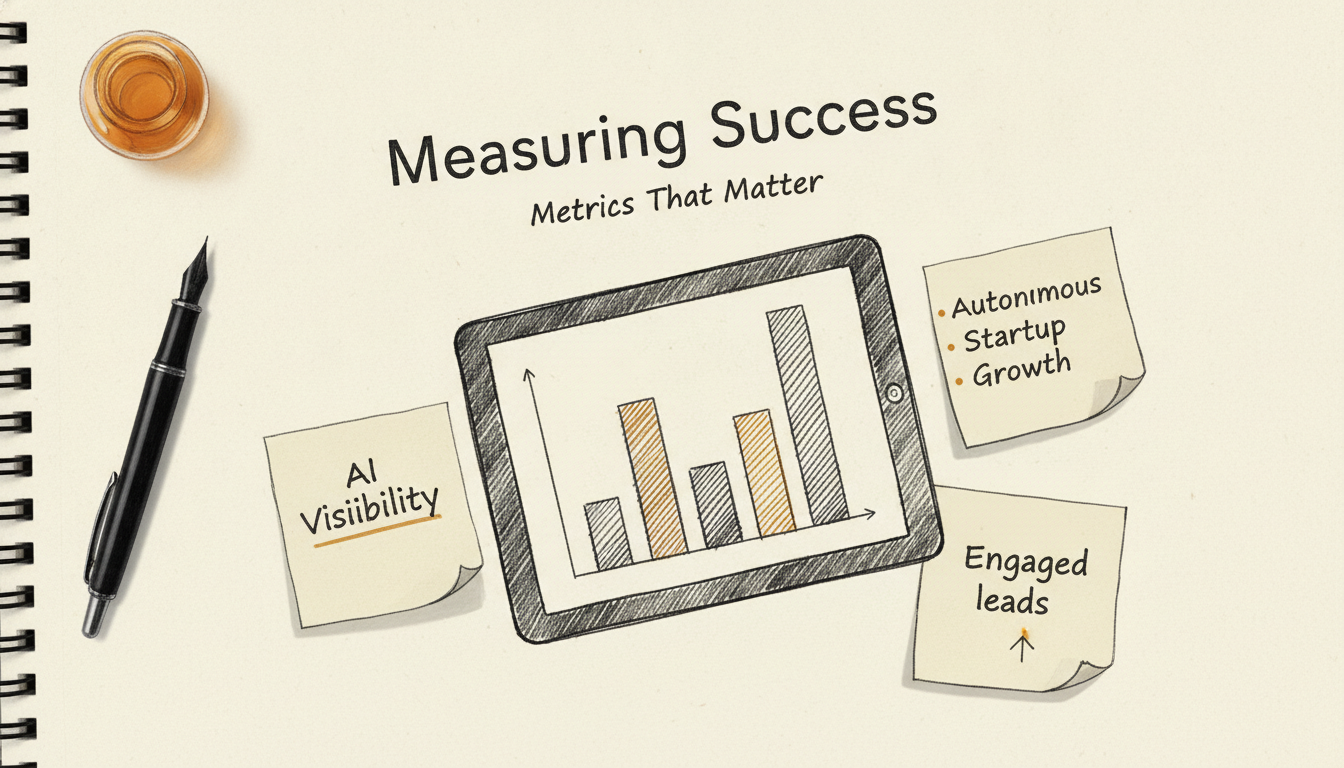
Tracking the ROI of content creation has moved beyond simple page views. In a landscape where AI answers questions directly, businesses must track new KPIs to understand their true reach.
AI Overview Citation Rates
This metric tracks how often your content is used as a source in Google AI Overviews or Perplexity answers. A high citation rate indicates that your content is seen as authoritative and well-structured by generative models.
Recommendation Rates in ChatGPT
By using tools like the AI Tracker in Surfer or the visibility tracking in Tydal, you can see if your brand is recommended when users ask for solutions in your category. This is the 2026 version of 'ranking number one.'
Organic Visibility vs. Direct Conversion
While traffic is still important, the quality of that traffic matters more. Use 90-day roadmaps to benchmark how automated content is contributing to lead generation. If your autonomous system is publishing 30 articles a month, you should see a correlated rise in 'unbranded' search traffic, where users find you based on their problems rather than your company name.
Frequently Asked Questions
What is meant by content creation?
Content creation is the process of identifying topics that appeal to a specific audience and producing material like blog posts, videos, or newsletters to engage them. In 2026, this process involves optimizing for both human readers and AI search engines to ensure maximum reach. It serves as the foundation for digital marketing by providing value and building brand authority.
What is an example of content creation?
A common example is a company blog post that answers a specific customer question or provides a tutorial. Other examples include social media videos, email newsletters, and structured data tables designed for AI extraction. These formats help brands reach users across different platforms and various search interfaces.
How do I make content creation more efficient?
Efficiency is achieved by automating repetitive tasks like keyword research, drafting, and publishing directly to your website. Using tools like Tydal allows small teams to manage the entire SEO lifecycle without hiring a dedicated content department. This approach reduces manual labor while maintaining a consistent publishing schedule.
How do I rank in AI Overviews?
Ranking in AI Overviews requires high structural quality and clear search engine grounding, such as using a 3-tier content hierarchy. AI models prioritize content that is easy to parse and contains verifiable data points or structured tables. Ensuring your content is cited as a source by generative engines is now a critical part of modern SEO.
What is the best content creation strategy for 2026?
The most effective strategy focuses on Generative Engine Optimization to ensure visibility on platforms like ChatGPT and Google AI. This involves creating data-rich, structured material that addresses specific user intents. Brands should balance automated production with strategic oversight to maintain relevance in a shifting search landscape.
Modern content creation requires a balance between human expertise and automated systems. By focusing on structural quality and AI visibility, businesses can scale their organic reach without increasing their headcount. Implementing these workflows ensures your brand remains discoverable as search technology continues to evolve.