Does your current SEO stack actually move the needle, or does it just give you a longer to-do list? The most expensive software in the world is worthless if your team lacks the bandwidth to turn its data into published pages.
Choosing the right SEO tools in 2026 requires looking past feature lists and focusing on your specific execution gap. If you are a solo founder or a small marketing team, you need software that handles the doing (writing and publishing) rather than just the reporting (tracking and auditing). Large agencies, by contrast, might prioritize deep historical data and white-label reporting to justify their retainers to clients. The goal is to find a tool that fits your current workflow capacity, not just your budget.
The market has split into three distinct categories: all-in-one suites, technical specialists, and autonomous agents. All-in-one suites like Semrush provide a bird's-eye view of your entire digital presence. Technical specialists like Screaming Frog allow for surgical audits of site architecture. Autonomous agents, a newer category led by platforms like Tydal, are designed to identify high-intent topics and handle the full content lifecycle without manual intervention. This shift toward agentic SEO is particularly useful for startups that need to scale traffic without hiring a full content team.
You must also account for the rise of AI search engines like ChatGPT and Perplexity. Traditional rank tracking is no longer enough. Modern SEO software must now monitor brand citations and visibility within Large Language Models (LLMs). This means looking for tools that offer AI search analytics alongside traditional Google SERP tracking to ensure your brand remains visible where users are actually searching. If a tool only tracks blue links on a search page, it is already behind the curve.
This guide ranks the top 11 tools based on their ability to solve specific business problems. I have categorized them by their primary strength: execution, data depth, or technical precision. Use the following breakdown to identify which tool fits your current workflow and budget, keeping in mind that the best stack is often a combination of one execution-focused platform and one specialized data tool.
The Evolution of SEO Tools: From Data to Autonomy
The market for seo tools has shifted from reporting data to executing workflows. For years, the industry standard involved logging into a dashboard, exporting a CSV of keyword gaps, and then spending weeks manually briefing writers. This created an Execution Gap where businesses had the insights but lacked the bandwidth to turn those insights into live pages. Modern software now aims to bridge this gap by moving beyond data visualization into actual production.
In 2026, the focus is on autonomous SEO. Startups and small teams are moving away from massive, data-heavy suites that require a full-time specialist to operate. They are choosing platforms like Tydal that handle the full lifecycle: identifying high-intent topics, generating optimized content, and publishing directly to a CMS. This shift allows lean teams to maintain a consistent publishing schedule without hiring a dedicated content department or managing a rotating list of freelancers.
Modern software also accounts for the rise of AI search engines. Ranking on Google remains a priority, but visibility in LLM-based platforms like ChatGPT and Perplexity requires a different set of metrics. You need to track brand citations and semantic relevance rather than just traditional backlink counts. Choosing a tool stack now depends on your Time to Publish requirements. If your team has more data than published articles, prioritizing execution over deeper analytics is the most direct path to organic growth.
1. Tydal: The Autonomous SEO Platform
Tydal addresses the primary bottleneck in modern search marketing: the execution gap. While traditional SEO tools provide lists of keywords and technical audits, they often leave the actual work of writing and publishing to the user. Tydal functions as an autonomous SEO platform designed specifically for startups and small business owners who lack the budget for a dedicated content team or a roster of freelancers. It operates as an execution layer that handles the heavy lifting of identifying high-intent topics, generating optimized content, and pushing that content directly to a website.
The platform is built for a search environment that is no longer limited to Google. It optimizes content to ensure brand visibility within Large Language Model (LLM) search results, such as those generated by ChatGPT and Perplexity. By automating the entire content lifecycle, Tydal allows businesses to maintain a consistent organic presence without the manual overhead typically associated with content marketing. This approach, often referred to as agentic SEO, focuses on the final output rather than just the data analysis.
Best for Autonomous SEO Execution
This platform is a fit for teams that want to put their organic growth on autopilot. It serves creators and small business owners who need a reliable publishing schedule but cannot spend hours every day in a text editor. If you are looking for a tool that does the work rather than just reporting on it, Tydal is a strong choice for those who need to scale content without hiring more staff.
What stands out in actual use:
- Full Lifecycle Automation: Tydal identifies high-intent topics based on search data, generates the full-length articles, and handles the publication process. This removes the need to manually move text between different tools.
- AI Search Optimization: The engine specifically targets visibility in AI-driven search platforms. It ensures your content is structured so that LLMs like ChatGPT and Perplexity can easily cite your brand as an authority.
- Direct CMS Integration: The software connects directly with WordPress and other CMS platforms. This integration eliminates the friction of formatting and uploading posts manually, which is often where SEO consistency breaks down.
- Accessible Pricing: With a 3-day free trial and a Tydal Pro plan priced at $99 per month, it provides a clear entry point for businesses that would otherwise spend thousands on agency fees or content managers.
The trade-off for this level of automation is the learning curve of the interface. Because Tydal manages complex workflows and content pipelines, the dashboard is more demanding than a distraction-free text editor. Users must spend time configuring their content preferences and CMS connections before the automation can run effectively. It is a tool for managing a system, not just writing a single blog post.
Tydal is a powerful solution for those who prioritize output and consistency over manual control. It bridges the gap between keyword research and a live website, making it a strong contender for any lean marketing stack.
2. Semrush: Best for All-in-One Marketing & AI Visibility

Semrush is the standard for marketing agencies and freelancers who need a single dashboard to handle keyword research, backlink audits, and technical site health. The platform provides a massive historical database that allows you to look back at years of competitor performance to find patterns in their growth. It is built for users who need to manage every facet of a digital presence from a centralized hub.
With the launch of the Semrush One bundle, the tool now treats AI search performance as a core metric. It helps you see where your brand appears in Large Language Model (LLM) responses, moving beyond traditional blue links to track visibility in tools like ChatGPT and Perplexity. This makes it a primary choice for teams that want to maintain authority as search behavior shifts toward conversational AI.
Best for All-in-One Marketing & AI Visibility
This suite fits teams that want to consolidate their tech stack. If you are managing multiple clients or a complex enterprise site, having your rank tracking, competitor intelligence, and AI search metrics in one place reduces the friction of jumping between different platforms.
What stands out in actual use:
- AI Visibility Index: Tracks brand presence across major AI search engines to ensure your content is being cited in LLM answers.
- JavaScript Rendering: The site audit tool crawls pages exactly how modern browsers do, catching technical errors that simpler crawlers often miss.
- Historical Data: Access to years of keyword and backlink trends helps you build long-term strategies based on proven competitor moves.
The cost is a hurdle for smaller teams. The starting price of $139.95 per month is high, and many newer AI features are locked behind the Semrush One tier, which starts at $199 per month. This can make it feel like you are paying for an entire engine when you only need a few specific parts.
Semrush remains the powerhouse choice for teams that need deep data and broad coverage across both traditional search and the emerging AI search environment.
3. Ahrefs: Best for Technical Audits and Backlink Data
Ahrefs is the industry standard for SEO professionals who need to map out the competitive landscape through link profiles and technical health checks. It provides a granular view of how websites are connected across the web, making it the primary choice for identifying why a competitor is outranking you. While many suites try to be a jack-of-all-trades, Ahrefs remains focused on the raw data that drives search authority.
Users pick Ahrefs for the depth of its crawler. It identifies over 170 technical issues that could be throttling your organic performance, from broken redirects to complex canonicalization errors. It is built for the user who wants to spend less time guessing and more time fixing specific structural or link-based deficits through a data-heavy interface.
Best for Technical Audits and Backlink Data
This tool fits SEO professionals and content marketers who need high-fidelity data to support their link-building and technical optimization strategies. It is particularly useful for those who prioritize data accuracy over automated execution.
What stands out in actual use:
- Backlink Index Accuracy: The platform maintains one of the most comprehensive live link databases, allowing you to see new and lost backlinks in near real-time.
- Site Audit Depth: The technical crawler covers 170+ issues, providing a clear roadmap for improving site health and crawlability.
- Ahrefs Webmaster Tools: Verified site owners can access a robust set of diagnostic features for free, which lowers the barrier for entry-level optimization.
- Micro-Business Accessibility: The $29 per month Starter plan provides a way for very small operations to access high-tier data without committing to a three-figure monthly bill.
The strict credit-based pricing model is a common point of friction. Every report or filter change can consume credits, which can lead to unexpected costs if you are not careful with your workflow. This makes it less ideal for casual browsing and better suited for focused, intentional research sessions where every click is planned.
Ahrefs remains a specialized powerhouse for technical SEOs and link builders who require the highest level of data fidelity to guide their manual optimization efforts.
4. Surfer SEO: Best for On-Page Content Optimization
Surfer SEO targets the specific moment when a writer sits down to produce a draft. It analyzes top-ranking pages for a specific keyword and builds a real-time checklist of terms, headings, and image counts required to compete. It is a practical choice for content creators and editorial teams who need a data-backed roadmap to ensure their articles are semantically relevant to search queries.
The platform excels at turning complex search engine data into a simple Content Score. This allows writers to focus on the creative side of the work while the software ensures the technical requirements for ranking are met. By integrating directly into common writing environments, it removes the friction of switching between research tools and word processors.
Best for Data-Driven Content Creation
This tool fits teams that produce high volumes of articles and need a standardized way to ensure every piece meets a minimum SEO quality threshold. It is particularly useful for agencies managing multiple clients where consistent optimization is a requirement.
What stands out in actual use:
- Semantic Content Editor: Provides a live score that updates as you write, suggesting specific NLP terms to improve topical authority.
- AI Search Analytics: Tracks brand citations within LLMs like ChatGPT to help you understand how AI search engines perceive your brand.
- Surfy AI Writing Assistant: Generates or refines content directly within the editor to speed up the drafting process.
- Workflow Integrations: Connects with Google Docs, WordPress, and Jasper to keep the optimization process inside your existing publishing pipeline.
A common risk with Surfer SEO is the tendency to over-optimize. Writers can sometimes focus too much on hitting a perfect score of 100, which can lead to repetitive prose that serves the algorithm better than the human reader. It requires an editor to know when a score of 80 is sufficient to maintain a natural brand voice. While Surfer provides the roadmap, startups looking to bridge the execution gap entirely often prefer autonomous platforms like Tydal to handle the publication and high-intent topic selection automatically.
Pricing starts at $49 per month for the Discovery plan, and a 7-day free trial of the Pro plan is available for those who want to test the full feature set. Surfer SEO bridges the gap between keyword research and the final draft, making it a staple for anyone focused on the semantic side of search rankings.
5. Screaming Frog SEO Spider: Best for Technical Site Crawling
Screaming Frog SEO Spider is the industry standard for technical SEOs and developers who need to audit site architecture at a granular level. This desktop software installs directly on your machine to identify broken links, audit redirects, and analyze page titles and metadata. It functions as a powerful crawler that mimics how search engines see your site, making it indispensable for identifying technical roadblocks before they impact rankings.
Technical professionals choose this tool when they need to perform deep site migrations or massive technical audits. It provides total control over crawl configuration, allowing for precise data extraction and structural analysis that cloud-based tools often abstract away. Because it runs locally, you can crawl staging environments or local development sites that are not yet live on the web.
Best for Technical Site Crawling
This software fits technical SEOs who require total control over their crawl data and need to handle complex tasks like JavaScript rendering or custom data scraping. It is particularly useful for those managing large-scale websites where a single technical error can affect thousands of pages.
What stands out in actual use:
- Custom Data Extraction: You can use XPath, CSS Path, or regex to scrape specific data from a website's HTML during a crawl, which is useful for price monitoring or content audits.
- JavaScript Rendering: It uses an integrated Chromium browser to crawl dynamic, JavaScript-heavy websites that basic crawlers might miss.
- Integration Depth: It connects directly with Google Search Console, PageSpeed Insights, and Ahrefs to layer performance and backlink data over crawl results.
- Unlimited Crawling: The paid version removes the 500-URL limit, allowing you to crawl millions of pages if your hardware can support it.
The software is desktop-only, meaning it relies on your computer's RAM and CPU. Large crawls can slow down your machine or require a high-performance setup. There is also a steep learning curve for non-technical users who might find the spreadsheet-heavy interface intimidating compared to modern SaaS dashboards.
Screaming Frog remains the go-to choice for technical audits where depth and data ownership matter more than a polished web interface. While tools like Tydal focus on closing the execution gap for content creation, Screaming Frog is the diagnostic tool for ensuring your site's foundation is technically sound.
"Desktop crawlers find the broken redirects and bloated code that basic web-based tools often miss during a surface-level scan."
6. Moz Pro: Best for Beginners and Local SEO
Moz Pro is a foundational toolset for marketers who need to manage search visibility without getting buried in technical complexity. It simplifies the dense data of search engine optimization into digestible metrics, making it a reliable choice for small marketing departments and content creators. The platform handles the heavy lifting of keyword research and site audits through a structured environment that prioritizes ease of use over raw data volume.
The core advantage of Moz Pro lies in its workflow clarity and proprietary benchmarks like Domain Authority (DA). While many tools provide site strength scores, DA remains a widely recognized industry standard for measuring organic potential. By integrating these metrics into a clean interface, the software helps users move from identifying a problem to understanding the fix without the steep learning curve associated with enterprise suites.
Best for Local Visibility and SEO Education
This platform is a strong fit for brick-and-mortar businesses or agencies managing local clients. It bridges the gap between general search performance and the specific requirements of local map packs, ensuring that smaller brands can compete for regional keywords effectively.
What stands out in actual use:
- Moz Local Integration: Simplifies the process of managing business listings and maintaining NAP (Name, Address, Phone) consistency across the web.
- Keyword Explorer: Uses a Priority Score that balances search volume, difficulty, and organic CTR to help you target the most viable terms.
- Educational Overlay: Technical suggestions often include direct links to educational resources, explaining the logic behind specific SEO recommendations.
- AI Visibility Dashboard: A modern addition that tracks brand presence across evolving search environments, including AI-driven results.
Data refresh rates are a specific trade-off to consider. Compared to high-frequency crawlers, Moz Pro can be slower to update its link index and keyword rankings. If you are working in a hyper-competitive niche where SERPs change hourly, the data lag may be a limitation. The interface is designed for accessibility, which means it lacks the deep technical customization and rapid-fire execution found in autonomous platforms like Tydal.
Moz Pro remains a top choice for teams that value simplicity and structured guidance. It is a foundational suite that helps you build a solid SEO strategy with a focus on long-term authority and local relevance.
7. Clearscope: Best for Enterprise Content Grading
Clearscope is built for large-scale editorial teams that need to maintain high search visibility without sacrificing the quality of their writing. It acts as a bridge between technical SEO requirements and the actual production of content, providing a clear framework for writers who might not be SEO experts themselves. By focusing on semantic relevance, the platform helps you identify the specific terms and concepts that search engines associate with high-authority answers.
The core advantage is workflow clarity. Clearscope integrates directly into the environments where writers already work, removing the friction of switching between data tools and word processors. This allows teams to focus on producing high-quality prose while the software handles the heavy lifting of analyzing competitive content structures and keyword density.
Best for Editorial Quality Control
This tool is the standard choice for enterprises managing hundreds of active articles. It ensures every piece of content meets a specific semantic threshold before it goes live, protecting the site's overall topical authority and search performance.
What stands out in actual use:
- Semantic Grading: The A+ to F grading system provides an immediate, objective measure of how well a draft covers a topic compared to top-ranking competitors.
- AI Search Monitoring: It includes dedicated tracking for how your brand appears in AI-driven queries on platforms like ChatGPT and Gemini.
- Workflow Integrations: Native plugins for Google Docs and WordPress allow editors to see real-time optimization scores without leaving their CMS or document editor.
The primary hurdle is the cost. With the Essentials plan starting at $189 per month, Clearscope is significantly more expensive than many other content optimization tools. Small teams or solo creators might find the price point difficult to justify when compared to more affordable alternatives that offer similar keyword suggestions for a fraction of the price.
Clearscope remains a premium solution for organizations that prioritize Content-First Discoverability. It is a specialized tool for teams that view content as their primary growth engine and require a rigorous, data-backed grading system to maintain their competitive edge.
8. AnswerThePublic: Best for Search Intent Ideation
AnswerThePublic serves content marketers and researchers who need to understand the raw curiosity of their audience. It functions as a search listening tool that scrapes autocomplete data from search engines to reveal the specific questions people ask around any given keyword. By tapping into the search box directly, it provides a window into the actual language users use when they are looking for solutions.
The tool provides a visual map of search intent, categorizing queries into clusters like "who, what, where, when, and why." This clarity helps creators move past generic keywords and address the specific problems or curiosities driving user behavior. It simplifies the process of finding long-tail opportunities that larger, data-heavy suites might overlook in their focus on volume alone.
Best for Content Strategy and Question Research
This tool fits teams that have already identified their primary keywords but struggle to map out a content calendar that addresses every stage of the buyer's journey. It is particularly useful for winning featured snippets by identifying the exact phrasing users type into Google. For startups or creators looking to compete with established brands, answering these specific questions is often the fastest path to organic visibility.
What stands out in actual use:
- Visual Search Clouds: It turns dry data into interactive question wheels that make it easy to spot clusters of high-intent queries.
- AI-powered Content Studio: This feature helps transform raw search data into structured content briefs or outlines to speed up production.
- Affordable Entry Point: With a Starter plan at $9 per month and three free daily searches, it is accessible for solo creators and small teams.
While it excels at ideation, AnswerThePublic offers limited technical SEO data. You will not find deep backlink analysis, site health audits, or complex difficulty metrics here. It is a specialized tool for the discovery phase of content creation rather than a comprehensive technical suite for site maintenance.
AnswerThePublic is a high-value addition for content-heavy strategies that require deep insight into consumer behavior. It functions best as a specialized companion to a broader execution platform like Tydal, which can take these identified questions and turn them into published articles.
9. Mangools: Best for Budget-Conscious Beginners
Mangools is a streamlined suite of five SEO tools designed to strip away the complexity often found in enterprise platforms. It serves solopreneurs and small agencies who need reliable keyword data and rank tracking without the steep learning curve or high monthly overhead of a full marketing cloud. The platform prioritizes a clean user experience, making it a favorite for those who find the data density of other suites distracting.
The core advantage lies in workflow clarity. By bundling KWFinder, SERPWatcher, and LinkMiner into a single subscription, it provides a cohesive environment where you can move from finding a low-competition keyword to tracking your position in minutes. The interface is built for speed, allowing users to extract actionable insights without navigating through dozens of nested menus.
Best for Budget-Conscious Beginners
This suite fits users who need professional-grade data but have limited time to master complex software. If you are a freelancer managing a handful of clients or a startup founder handling your own SEO, the intuitive design ensures you spend more time acting on data than trying to interpret the interface. It is particularly effective for those who want to transition from free tools to a more robust, paid ecosystem without a massive financial commitment.
What stands out in actual use:
- KWFinder: This tool remains one of the most user-friendly keyword research options, providing clear difficulty scores and search volume trends that are easy to digest.
- AI Search Watcher: A specialized bundle that checks prompts twice for stability, helping you monitor how your brand appears in modern AI search environments.
- SERPWatcher: This rank tracker simplifies progress monitoring by providing an index of dominance to show your overall organic visibility across a specific keyword list.
- LinkMiner: A backlink analysis tool that allows you to preview the referring website directly within the dashboard to evaluate link quality quickly.
The primary limitation involves the depth of the underlying database. While the interface is superior for beginners, the keyword and backlink indexes are smaller than those of top-tier competitors. Heavy-duty technical SEOs might find the data breadth insufficient for deep-dive competitive audits in highly saturated or global niches where massive data sets are required.
Mangools provides a high-value entry point for those who need professional-grade research capabilities on a $29 per month budget. It successfully bridges the gap between free tools and expensive enterprise suites by focusing on the features that matter most to growing businesses.
10. SE Ranking: Best for Customizable Rank Tracking
SE Ranking is built for teams that need high-frequency rank tracking and professional reporting without the enterprise price tag of the biggest suites. It serves as a reliable middle ground for digital marketing agencies and small businesses that need to monitor keyword performance across different regions and devices while keeping overhead low. The platform handles the core pillars of SEO, including site audits and keyword research, within a single dashboard.
The platform stands out because it allows you to pay for exactly what you use. You can adjust your subscription based on how often you want your rankings checked and how many keywords you need to track. This flexibility makes it easier to scale your SEO operations as your client base or site portfolio grows, ensuring you are not paying for unused capacity or excessive data updates.
Best for SMBs and Marketing Agencies
This tool is a strong fit for agencies that manage multiple client accounts and need to provide professional reports. The white-label features allow you to present data under your own brand, which helps build trust with clients who want to see progress without logging into a complex dashboard themselves. It bridges the gap between raw data collection and client-ready presentation.
What stands out in actual use:
- Flexible Rank Tracking: You can choose between different update frequencies to save on monthly costs.
- AI Content Editor: This helps you optimize new articles based on real-time SERP data and competitive benchmarks.
- On-Page SEO Checker: It provides a specific list of fixes for individual URLs to improve their ranking potential.
- White-Label Reporting: You can automate the delivery of branded PDF reports to stakeholders.
While the tool is highly versatile, some users have reported occasional data inaccuracies when tracking very specific local rankings. If your business relies heavily on hyper-local searches in smaller geographic areas, you might need to cross-reference the data with manual searches or a dedicated local SEO tool. The Essential plan starts at $55 per month, making it a budget-friendly entry point for those graduating from free tools.
SE Ranking is a practical, all-in-one choice for those who want the depth of a premium suite with a pricing model that adjusts to their actual workload.
11. Gumloop: Best for Custom AI SEO Workflows
Gumloop is a no-code AI agent platform designed for marketing and operations teams that need to automate specific, repetitive SEO tasks. It functions as a flexible builder for custom workflows, allowing users to connect different data sources and AI models to handle everything from deep lead research to automated content distribution across multiple platforms.
The core advantage lies in its accessibility. While traditional automation platforms often require managing complex logic trees, Gumloop uses a chat-based interface to help you build agents. This approach allows teams to deploy custom solutions for data scraping or report generation without needing a developer or a background in software engineering.
Best for Custom AI SEO Workflows
This platform is ideal for organizations that have moved beyond standard SEO tools and need to build proprietary processes. It works well for teams that want to create unique skills for their AI agents, such as analyzing search intent across thousands of rows of data or summarizing competitor updates in real time to feed into a central database.
What stands out in actual use:
- Chat-based agent builder: You can describe your desired workflow in plain text to generate the automation logic, which is much faster for non-technical users than manual node-based mapping.
- Company Brain indexing: This feature allows the platform to index your internal documents and brand guidelines, giving your SEO agents the specific context needed to stay on-brand during content tasks.
- Scalable team access: The Pro plan provides unlimited seats for a flat $37 per month, making it a cost-effective choice for agencies that need to collaborate on automation design.
Forecasting your monthly spend can be challenging because the platform operates on a credit-based system. Each step in a workflow consumes credits, and if you are running high-frequency tasks or processing large datasets, you might hit your limits faster than expected. This requires careful monitoring of your automation efficiency to avoid unexpected credit depletion.
Gumloop serves as a powerful utility for teams that want to build their own specialized SEO agents to handle the execution gap rather than being limited by the predefined features of a traditional software suite.
How to Choose the Right SEO Stack for 2026
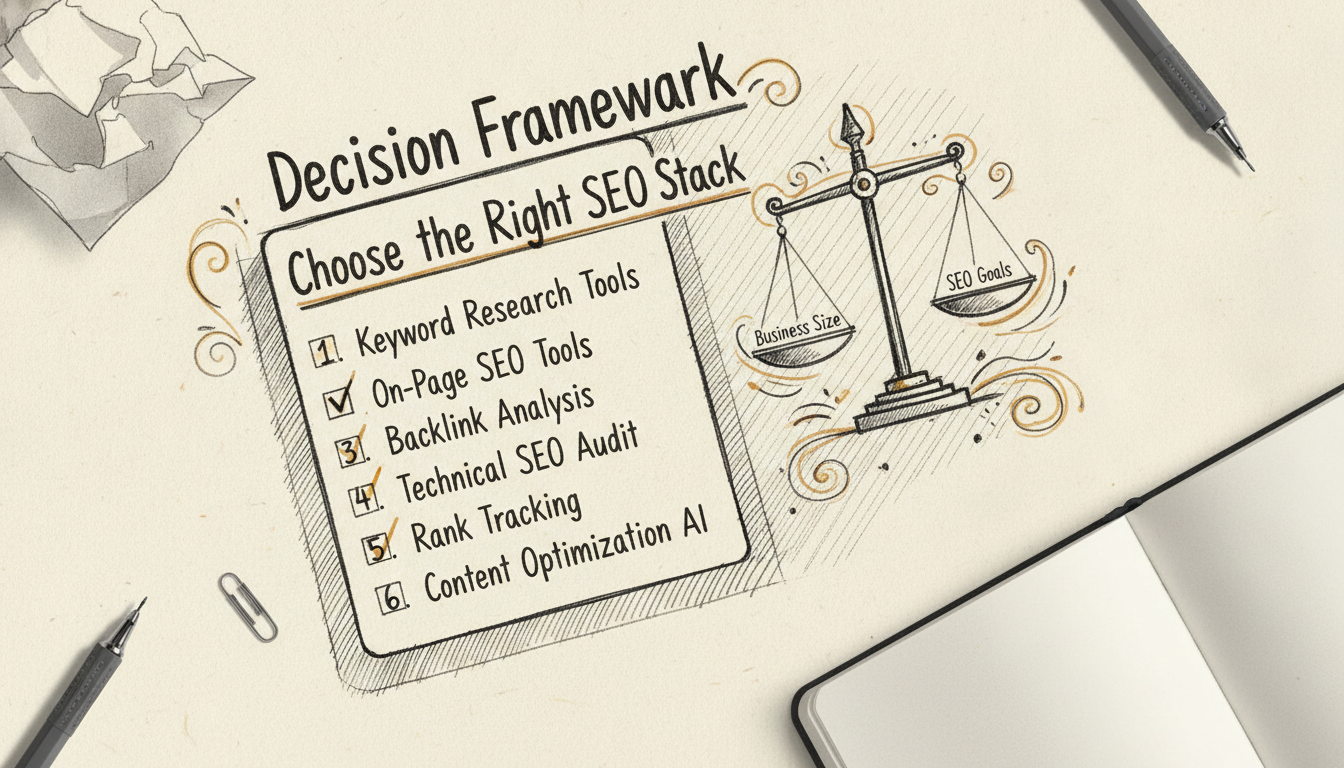
Selecting the right software depends on your "Time to Publish" (TTP). This metric measures how many hours pass between identifying a keyword and hitting the publish button. If your TTP is measured in days because of manual research and drafting, your stack is failing you.
Startups and content creators should prioritize execution over raw data. Platforms like Tydal (https://tydal.co) are built for this Agentic SEO model, handling the research, writing, and CMS publication automatically. This allows small teams to maintain a high output without hiring a dedicated content department.
Agencies and consultants require a different balance. You need reporting depth and white-labeling features to prove value to clients. Tools like SE Ranking or the Semrush One bundle provide the client-facing dashboards and multi-site tracking necessary for managing a portfolio.
Technical specialists should look for depth rather than automation. If your job involves site migrations or fixing crawl budget issues, a desktop-based crawler like Screaming Frog SEO Spider is mandatory. It provides the granular XPath data and JavaScript rendering that cloud-based suites often simplify.
Budgeting for your stack usually falls into three tiers:
- Micro-businesses: Stick to Ahrefs' $29/mo Starter plan or AnswerThePublic's $9/mo tier for ideation.
- Growth-stage startups: Invest in execution-heavy tools like Tydal ($99/mo) to scale traffic quickly.
- Enterprise teams: Use Clearscope ($189/mo+) to ensure editorial quality across hundreds of pages.
Top 11 SEO Tools: Features & Pricing Comparison
| Product | Best For | Starting Price | Free Trial/Plan | AI Search Tracking | Key Differentiator |
|---|---|---|---|---|---|
| Tydal | Autonomous SEO Execution | $99/month | 3-day free trial | Yes | Agentic SEO (full lifecycle automation) |
| Semrush | All-in-One Marketing & AI Visibility | $139.95/mo | Free entry tier | Yes | Massive historical database |
| Ahrefs | Technical Audits & Backlink Data | $29/mo | Free Webmaster Tools | Not listed | Industry-leading backlink index |
| Surfer SEO | On-Page Content Optimization | $49/mo | 7-day free trial | Yes | Semantic web authority scoring |
| Screaming Frog SEO Spider | Technical Site Crawling | ~$260/year | Free up to 500 URLs | Not listed | Desktop-based deep site analysis |
| Moz Pro | Beginners & Local SEO | $49/mo | 7-day free trial | Yes | Proprietary Domain Authority (DA) |
| Clearscope | Enterprise Content Grading | $189/mo | Not listed | Yes | Content-First Discoverability focus |
| AnswerThePublic | Search Intent Ideation | $9/mo | 3 free daily searches | Not listed | Visual search box data clouds |
| Mangools | Budget-Conscious Beginners | $29/mo | 10-day free trial | Yes | Highly intuitive interface |
| SE Ranking | Customizable Rank Tracking | $55/mo | 14-day free trial | Not listed | Pay-for-what-you-need model |
| Gumloop | Custom AI SEO Workflows | $37/mo | Free plan available | Not listed | No-code chat-based agent builder |
Choose the Tool That Solves Your Execution Bottleneck
SEO has shifted from a data problem to an execution problem. Most teams know which keywords they should target, but they lack the bandwidth to produce the volume of high-quality content required to rank in a competitive landscape. If your team spends more time looking at dashboards than publishing, you have a workflow bottleneck. Selecting the right software depends on whether you need more information or more output.
Large agencies often require the deep competitive intelligence of Semrush or the technical auditing power of Screaming Frog to manage complex client sites. For editorial teams at the enterprise level, Clearscope ensures every piece of content meets strict semantic standards. These tools provide the data and the strategy, but they still require a human team to handle the actual writing and publishing. They are built for teams that already have the staff to act on the insights provided.
Small businesses and startups usually need a different approach. If you are a solo founder or a small marketing team, your biggest hurdle is the manual labor of keyword research, drafting, and CMS management. Tydal fits this gap by automating the full content lifecycle. It identifies high-intent topics and handles the publication process directly to your CMS, which helps you build organic traffic without hiring a full content department or a fleet of freelancers.
For those who want to build custom automations without writing code, Gumloop offers a flexible way to connect different AI agents for specific tasks. Beginners on a tight budget might find Mangools to be the most accessible entry point due to its simple interface and low starting price. Each of these tools serves a specific stage of business growth, from initial discovery to enterprise-level maintenance.
The best way to evaluate these platforms is to test them against a specific goal, such as ranking a single cluster of articles or fixing a specific set of technical errors. Start with a tool that aligns with your current team size and technical comfort level. If your goal is to scale organic traffic and improve visibility on platforms like ChatGPT with minimal manual intervention, Tydal is a strong starting point to bridge that execution gap.
Frequently Asked Questions
What are the best SEO tools for beginners?
Mangools and Moz Pro are widely considered the best SEO tools for beginners due to their intuitive interfaces and educational resources. Mangools offers a suite of five tools at an affordable price point, while Moz Pro provides industry-standard metrics like Domain Authority. Both platforms simplify complex data into actionable insights for those new to search engine optimization.
How much do professional SEO tools cost?
Professional SEO tools typically cost between $99 and $250 per month for standard plans. Entry-level options like Ahrefs Starter begin at $29 per month, while comprehensive suites like Semrush One can reach $199 per month or more. Pricing often depends on the number of keywords tracked and the depth of technical auditing features required.
Are there any free SEO tools available?
Google Search Console and Google Analytics are the most important free SEO tools for any website owner. Other options include the free version of Screaming Frog, which allows for crawling up to 500 URLs, and AnswerThePublic, which offers three free daily searches. These tools provide essential data on site performance and search intent without requiring a paid subscription.
Can SEO tools automate content creation and publication?
Tydal is an autonomous SEO platform that automates the entire content lifecycle from keyword research to publication. It is designed for startups and small businesses that want to grow organic traffic without hiring a dedicated content team. The tool identifies high-intent topics and publishes optimized articles directly to a CMS like WordPress.
Do SEO tools track visibility in AI search engines like ChatGPT?
Modern SEO tools like Semrush and Surfer SEO have introduced features to track brand visibility in AI search engines and LLMs. These tools monitor how often a brand is cited in responses from platforms like ChatGPT or Perplexity. This tracking helps businesses understand their reach beyond traditional Google search results.
What is the best tool for technical SEO audits?
Screaming Frog SEO Spider is the industry standard for deep technical SEO audits and site architecture analysis. It is a desktop-based crawler that identifies broken links, analyzes page titles, and extracts data via XPath. While it has a steeper learning curve than SaaS tools, it provides unmatched precision for large-scale site migrations and technical troubleshooting.