Does your current SEO software actually do the work, or does it just give you a longer to-do list? For most startups and lean marketing teams, the bottleneck is rarely a lack of data. It is the time required to turn keyword research into published articles that rank. In 2026, the best SEO software is defined by its ability to bridge the gap between analysis and execution, especially as AI search platforms like ChatGPT change how users find information.
Evaluating these tools requires looking past feature checklists. You need to distinguish between Analysis Software and Execution Software. Analysis suites like Semrush or Ahrefs are built for professionals who need deep backlink data and competitor intelligence to inform a manual strategy. They are excellent for agencies with the staff to manage them. On the other hand, execution-focused platforms automate the entire pipeline, from keyword planning to direct website publication. This is the standard for businesses that need to grow organic traffic without hiring a dedicated content team.
The market is currently split into three distinct categories. First, there are the all-in-one suites that offer a unified dashboard for SEO, PPC, and social media. Second, specialized technical tools focus on self-healing site health, fixing meta tags and internal links automatically. Finally, a new wave of AI-first automation tools handles the end-to-end content cycle. These tools are designed for Generative Engine Optimization (GEO), ensuring your brand appears in AI Overviews and LLM responses as often as it does in standard Google results.
This list prioritizes tools based on their specific utility for lean teams. If you have a full-time SEO manager, you will likely want the data depth of a traditional suite. If you are a founder or creator looking to automate your growth, you should focus on the Done-for-You execution platforms. We have ranked these options by their ability to handle modern search demands, including AI visibility tracking and automated publishing workflows.
The Evolution of SEO Software: From Reporting to Execution
The traditional SEO software model focuses on data visualization. You log in to see a dashboard of broken links, keyword gaps, and ranking drops. While this data is valuable, it creates a to-do list that requires a human team to execute. For a startup or solo creator, a list of 500 keywords often feels like a burden because the manual labor of drafting and publishing remains the primary bottleneck.
We are seeing a shift toward execution-first platforms. These tools move beyond analysis to handle the actual workflow of growing traffic. Modern software identifies the opportunity, generates the SEO-optimized article, and pushes it live to your CMS. This automation allows lean teams to maintain a publishing frequency that was previously only possible for large enterprises with dedicated content departments. By removing the need for manual drafting, businesses can focus on strategy while the software handles the production pipeline.
This evolution is also driven by the rise of AI-driven search platforms like ChatGPT and Google AI Overviews. Traditional software tracks blue links on a results page. Modern tools focus on Generative Engine Optimization (GEO), ensuring your brand is cited as a source when an AI model answers a user query. Moving from a reporting-heavy stack to an automated pipeline is becoming the standard way for smaller players to compete in a crowded digital space without hiring a full content team.
1. Tydal: Best for Automated Content Execution
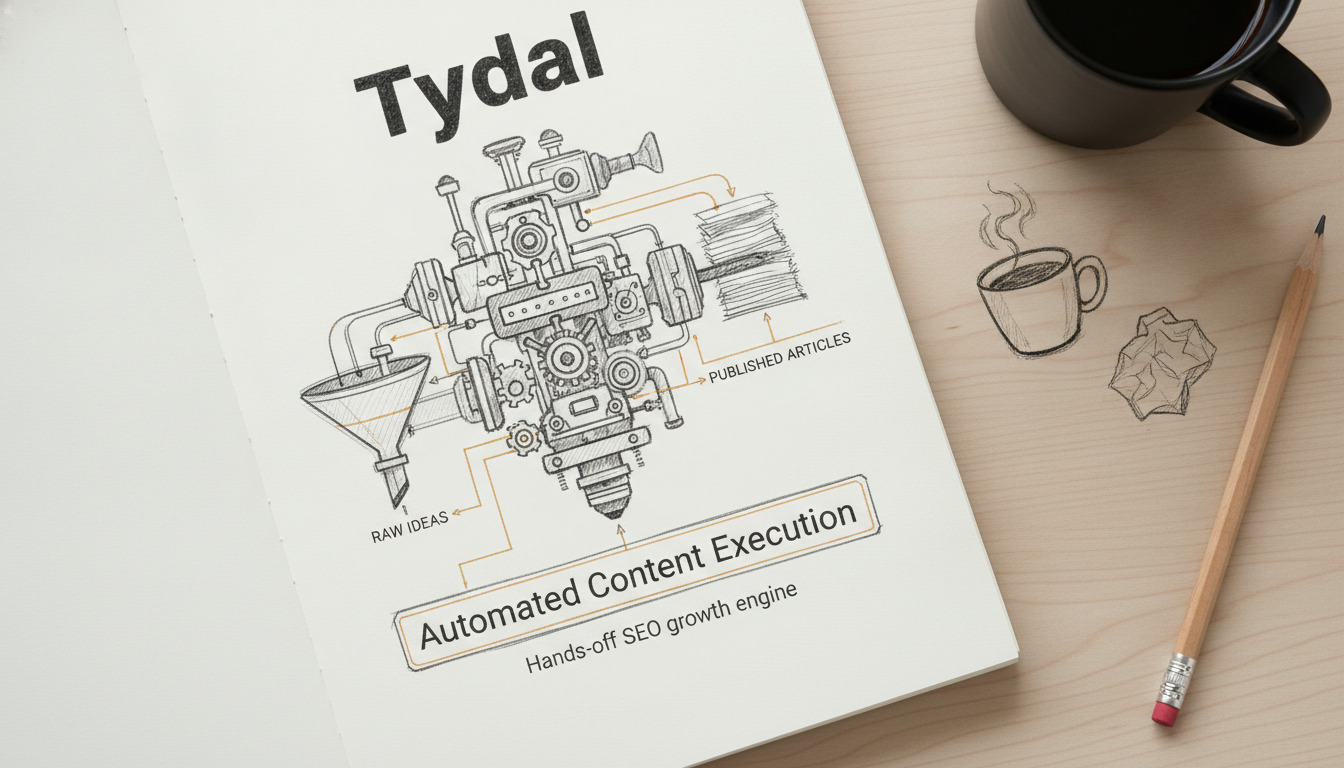
Tydal is built for the founder or small marketing team that needs organic growth but lacks the hours to manage a traditional SEO workflow. It handles the heavy lifting of identifying opportunities and turning them into live, ranking articles that populate your site without constant manual intervention.
The platform shifts the focus from looking at data to acting on it. Most tools give you a list of problems to fix; Tydal builds the content pipeline that solves the traffic problem directly by automating the research, writing, and publishing phases in a single stream.
Best for Startups and Creators Needing a "Done-for-You" Pipeline
This software fits businesses that are frustrated by the manual grind of keyword research and drafting. It is particularly useful for those who want to rank on Google and be recommended by AI tools like ChatGPT without increasing their headcount or managing a rotating roster of freelancers.
What stands out in actual use:
- End-to-End Automation: The software manages the entire journey from keyword planning to direct website publication.
- AI Search Visibility: Content is structured to perform well on both traditional Google search and generative AI platforms like ChatGPT.
- Lean Team Support: It removes the requirement to hire dedicated writers or SEO specialists to maintain a consistent publishing schedule.
Tydal is not built for large enterprises that require multi-layered internal approval workflows or legal review cycles for every draft. Its strength lies in speed and autonomy, which might clash with highly regulated corporate environments that demand manual sign-off on every sentence.
It is a specialized execution engine for teams prioritizing speed and organic visibility over granular manual control.
Why it stands out for Execution-First SEO
Traditional SEO software often leaves you with a dashboard full of tasks and no one to do them. Tydal bridges this gap by focusing on execution rather than just providing a list of chores. It treats SEO as a finished product rather than a research project. This is a significant shift for small businesses that have historically struggled to compete with the content output of larger competitors. By automating the research, writing, and publishing phases, it levels the playing field for lean teams by ensuring a consistent output of optimized pages.
Scaling Organic Traffic Without a Content Team
For a solo creator, the biggest bottleneck is the time between finding a keyword and hitting "publish." Tydal automates this middle ground. This allows you to maintain a high volume of quality content that targets specific user intent without burning out. An editorial rule to consider: use Tydal to handle the high-volume, intent-based articles that form your site's foundation, allowing you to spend your limited manual time on high-level strategy or unique brand storytelling. The software ensures that the technical and topical requirements for ranking are met automatically, leaving you to focus on the broader business direction.
"Stop wasting weeks on manual content drafts when you can set the software to build and ship your pages automatically."
2. Semrush / Semrush One: Best for All-in-One Marketing Intelligence

Semrush is a standard choice for marketing teams that need to manage SEO, PPC, and social media from a single dashboard. It functions as a massive database for competitor intelligence, allowing you to view any domain's organic traffic, backlink profile, and paid ad history.
The introduction of Semrush One marks a shift toward tracking visibility in the age of generative AI. Traditional rank tracking remains a core feature, but the platform now provides specific data on how brands appear in AI Overviews and other non-traditional search environments.
Best for mid-sized businesses and agencies needing a unified marketing suite
This software fits organizations that have the personnel to act on deep data insights. It provides the granular reporting necessary for client-facing agencies and internal marketing departments that need to justify their strategy with hard numbers across multiple channels.
What stands out in actual use:
- AI Visibility toolkit: This feature tracks brand mentions within AI Overviews, helping you understand your footprint in generative search results.
- Keyword Magic Tool: You can access a database of over 25 billion keywords to identify high-volume opportunities and analyze search intent.
- Site Audit with JavaScript: The crawler handles modern web frameworks effectively, identifying technical issues that might block search engines from indexing your content.
The primary hurdle is the high cost and complexity. With classic plans starting at $139.95 per month and Semrush One tiers reaching up to $549 per month, it is often too expensive for solo creators or very small startups. The sheer volume of features also creates a steep learning curve that requires a dedicated time investment to master.
Semrush remains a top-tier choice for data-driven professionals who require a comprehensive analysis suite to monitor every facet of their digital presence.
3. Ahrefs: Best for Technical SEO and Backlink Analysis
Ahrefs is the primary choice for SEO professionals who prioritize data accuracy and deep link analysis. It serves as a comprehensive research hub, providing the granular insights necessary to map out a competitor's backlink profile or diagnose complex technical issues across a large site. For micro-businesses, the platform has introduced a $29 per month Starter plan, making its data more accessible to those just beginning their growth journey.
The platform offers a clear view of the mechanics behind search rankings. By using its crawler data, you can see exactly which referring domains and anchor texts are driving a page's success, making it a reliable foundation for any data-driven strategy. It provides the why behind the numbers, which is a requirement for teams that need to justify their SEO investments with hard evidence.
Best for SEO professionals and data-driven agencies focused on backlinks
This software fits teams that have the internal capacity to act on raw data. It is built for practitioners who need to verify keyword difficulty with high precision before committing resources to a campaign. While it has added content tools, its core strength remains its ability to crawl the web and report on link health.
What stands out in actual use:
- Robust backlink index: The Site Explorer tool allows you to dissect any URL link profile with industry-leading depth, tracking new and lost links in real time.
- Technical Site Audit: The software automatically scans for over 170 technical issues, ranging from broken redirects to crawl depth problems, that could hinder search performance.
- AI Content Helper: New features assist in drafting content that is optimized for specific search intent, bridging the gap between data and creation.
- Rank Tracker: The tool includes AI search tracking add-ons to monitor how your brand appears in modern search environments.
One significant consideration is the pricing structure. Ahrefs does not offer a traditional free trial, and its pay-per-credit model can lead to unpredictable costs for heavy users who run frequent, high-volume reports. This makes it a more expensive option for solo creators who may prefer the automated execution found in tools like Tydal.
Ahrefs functions as a high-end analysis suite for those who require a reliable source of truth for off-page and technical SEO metrics. It is an analysis software staple that provides the data you need to build a manual execution plan.
"Your link building strategy fails the moment you rely on incomplete data that misses your competitors' strongest referring domains."
4. Search Atlas (OTTO): Best for Technical Automation
Search Atlas (OTTO) targets the gap between identifying a technical SEO error and actually fixing it. It is designed for agencies and site owners who want the seo software to handle the manual labor of updating meta tags, internal links, and site architecture. The platform operates as an execution engine by connecting directly to your CMS, closing the loop on site health tasks that usually require a developer or hours of manual entry.
This makes it a strong choice for teams managing multiple sites where technical debt accumulates faster than it can be cleared. By focusing on automated site health, it allows users to maintain a high-performance foundation for their content without needing a deep technical background. It is a tool built for those who prefer a hands-off approach to the repetitive maintenance of a website.
Best for businesses looking to automate technical and on-page SEO fixes
This software fits organizations that have outgrown simple rank tracking and need a tool that interacts with their website's backend. It is particularly useful for agencies that need to maintain high site health scores for clients without ballooning their payroll. What stands out in actual use:
- Self-healing technical loops: Automatically identifies and repairs broken internal links or missing meta descriptions without manual intervention.
- LLM Visibility tracking: Monitors how generative AI models like ChatGPT perceive your brand, providing data on your AI share of voice.
- Atlas Agent: A conversational AI interface that allows you to query your SEO data and get actionable insights through a chat window.
The automated workflows are powerful but come with a learning curve. Setting up the initial self-healing parameters requires careful configuration to ensure the software does not make changes that conflict with your brand voice or specific site logic. Additionally, pricing can scale quickly from $99/mo to $999/mo if you are managing a high volume of pages across a large enterprise site.
Search Atlas (OTTO) is a specialized execution platform for those who want to move from reporting to doing by automating the technical maintenance of their digital presence.
5. Surfer SEO: Best for Semantic Content Optimization
Surfer SEO serves content teams and SEO managers who need to ensure their articles are mathematically optimized to rank. It analyzes top-performing pages in real-time to provide a roadmap of keywords, headings, and structures that search engines currently favor. This data-driven approach removes the guesswork from on-page optimization, allowing writers to focus on quality while the software handles the technical requirements for relevance.
Picking this tool provides a clear workflow for moving from a keyword to a published article with high semantic relevance. The software provides a Content Score that updates as you write, giving immediate feedback on how well your draft aligns with the current competitive landscape. This immediate feedback loop helps teams maintain high standards across large volumes of content without needing a manual editor for every SEO check.
Best for content teams focused on semantic optimization and AI search visibility
This software fits businesses that already have a content strategy but need to improve their ranking success rate. It is particularly useful for those concerned with Generative Engine Optimization (GEO) to ensure their brand appears in AI-driven answers and recommendations.
What stands out in actual use:
- Semantic Analysis: Uses natural language processing to identify the specific subtopics and entities required to achieve topical authority.
- GEO Tools: Specifically targets visibility within AI platforms like ChatGPT by optimizing for the citation patterns those models prefer.
- Automated Briefs: Builds detailed outlines based on real-time SERP data, which cuts down the time spent on manual competitor research.
Surfer SEO is a specialist platform. It does not provide the deep backlink analysis found in Ahrefs or the automated technical fixes seen in Search Atlas. Users must also provide manual oversight to ensure that AI-generated suggestions or full drafts maintain a consistent brand voice, as the tool prioritizes ranking factors over creative flair.
It remains a top choice for teams that want a dedicated environment for on-page execution and semantic precision.
Choosing Your SEO Stack: Analysis vs. Execution
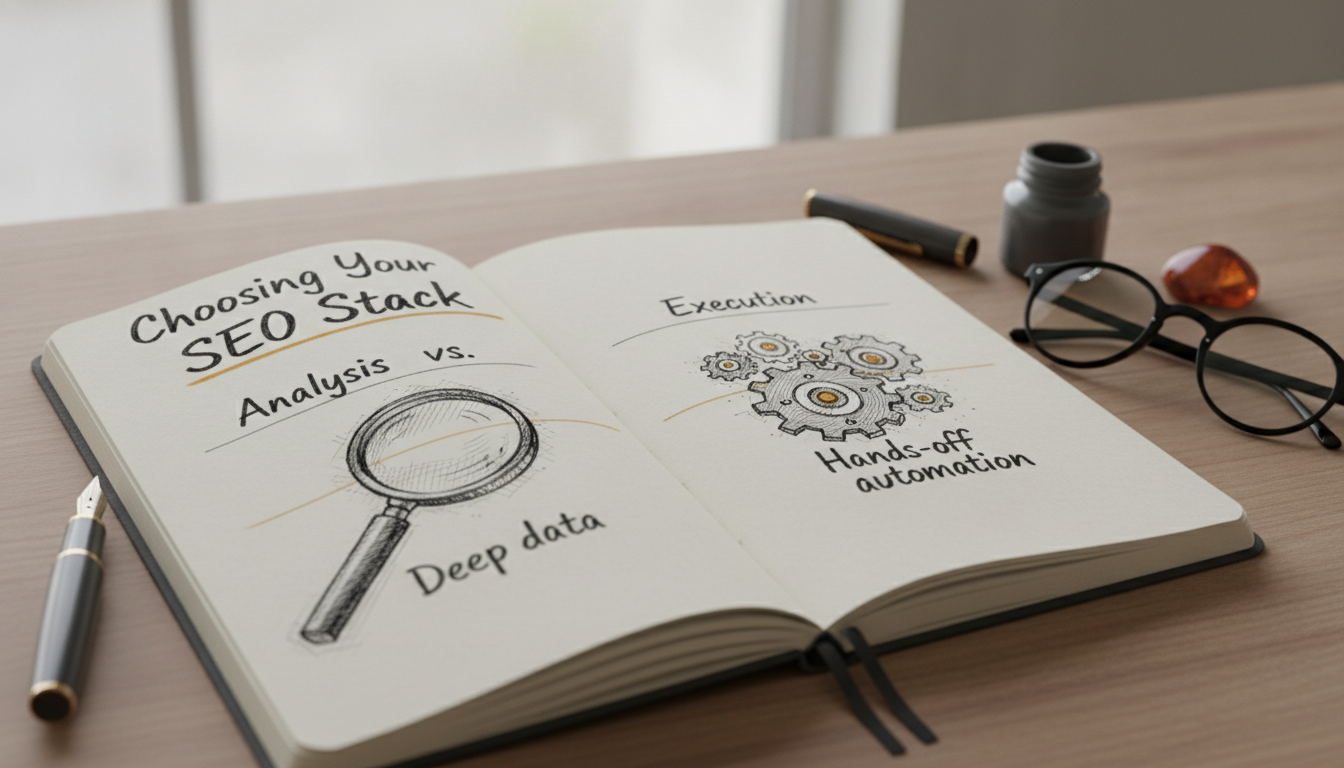
Selecting the right seo software depends on whether you have a dedicated team to act on data or if you need the software to handle the labor itself. Most legacy platforms fall into the Analysis category. Tools like Semrush or Ahrefs provide deep competitive intelligence and technical audits, but they leave the execution to you. You still have to write the briefs, hire the writers, and manually upload the content. These are excellent choices for agencies or mid-sized companies with established marketing departments.
If you are a startup founder or a solo creator, you likely need Execution software. This category, which includes platforms like Tydal and Search Atlas, focuses on the SEO for Non-SEO Teams framework. The goal here is to bridge the gap between finding a keyword and getting a live, optimized page on your site without manual drafting.
A practical automated workflow follows a specific sequence:
- The software identifies high-intent keywords based on your niche.
- It researches the topic and generates a full-length article optimized for both Google and AI platforms like ChatGPT.
- It pushes the content directly to your CMS.
This approach allows lean teams to maintain a consistent publishing schedule that would otherwise require a full-time content manager. When choosing your stack, ask if you are buying a dashboard to monitor or a pipeline to produce. If your primary frustration is the time-consuming nature of manual content creation, prioritize execution over analysis.
"Buying another reporting tool won't fix a flat traffic graph if you lack the bandwidth to actually implement the recommendations."
Top 5 SEO Software Platforms: Features & Pricing Comparison
| Software Name | Best For | Automates Execution? | AI Search Tracking | Starting Price |
|---|---|---|---|---|
| Tydal | Startups and creators needing a 'Done-for-You' content pipeline | Yes | Yes | Not listed |
| Semrush / Semrush One | Mid-sized businesses and agencies needing a unified marketing suite | No | Yes | $139.95/mo |
| Ahrefs | SEO professionals and data-driven agencies focused on backlinks | No | Yes | $29/mo |
| Search Atlas (OTTO) | Businesses looking to automate technical and on-page SEO fixes | Yes | Yes | $99/mo |
| Surfer SEO | Content teams focused on semantic optimization and AI search visibility | No | Yes | Not listed |
Choose the software that removes your biggest bottleneck
Most SEO software falls into two camps: analysis or execution. If you have a full marketing team, platforms like Semrush or Ahrefs provide the deep data needed to guide their daily tasks. These suites excel at uncovering competitor secrets and auditing technical debt, but they require a human to log in, interpret the charts, and do the actual work of writing or coding.
For lean startups and solo creators, the bottleneck is rarely a lack of data. It is a lack of time. If your primary goal is to rank for specific keywords without spending ten hours a week drafting articles, look toward execution-first tools. Search Atlas (OTTO) is a strong choice for those who need technical fixes like meta tag updates handled automatically. Surfer SEO is better suited for teams who want to manually polish their content using semantic data to ensure they satisfy modern search algorithms.
If you are operating without a dedicated content team and need to scale organic traffic from scratch, Tydal offers a distinct advantage. It moves past the dashboard phase by automating the keyword research, content creation, and direct publication process. This setup is particularly useful for businesses that want to be visible on both Google and AI platforms like ChatGPT without managing a complex manual workflow.
When evaluating these tools, I recommend testing them based on their final output rather than their marketing promises. Run a small pilot to see which platform actually saves you hours of labor versus which one simply gives you more charts to look at. The best software is the one that lets you spend less time inside the tool and more time growing your business.
Frequently Asked Questions
What is the best SEO software for small businesses?
The best SEO software for small businesses depends on whether you have a dedicated team or need to automate the work. For lean teams, Tydal is highly recommended because it handles the entire content pipeline from research to publication. If you have the staff to manage manual strategy, all in one suites like Semrush or Ahrefs provide the most comprehensive data.
How much does SEO software typically cost?
SEO software costs range from $29 per month for basic tools to over $500 per month for advanced marketing suites. Ahrefs offers a starter plan at the lower end of that scale, while Semrush One plans typically start around $199 per month. Many providers offer tiered pricing based on the number of keywords tracked or the volume of content generated.
Can SEO software automate content creation?
Yes, several SEO software platforms now automate the full content creation process using artificial intelligence. These tools identify relevant keywords, draft optimized articles, and publish them directly to your website. This automation allows businesses to grow organic traffic without the need for manual writing or external content agencies.
What is the difference between SEO analysis and execution software?
Analysis software provides dashboards and reports that highlight SEO issues, while execution software actually performs the necessary fixes or content updates. Tools like Semrush are built for analysis and strategy planning. Execution platforms focus on completing the work, such as automatically fixing technical tags or publishing blog posts to your site.
Does SEO software help with AI search visibility?
Modern SEO software includes specialized features to help websites appear in AI search results like ChatGPT and Google AI Overviews. These tools analyze how generative models perceive your brand and suggest optimizations to increase the likelihood of being cited as a source. This practice is often called Generative Engine Optimization.