Can your content strategy survive a world where Google and ChatGPT are the primary readers? By 2026, the standard for ai content generation has moved past simple text drafting. The real value now lies in whether a tool can autonomously handle the entire lifecycle from keyword research to publication without you ever touching a dashboard.
Evaluating these tools requires looking at automation depth rather than just output quality. Most legacy AI writers still require a human to copy-paste text into a CMS, optimize for search intent, and find relevant keywords. In a zero-hire workflow, you need agentic systems that bridge the gap between a raw prompt and a live, ranking URL. This means looking for native CMS integrations and the ability to optimize for AI-to-AI visibility, ensuring your site is the one cited by platforms like Perplexity or ChatGPT Search.
The market is currently split into three distinct categories. First, there are autonomous SEO engines designed for startups that want organic traffic without a content team. Second, you have enterprise governance platforms that focus on maintaining a strict brand voice across thousands of employees. Finally, specialized verification tools have emerged to solve the hallucination problem for technical B2B SaaS companies, where a single factual error can destroy a brand's reputation.
This guide ranks the top performers based on their ability to reduce manual overhead. If you are a founder looking to scale traffic while staying lean, focus on the tools that offer end-to-end automation. If you are part of a larger marketing department, prioritize tools with robust style guide enforcement and collaborative features. We have tested these against the 2026 AI Mode updates to ensure they do not just generate text, but actually drive visibility.
The Shift to Agentic AI Content Generation in 2026
AI content generation has evolved from a simple drafting tool into a system of autonomous agents. By 2026, 77% of US small businesses have integrated AI into their regular operations to keep pace with changing search behaviors. This transition marks a departure from using AI as a basic writing assistant toward deploying it as an agent that manages the entire content lifecycle.
Google's AI Mode is a primary driver of this change. Searchers no longer browse a simple list of links; they interact with synthesized answers. To remain visible, content must be optimized for both human readers and the AI models that power these search experiences. The generative AI market is on track to hit $80.12B by 2030, reflecting a massive pivot toward these automated systems.
In this environment, agentic SEO becomes the standard for startups and creators. An agentic workflow does not stop at drafting a blog post. It identifies high-intent keywords, generates the copy, optimizes for visibility on platforms like ChatGPT and Perplexity, and publishes the result directly to a CMS without manual intervention. This level of automation allows small teams to compete with larger enterprises by maintaining a high-volume, high-quality organic presence without the overhead of a traditional content department.
The Zero-Hire Framework: Automating the Full Content Lifecycle
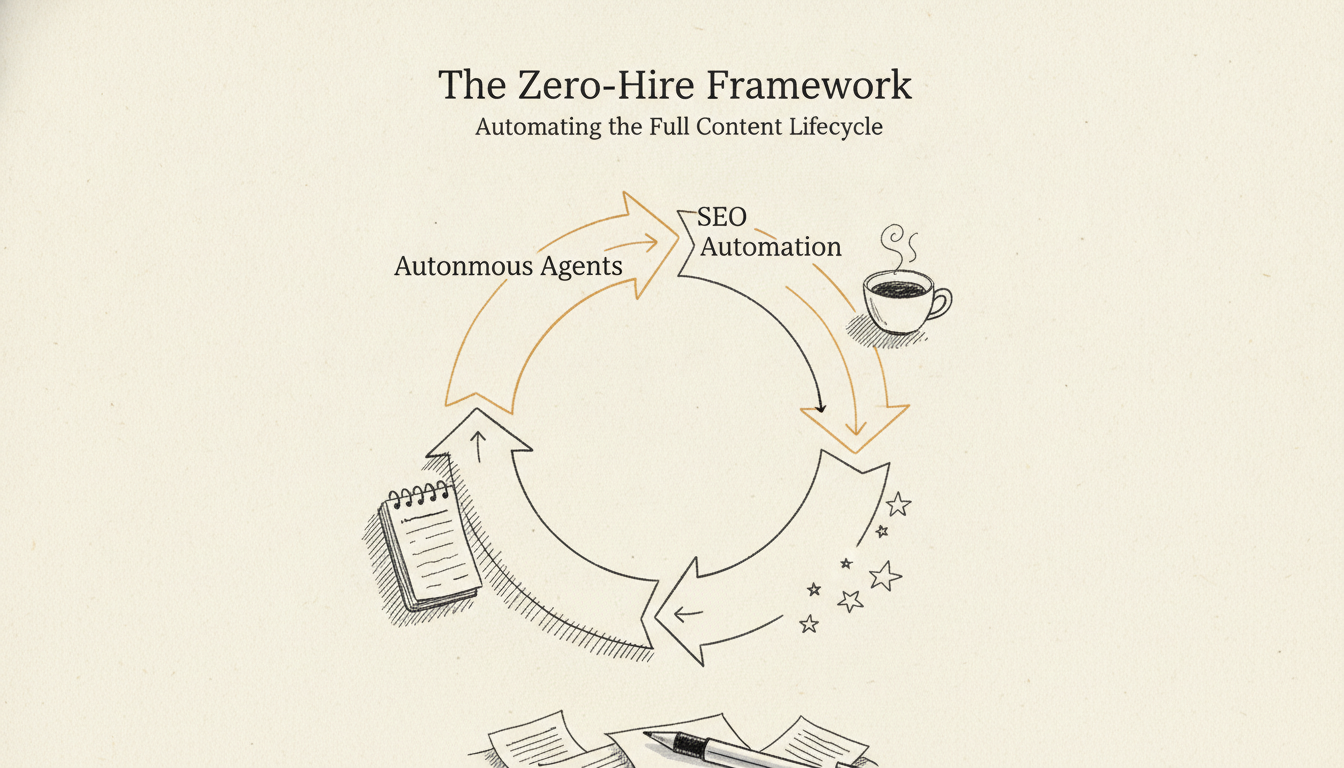
Scaling organic traffic in 2026 requires moving away from manual dashboard management. A zero-hire workflow uses agentic SEO to handle the entire content lifecycle without a dedicated team. This framework follows five distinct stages: keyword planning, content creation, optimization, publication, and monitoring. By treating these steps as a single automated loop, startups can maintain a high-volume presence that would otherwise require multiple full-time employees.
The biggest bottleneck for small businesses is often the last mile of SEO. Many tools generate drafts that sit in a folder, requiring a human to copy, paste, and format them into a CMS. True automation involves direct publication, where the AI pushes optimized articles directly to your website. This ensures your content stays fresh and consistent without manual oversight, allowing you to focus on product development rather than formatting blog posts.
Visibility now extends beyond traditional search engines. AI-to-AI Optimization (AIO) is a necessary layer for 2026 strategy. Your content must be structured so that LLMs like ChatGPT and Perplexity can easily parse and recommend your business to users. This involves using clear data structures and addressing specific user intents that AI models prioritize when synthesizing answers. Automating this entire loop allows small teams to compete with larger enterprises that still rely on traditional, slower content departments.
1. Tydal
Tydal is built for founders and small marketing teams who need to scale organic traffic without adding headcount. It manages the entire lifecycle of SEO, moving from the initial spark of a keyword idea to a live, published article on your site. This platform is specifically designed to handle the repetitive tasks that usually require a dedicated specialist, allowing business owners to focus on strategy rather than drafting.
The system operates on an agentic model, meaning it does not stop at generating a document. It handles the research, writing, and the technical last mile of publication. This makes it a strong fit for those who find manual dashboard management and content uploading to be major bottlenecks in their organic growth strategy.
Best for Autonomous SEO and AI-to-AI Visibility
This tool is ideal for startups and creators who want to rank on Google while also appearing in the results of AI search tools like ChatGPT and Perplexity. It focuses on the specific data points and structures these platforms look for when recommending a brand to users.
What stands out in actual use:
- End-to-end automation: Tydal covers keyword planning, content creation, and direct web publication in a single flow.
- AI-to-AI optimization: The system structures content to be easily parsed and cited by generative search engines.
- Zero-hire focus: It is built to replace the need for a dedicated content team or external agency for standard SEO tasks.
Tydal is not intended for large enterprise departments that require manual, multi-stage editorial sign-offs or those focusing heavily on one-off social media copy. It prioritizes long-term organic growth and search visibility over short-form social engagement or manual campaign oversight. For businesses with established, manual content departments, the autonomous nature of the tool might clash with existing rigid workflows.
It is a specialized choice for businesses that value hands-off execution and want to future-proof their visibility for the next generation of search.
Solving the Last Mile of SEO Automation
Most AI tools leave you with a wall of text that still requires manual formatting, image sourcing, and CMS uploading. Tydal addresses this by handling the publication step directly. For a small business owner, this removes the friction that often leads to a backlog of unpublished drafts. I would use this to build a consistent publishing cadence that would otherwise require a part-time hire or several hours of manual labor each week.
Preparing for the AI-Search Era
Search is shifting toward platforms like Perplexity and ChatGPT. Tydal includes specific optimizations to ensure your content is not only readable by humans but also structured for these AI models to cite. This AI-to-AI visibility is becoming a standard requirement for brands that want to stay relevant as traditional search engine result pages evolve into interactive AI interfaces.
2. Jasper
Jasper targets marketing teams that must maintain a strict brand identity while producing high volumes of content. It functions as a centralized hub for organizations with established messaging that need to scale without sacrificing quality. The platform operates as a collaborative workspace where style guides and product data create a persistent memory for all outputs. This makes it a reliable choice for B2B SaaS companies requiring professional, consistent messaging across emails, landing pages, and social media.
By feeding the system your specific style guides, you create a persistent memory that informs every output. This approach helps teams that have already established their messaging but need to scale it without losing quality. It serves as a centralized hub for teams that require professional, consistent messaging across various digital channels.
Best for Enterprise Brand Voice and Multi-Channel Campaigns
This tool fits organizations with multiple stakeholders and a requirement for rigorous brand governance. It serves teams that spend excessive time editing AI drafts to match a specific tone.
What stands out in actual use:
- Brand Voice Memory: Jasper uses sophisticated training to enforce style guides across every piece of copy. This reduces briefing bottlenecks by ensuring the AI understands the nuances of your brand from the start.
- Campaign Management Tools: The platform allows teams to coordinate multi-channel campaigns from a single interface. You can generate a cohesive set of assets for a product launch, including social posts and landing pages, that all share the same narrative thread.
- Workflow Integrations: It connects with tools like Google Docs, Webflow, and Surfer SEO. The browser extension allows you to bring your brand voice into any CMS or email client you already use.
The trade-off is the cost. With the Pro plan starting at $59 per month, Jasper is a more expensive option than basic LLM wrappers. It is an investment in brand security and workflow efficiency rather than a low-cost text generator.
If your priority is maintaining a professional image across a large team, Jasper provides the governance and security features necessary for enterprise-level content production. You can test the platform using their 7-day free trial to see if the brand voice training meets your requirements.
3. Copy.ai
Copy.ai is built for sales and marketing teams that need to move beyond simple drafting and into repeatable go-to-market (GTM) processes. It functions as a central hub for generating high-volume outbound sequences, social media updates, and internal communications that remain consistent with a specific brand identity. It is particularly useful for businesses that require high-velocity output across multiple platforms simultaneously.
The platform distinguishes itself by moving away from the standard chat-box interface found in most ai content generation tools. It uses a structured workflow engine that allows users to connect multiple steps of a marketing campaign, ensuring that data from a CRM or a product brief flows directly into the final copy. This approach reduces the manual friction of moving information between different software tools.
Best for GTM and Sales Workflow Automation
This tool is ideal for growth teams that handle complex sales cycles or multi-channel marketing campaigns. It bridges the gap between raw AI output and the specific data structures required by modern sales stacks, making it a functional asset for teams that prioritize operational efficiency.
What stands out in actual use:
- Workflow Builder: You can create automated sequences that trigger content creation based on external data inputs.
- GTM Alignment: It integrates directly with Salesforce, HubSpot, and Slack to keep sales and marketing teams synchronized.
- Global Reach: Support for over 95 languages makes it a strong choice for international teams scaling across different regions.
While the automation capabilities are extensive, the initial setup for advanced workflows can be complex. Users who just want a quick blog post might find the interface more demanding than a simple editor, and it lacks the deep SEO-specific publication features found in specialized tools like Tydal. The learning curve is steeper for those who are not already familiar with logic-based workflow design.
Copy.ai is a powerful choice for organizations that view AI as a component of their broader sales and marketing operations. It is best suited for teams that value process automation and cross-platform integration over pure long-form article generation.
4. Oleno: Best for Technical B2B Fact-Checking
Oleno serves B2B SaaS marketing and product teams who cannot afford factual errors in their technical documentation or marketing collateral. While general AI content generation tools often hallucinate technical specs, this platform focuses on verifying every claim against your internal product data. It is built for the specific purpose of maintaining a high standard of truth in automated workflows.
The workflow clarity here is excellent for high-stakes industries. You use it to audit content for accuracy, ensuring that your automated output remains grounded in reality. It acts as a safety net for teams scaling their technical libraries without increasing their legal or reputational risk, providing a layer of oversight that manual editing often misses.
Best for Technical B2B Fact-Checking and Claim Verification
This tool fits perfectly for companies in complex sectors like fintech, healthtech, or deep-infrastructure SaaS. When your content impacts user trust or regulatory compliance, Oleno provides the verification layer that standard LLMs lack. It is designed for environments where a single incorrect decimal point or feature claim can lead to significant customer churn or legal issues.
What stands out in actual use:
- Automated Verification: It cross-references generated text against your uploaded internal documentation to flag discrepancies in real-time.
- Product-Claim Checking: The system identifies specific technical claims and confirms they match the latest product version specs found in your knowledge base.
- Hallucination Prevention: It filters out the "creative" fabrications often found in long-form technical drafts by demanding a source for every assertion.
The entry price of $299 per month is steep for small startups or solo creators. It is a specialized verification tool rather than a general-purpose writer, so you will still need a separate solution for initial drafting or creative brainstorming. There is no free tier, which makes it a significant investment for teams that do not produce high volumes of technical copy.
Oleno is a high-end insurance policy for technical accuracy. It is the right choice for B2B teams where the cost of a factual mistake far outweighs the subscription fee.
5. HeyGen: Best for Scaling Multimodal Video Content
HeyGen is built for teams that recognize text-only strategies are no longer sufficient in a 2026 content landscape. It serves as a specialized engine for generating high-fidelity video assets, allowing creators to produce branded visual content at a scale that was previously impossible without a full production crew.
The platform excels at turning scripts into polished, multi-language videos featuring realistic AI avatars. It is particularly effective for businesses that need to maintain a constant presence on visual-first platforms like TikTok or LinkedIn while keeping production costs low.
Best for Scaling Multimodal Video Content
This tool is a fit for ecommerce brands and global marketing teams that require localized video assets for different regions.
What stands out in actual use:
- Global reach: The multi-language support allows you to translate a single video into dozens of languages while keeping the voice and lip-syncing consistent.
- Visual fidelity: The output quality is high enough for professional social media campaigns and internal training materials.
- Asset scaling: You can quickly generate a library of video assets for product launches or personalized sales outreach.
Using HeyGen effectively requires a separate distribution strategy because the tool focuses on generation rather than social media management. Additionally, while the AI handles the visuals, the initial text-to-video scripts usually need manual refinement to ensure the pacing and tone match the brand's specific personality.
HeyGen serves as a powerful multimodal addition to any content stack, specializing in high-quality video production for brands that need to move faster than traditional filming allows.
"Text based blogs are invisible to users who prefer video, making automated production a requirement for staying in the feed."
Selection Criteria: How to Choose Your AI Content Stack
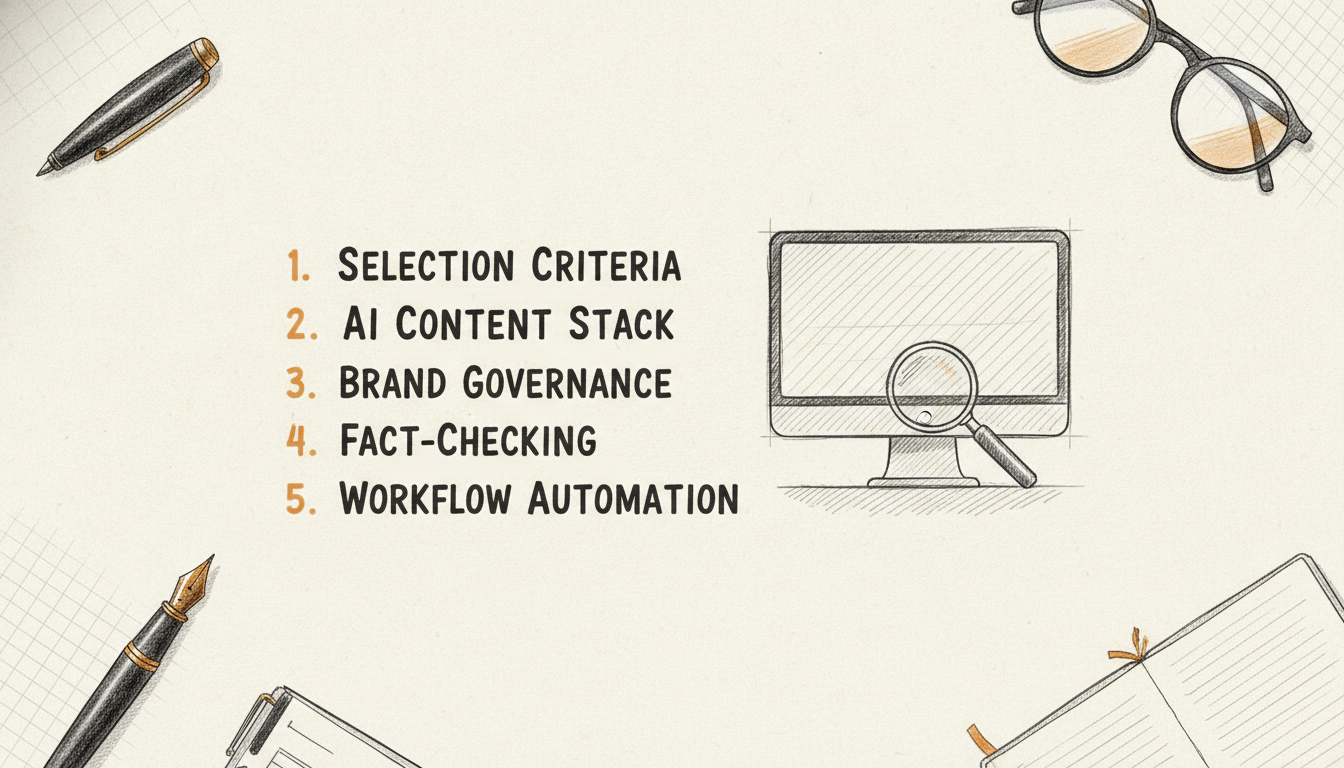
Choosing a tool for ai content generation requires looking beyond the quality of the prose. In 2026, the bottleneck is rarely the writing itself but the workflow surrounding it. You should evaluate your stack based on three specific pillars: integration depth, automation level, and governance.
Startups and solo creators should prioritize agentic tools. These platforms, such as Tydal, are designed for zero-hire workflows where the software handles the entire SEO lifecycle. This includes keyword planning, drafting, and the last mile of direct publication to your CMS. If your goal is to grow organic traffic without managing a daily dashboard or hiring a content team, look for tools that offer autonomous publication and visibility on AI platforms like ChatGPT and Perplexity.
Established marketing departments often require governance tools. If you have an existing team, brand safety is the priority. Tools like Jasper excel here because they offer brand voice memory and style guide enforcement across multiple users. These platforms act as an assistant to your team rather than a replacement, ensuring every piece of content stays within legal and brand parameters.
Technical B2B SaaS companies must also consider accuracy as a primary metric. You might need a specialized tool like Oleno to verify product claims against internal documentation to prevent hallucinations. A general-purpose writer is rarely enough for high-stakes technical documentation where a single factual error can damage your reputation. Match your tool selection to your internal capacity: choose agentic for growth and governance for oversight.
Top 5 AI Content Generation Tools: Features & Pricing Comparison
| Product | Price | Primary Use Case | Automation Level | Best For | CMS Integration |
|---|---|---|---|---|---|
| Tydal | Not listed | SEO automation | Agentic (Full Lifecycle) | Autonomous SEO and AI-to-AI Visibility | Yes |
| Jasper | $59/month | Scaling marketing campaigns | Manual Oversight | Enterprise Brand Voice | Yes |
| Copy.ai | $49/month | GTM and Sales workflows | Workflow-driven | Sales Workflow Automation | Yes |
| Oleno | $299/month | Technical fact-checking | Verification-focused | Technical B2B Fact-Checking | Not listed |
| HeyGen | Not listed | Multimodal video creation | Asset Generation | Scaling Video Content | Not listed |
Choose the Tool That Removes Your Content Bottleneck
Selecting the right AI content generation tool depends on where your workflow breaks down. If you have an established marketing team, your bottleneck is likely brand consistency and approval speed. In these cases, tools like Jasper or Copy.ai provide the governance and workflow engines necessary to keep multiple users aligned with a specific brand voice. These platforms act as powerful assistants that require a human in the driver's seat to guide the creative process and manage multi-channel campaigns.
For businesses dealing with high-stakes technical data, the bottleneck is accuracy. Oleno serves this niche by focusing on fact-verification against internal documents, which is a specialized requirement for B2B SaaS companies where a single hallucination can damage market trust. If your primary goal is visual engagement on social media or ecommerce platforms, HeyGen addresses the bottleneck of video production costs by scaling branded video assets from text scripts.
Startups and individual creators often face a different challenge: the lack of a content team entirely. When you do not have the headcount to manage keyword research, drafting, and manual publishing, you need a system that functions as an autonomous agent. This shift toward agentic SEO means moving away from tools that only provide a text box and moving toward platforms that handle the full lifecycle of a post.
Tydal is a strong place to start for those who need to grow organic traffic without the manual overhead of a traditional content department. It is designed to manage the keyword planning and publication phases autonomously, ensuring your site remains visible on both Google and AI-driven search platforms like ChatGPT. If your objective is to build a self-sustaining traffic engine while you focus on product development, Tydal offers the most direct path to a zero-hire content workflow.
Frequently Asked Questions
What is AI content generation?
AI content generation is the use of machine learning models to produce text, visuals, or audio from specific inputs. These systems analyze vast amounts of data to generate relevant material that aligns with user intent. In 2026, the focus has shifted toward agentic tools that manage entire content strategies rather than just drafting individual paragraphs.
Can Google detect AI-generated content?
Google prioritizes high-quality, helpful content regardless of whether it is produced by humans or artificial intelligence. The search engine's algorithms are designed to reward material that demonstrates expertise and provides a good user experience. Content that is generated solely to manipulate search rankings without adding value is likely to perform poorly.
What are the best AI content generation tools for startups?
The best tools for startups include Tydal for full SEO automation and Copy.ai for streamlining sales workflows. Jasper is also a top contender for teams that need to maintain a specific brand voice across multiple marketing channels. Selecting the right platform depends on whether you need a simple writing assistant or an autonomous system to handle publication.
How does AI content generation improve SEO?
AI tools improve SEO by enabling rapid keyword research and the creation of optimized content at scale. These platforms can identify content gaps and ensure that every post is structured to meet the requirements of modern search engines. They also help websites become more visible on AI-driven search platforms like Perplexity and ChatGPT.
Is AI content generation free?
Many platforms offer free versions or trial periods, but comprehensive automation features usually require a monthly fee. For instance, Jasper Pro is priced at $59 per month, while Oleno starts at $299 per month for technical fact-checking. Free plans often have strict word count limits or lack the ability to publish directly to a website.
What is agentic SEO in content generation?
Agentic SEO is a method where AI agents autonomously handle the entire content lifecycle from research to publication. This approach eliminates the need for manual dashboard management and allows small teams to scale their organic traffic efficiently. It represents the next step in automation, moving beyond basic text generation to full workflow management.