7 Best AI Content Creation Tools for 2026: Ranked & Reviewed
Does your AI tool actually save you time, or does it just create a new backlog of drafts that you still have to edit, format, and upload manually?
In 2026, the standard for a high-performing ai content creation tool has shifted from simple text generation to autonomous growth. A recent Salesforce survey found that marketers save an average of 5 hours per week using AI, but that time is often lost if the software does not handle the 'last mile' of content. You should evaluate these tools based on their ability to integrate directly with your CMS, their handling of real-time SEO data, and how they manage your brand voice without constant human intervention.
The market is currently split into three distinct categories. Autonomous platforms designed for startups handle everything from keyword planning to live publication, effectively acting as a content team in a box. Enterprise-grade agents focus on brand consistency and multi-channel workflows for large marketing departments. Finally, specialized SEO tools prioritize data-driven briefs and visibility tracking within AI answer engines like ChatGPT and Gemini, a practice known as Generative Engine Optimization (GEO).
This list ranks tools by their specific utility for different business stages. If you are a solo founder or a small team, look for tools that offer 'zero-hire' workflows to replace a full content department. Larger teams should prioritize platforms that offer robust style guide enforcement and multi-user collaboration. Use the comparison criteria below to identify which software bridges the gap between a raw draft and a ranking article.
We have tested these platforms for their output quality, publication speed, and ability to rank in both traditional search engines and modern AI overviews. Whether you need to scale a blog from scratch or maintain brand voice across a global team, these are the top choices for 2026.
The Evolution of AI Content: From Drafting to Autonomous Growth
The role of an ai content creation tool has shifted from a simple writing assistant to a comprehensive growth engine. In 2026, the standard for success is no longer how fast a tool can generate a draft, but how effectively it manages the entire content lifecycle. A recent Salesforce survey indicates that marketers now save an average of five hours per week by offloading repetitive tasks to AI. This time is not recovered through faster typing. It is gained through the elimination of manual coordination between keyword research, drafting, and CMS uploads.
Modern workflows prioritize autonomous SEO platforms over basic LLM wrappers. While early adopters spent hours editing AI-generated text to fit their brand, today's teams use systems that handle the last mile of content. This includes automatic image generation, internal linking, and direct publication to platforms like WordPress or Shopify. The goal is a Zero-Hire workflow where a founder or solo creator can maintain a high-frequency publishing schedule without the overhead of a dedicated content manager.
A new metric has also emerged: Generative Engine Optimization (GEO). As searchers increasingly use AI platforms like ChatGPT or Gemini to find answers, your content must be structured to be cited by these models. This goes beyond traditional keyword density. It requires tools that understand how AI engines ingest and summarize information, ensuring your brand remains visible in the age of answer engines. High-intent visibility now depends on being the source that the AI chooses to reference.
1. Tydal
Tydal functions as an autonomous SEO platform that researches keywords, writes SEO-optimized articles, and publishes them directly to your website. It is built for startups, small businesses, and content creators who want to increase organic traffic without hiring a dedicated content team or managing multiple freelancers.
The core advantage lies in how it handles the last mile of content creation. Most tools provide a draft that requires manual formatting and uploading, but Tydal automates the publication process to keep your site active on autopilot. This workflow clarity allows founders to focus on product development while the software manages the search visibility.
Best for startups and solo creators needing a content team in a box
This tool fits businesses frustrated by the time-consuming nature of manual keyword research and the complexity of SEO tasks. It provides a streamlined path to ranking on Google and being recommended by AI tools like ChatGPT.
What stands out in actual use:
- Autonomous Lifecycle: Automates everything from initial keyword planning to the final live publication on your CMS.
- Reddit Lead Gen: A unique feature that monitors subreddits for high-intent keywords, alerting you to prospects in active communities.
- Integrated Formatting: Generates articles complete with images, internal links, and proper SEO formatting.
Tydal is not intended for large enterprises that require several layers of manual editorial review before any post goes live. Because it is designed for speed and autonomous growth, teams that need a high-touch, multi-person approval process might find the autopilot focus less compatible with their internal bureaucracy.
It is a specialized solution for those who prioritize organic growth and lead generation over manual content management.
Solving the Publication Bottleneck
Many AI content creation tools leave you with a document that still requires 30 minutes of work to format, add images, and upload. Tydal eliminates this friction through direct integrations with WordPress and Shopify (via Rivo). This ensures that your content strategy actually results in live pages that Google can index, rather than a folder full of unused drafts. An editorial observation: the platform works best when you connect it directly to your CMS, as the time saved on manual uploads is often greater than the time spent on the writing itself.
Optimizing for the AI Search Era
Beyond traditional SEO, Tydal optimizes for Generative Engine Optimization (GEO). This means the content is structured to be picked up by AI answer engines like ChatGPT and Perplexity. By combining this with the Reddit Lead Gen tool, you create a dual-threat strategy: you capture search intent on Google while finding high-intent conversations in niche communities. This approach addresses the gap in existing content that focuses only on drafting, providing a zero-hire workflow for founders.
2. Jasper: Best for Enterprise Brand Consistency
Jasper is built for mid-to-large marketing teams that need to maintain a strict brand identity while scaling content across dozens of channels. It functions as a centralized hub where style guides and brand voices are enforced automatically, ensuring that every AI-generated draft sounds like it came from your internal team rather than a generic bot.
The platform uses an LLM-Optimized Architecture that routes specific tasks to the most capable model, whether that is GPT-4 or Claude. This prevents the repetitive patterns often found in basic tools. It is particularly effective for agencies managing multiple clients who each require a distinct tone, vocabulary, and set of brand rules.
Best for mid-to-large marketing teams focused on brand voice
For organizations with established editorial standards, Jasper acts as an automated guardian of those rules. It moves beyond simple prompting by allowing teams to bake their specific brand DNA into every workflow.
What stands out in actual use:
- Marketing Agents: Over 100 specialized agents handle niche tasks like ad copy, email sequences, or long-form blogs based on specific data inputs.
- Jasper Studio: A no-code environment where teams can build custom AI workflows to automate repetitive content cycles without technical help.
- Style Guide Enforcement: The system cross-references every output against uploaded brand documents to maintain consistency across multi-user teams.
The cost is a significant factor for smaller teams, as the Pro Plan starts at $59 per month per user when billed annually. Additionally, while it handles the writing process exceptionally well, you will need a separate subscription to a tool like Surfer SEO if you require deep, real-time SERP data for technical optimization. Unlike Tydal, which handles the final publication to your CMS, Jasper remains focused on the drafting and collaboration phase.
Jasper is a high-performance choice for collaborative teams that prioritize brand integrity and multi-channel distribution over simple, hands-off SEO automation.
3. Writesonic
Writesonic functions as a high-performance ai content creation tool for teams that need to secure their presence in both traditional search results and modern AI answer engines. It streamlines the production of long-form SEO articles while offering a specialized tracking layer that monitors how your brand is cited by large language models. Users choose this platform to move beyond drafting and into the realm of Generative Engine Optimization (GEO). It provides the data necessary to understand why a brand might be missing from a ChatGPT response and offers the tools to fix those visibility gaps directly.
The platform addresses the reality of 2026 marketing, where users often receive answers from AI bots without clicking traditional blue links. By integrating search visibility tracking with content generation, it allows marketers to see how AI models perceive and cite their brand. The AI Article Writer handles the heavy lifting of drafting long-form content, while the Site Audit feature identifies specific visibility gaps that could prevent a brand from appearing in AI-generated summaries.
Best for SEO agencies tracking visibility in AI answer engines
This tool fits agencies and solo marketers who need to prove their value in a world where users increasingly get answers from AI bots. It moves beyond simple keyword density to address the specific mechanics of how models like ChatGPT and Gemini cite sources.
What stands out in actual use:
- Generative Engine Optimization (GEO): The platform tracks brand mentions and rankings inside ChatGPT, Gemini, and other AI answer engines.
- The Action Center: This feature provides AI-driven fixes for SEO and visibility issues, giving users a clear path to improve their rankings.
- AI Article Writer: A specialized tool for generating long-form SEO content that adheres to modern search standards.
- Site Audits: Users can run audits to find specific visibility gaps where their brand is underrepresented in AI search results.
The trade-off: Advanced GEO analytics and deep visibility insights require moving to the higher-tier plans. The Basic plan starts at 199 dollars per month when billed annually, while the Growth plan reaches 399 dollars per month. Teams on the 79 dollar Starter plan may find themselves limited when trying to access the full suite of AI search tracking tools.
Writesonic is a robust choice for those who need to maintain visibility across the evolving search landscape. It bridges the gap between content production and the technical requirements of AI engine optimization, making it a specialized asset for modern SEO workflows.
4. Copy.ai: Best for GTM Workflow Automation
Copy.ai is a specialized ai content creation tool designed for B2B SaaS teams that need to scale their go-to-market efforts. It operates as a central hub where marketing departments can transform a single product announcement or blog post into a cohesive set of assets for every channel. This makes it a practical choice for teams that already have a strategy but struggle with the sheer volume of writing required for multi-channel execution.
The core advantage here is the emphasis on Workflows. While other platforms might leave you with a single finished draft, Copy.ai allows you to build automated sequences that connect to your existing business apps. This ensures that your content production does not stop at the draft; it flows directly into the formats needed for your social, email, and sales teams.
Best for B2B SaaS and Multi-Channel Distribution
This tool is ideal for growth-stage companies that need to maintain a high-velocity content calendar across different platforms. It fits teams that prioritize speed and consistency in their messaging, ensuring that the brand voice remains stable whether the output is a LinkedIn post or a cold email sequence.
What stands out in actual use:
- GTM Workflows: Connects content generation to other business tools to automate the movement of data and text.
- Multi-Channel Repurposing: Quickly breaks down long-form assets into social media snippets, email newsletters, and ad copy.
- Team Collaboration: Provides a competitive alternative to Jasper for marketing departments that need to coordinate complex campaigns.
One significant trade-off to consider is that Copy.ai does not offer the same level of autonomous publishing or deep SEO analysis found in other tools. For example, it lacks the last-mile automation of Tydal, which can publish directly to your CMS. You will still need a manual step to move your content from the Copy.ai workspace into your website or blog platform, and you will likely need a separate tool for keyword research.
Copy.ai remains a top-tier choice for marketers who value workflow integration and the ability to turn one piece of content into ten different assets in seconds.
"Most teams waste hours moving text between apps when they should be building workflows that trigger content based on product updates."
5. Surfer AI: Best for Data-Driven Content Briefs
Surfer AI acts as a precision instrument for SEO professionals who prioritize data over guesswork. It analyzes the current search engine results pages (SERP) in real-time to determine exactly why the top competitors are ranking. By identifying specific keyword frequencies, header structures, and word counts, the tool builds a technical blueprint for your article before the first word is even written.
The workflow centers on a proprietary Content Score that updates as you write or generate text. This provides a clear, quantitative target for optimization, ensuring that the final draft aligns with the mathematical patterns Google currently favors. It is a choice for those who want to automate the heavy lifting of research without surrendering editorial control to a black-box AI.
Best for SEO professionals who want to maintain control over the outline while automating the draft
This tool fits users who treat SEO as a science and need their content to match the specific structural requirements of a competitive keyword. It bridges the gap between manual expert writing and fully autonomous generation.
What stands out in actual use:
- SERP-Driven Outlines: The tool creates headers based on what is currently ranking, ensuring you cover the exact subtopics Google expects.
- Real-Time Content Scoring: A numerical gauge provides instant feedback on keyword density and structural health.
- NLP Integration: It suggests specific semantic terms to help the content rank for a wider cluster of related searches.
Surfer AI requires a significant amount of manual oversight compared to autonomous platforms. While it generates drafts, the user still needs to navigate the initial setup of the brief and verify that the AI-generated sections flow naturally. It is an assistant for a skilled marketer rather than a complete replacement for a content manager.
Surfer AI is a specialized SEO tool that excels at technical precision, making it the standard choice for teams that already have a defined content strategy but need to speed up the production of high-ranking pages.
6. Gumloop: Best for Custom AI SEO Agents
Gumloop functions as a no-code automation platform for users who want to build their own AI SEO agents without hiring a development team. It provides a visual canvas where you can connect different data sources and AI models to handle repetitive, high-volume tasks that standard writing tools often miss. This makes it an effective choice for seo content automation where standard templates fail. The platform focuses on the technical side of content production, specifically for those who need to scrape search results or automate complex research workflows. While it differs from the best ai writing software 2026 options that focus on simple drafting, Gumloop allows you to design custom logic for how your content is researched, structured, and generated. You are building the machine that makes the content, focusing on the underlying logic of the draft.
Best for Programmatic SEO and Technical Founders
This platform fits solo founders and small teams who need to scale their organic presence through data-heavy strategies like programmatic SEO. It is particularly useful when you need to perform automated SERP analysis to
"Generic tools fail when you need specific data lookups, so building your own agent is the only way to avoid manual research."
7. Buffer AI Assistant: Best for Social Media Content
Buffer AI Assistant serves social media managers and creators who need to maintain a consistent presence across Instagram, LinkedIn, and X without manually drafting every post. It lives directly inside the Buffer dashboard, allowing users to generate ideas or refine captions right where the scheduling happens. This integration eliminates the need to copy-paste text between separate browser tabs, keeping the focus on the publishing pipeline.
The tool excels at bridge-building between long-form content and social distribution. It provides a streamlined workflow for teams that already rely on Buffer for their scheduling, making it a logical choice for those who want to speed up their social output without adding a new, complex software subscription to their stack.
Best for Social-First Creators and Small Teams
This assistant is designed for users who view social media as a primary growth engine rather than an afterthought. It helps translate complex ideas into platform-specific formats that drive engagement and clicks.
What stands out in actual use:
- Post Repurposing: It converts long-form blog articles into a series of social-ready snippets tailored for specific platform constraints.
- Tone Adjustment: Users can quickly shift the voice of a post from professional for LinkedIn to casual for Instagram with a few clicks.
- Idea Generation: It provides a starting point when facing a blank content calendar, suggesting topics based on previous successful posts.
Unlike dedicated SEO automation platforms like Tydal, Buffer AI Assistant does not handle keyword research or direct CMS publication for long-form blog posts. It focuses strictly on the social side of the content lifecycle. Users looking for deep SEO analytics or autonomous blog management will find its features limited to short-form copy and scheduling. It is a support tool for social distribution, not a replacement for a full SEO content team.
Buffer AI Assistant is a specialized utility for social distribution, ideal for users who want to streamline their existing social workflow rather than build an entire organic search engine from scratch.
Selection Criteria: How to Choose Your AI Content Stack
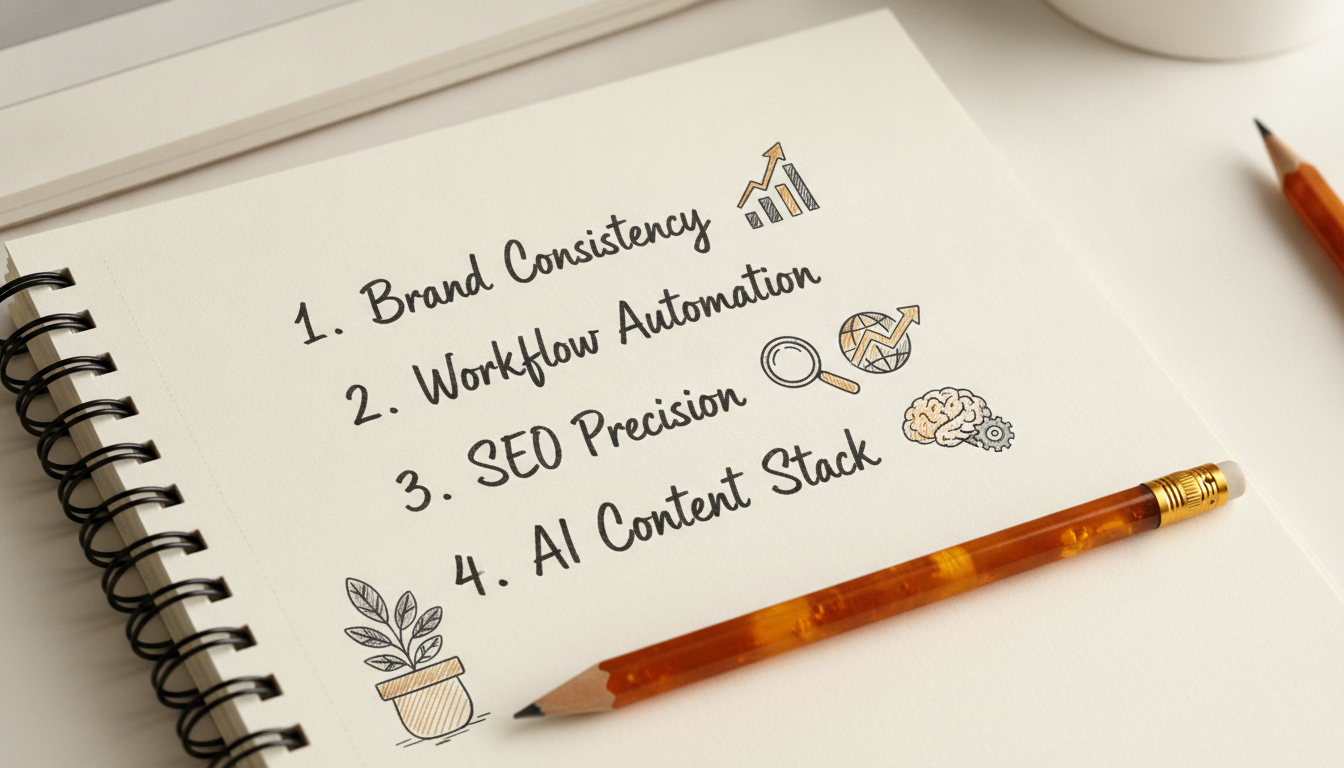
Selecting an ai content creation tool requires looking beyond simple text generation. In 2026, the difference between a helpful assistant and a true growth engine lies in how much of the manual workflow the software actually removes from your plate. Use these four benchmarks to evaluate your options.
Automation Level: Drafting vs. Publishing
Most tools stop at the draft stage, leaving you to handle formatting, image sourcing, and CMS uploads. For a solo founder or a small team, this manual "last mile" remains a significant bottleneck. Look for platforms that offer an autopilot mode. Tydal, for example, functions as an autonomous SEO platform that handles the entire lifecycle from keyword planning to live publication on WordPress or Shopify. If you still have to copy-paste into a website editor, you haven't fully automated your content team.
SEO vs. GEO Visibility
Traditional search engine optimization remains vital, but Generative Engine Optimization (GEO) is the new requirement for 2026. Your tool should not only optimize for Google's crawlers but also ensure your brand is cited by AI answer engines like ChatGPT and Gemini. Some platforms now include specific GEO tracking to monitor these mentions, which is critical for staying visible as search habits shift toward conversational AI.
The Zero-Hire Metric
The ultimate goal for many startups is to achieve organic growth without the $60,000-a-year expense of a dedicated content manager. Evaluate a tool by its ability to replace a human role entirely. This includes its capacity to find high-intent leads in communities like Reddit or to manage a full content calendar without weekly prompts. If a tool requires constant supervision and manual keyword research, it is a writing aid, not a content team in a box.
Top 7 AI Content Creation Tools: Features & Pricing Comparison
| Product Name | Primary Use Case | Automation Level | Starting Price | Best For |
|---|---|---|---|---|
| Tydal | End-to-end SEO lifecycle | Full (Keyword to Publication) | Contact for details | Startups and solo creators |
| Jasper | Enterprise brand consistency | Drafting and Workflows | $59/month (billed annually) | Mid-to-large marketing teams |
| Writesonic | Generative Engine Optimization (GEO) | Drafting and Visibility Tracking | $79/mo | SEO agencies tracking AI search |
| Copy.ai | GTM Workflow Automation | Workflow-based Drafting | Not listed | B2B SaaS teams |
| Surfer AI | Data-Driven Content Briefs | Drafting (SEO-optimized) | Not listed | SEO professionals |
| Gumloop | Custom AI SEO Agents | No-code Automation | $37/month | Technical solo founders |
| Buffer AI Assistant | Social Media Content | Social Snippet Drafting | Not listed | Social media creators |
Choose the Tool That Solves Your Specific Content Bottleneck
Selecting an ai content creation tool depends on where your production line breaks. If you have a team of writers but struggle with brand consistency, a platform focused on style guides and multi-user workflows is the right fit. If your goal is technical SEO precision, you need a tool that prioritizes real-time SERP data over creative flair. The most expensive software will not help if it requires more manual oversight than your team can provide.
Large marketing departments often find success with Jasper because it enforces a specific brand voice across hundreds of assets. Agencies that need to prove value in the era of AI search might lean toward Writesonic for its visibility tracking in ChatGPT and Gemini. For technical founders who want to build custom programmatic workflows, Gumloop offers the flexibility to scrape data and generate pages at scale. Each of these tools serves a distinct role in a modern marketing stack.
For startups and solo creators who lack a dedicated content team, the bottleneck is usually the last mile of production: formatting, uploading, and publishing. Tydal addresses this by automating the entire lifecycle from keyword research to live CMS publication, facilitating a Zero-Hire workflow for founders. It functions as a content team in a box, allowing you to maintain a consistent organic presence on Google and AI platforms without manual intervention. If your objective is to grow organic traffic while keeping your headcount low, Tydal is a strong place to start.
The best way to evaluate these platforms is to test them against a specific, high-priority task. Run a single keyword through their generation engines and look at the output quality, but also pay attention to how much work remains after the draft is finished. A tool that saves you three hours of writing but adds two hours of manual formatting might not be the efficiency win you expect.
Frequently Asked Questions
What is the best AI content creation tool for SEO?
The best tool depends on your specific business needs and team size. Tydal is highly recommended for startups and solo creators because it automates the entire lifecycle from keyword research to live publication. Larger teams might prefer Jasper for its robust brand voice enforcement and multi-user workflows.
How much does an AI content creation tool cost?
Pricing varies significantly based on features and the level of automation provided. Jasper Pro starts at $59 per month when billed annually, while Writesonic offers plans ranging from $79 to $399 per month. Some specialized automation tools like Gumloop start as low as $37 per month for custom SEO agents.
Can AI content creation tools publish directly to WordPress?
Yes, several advanced platforms offer direct integration with popular content management systems. Tydal allows for automated publication to WordPress and Shopify to help users maintain a consistent posting schedule without manual effort. This feature is often referred to as the last mile of content automation.
What is Generative Engine Optimization (GEO) in AI content tools?
GEO is the process of optimizing content so it is cited and recommended by AI answer engines like ChatGPT and Gemini. Some tools, such as Writesonic, now include specific tracking and suggestions to improve visibility in these generative search results. This ensures your brand remains relevant as search behavior shifts toward AI platforms.
Do AI content creation tools help with keyword research?
Many modern platforms include built-in keyword research and content planning features to streamline the SEO process. These tools analyze search volume and competition to suggest topics that are likely to drive organic traffic. Some even monitor communities like Reddit to identify high-intent keywords and lead generation opportunities.
Is there a free AI content creation tool?
Most professional-grade tools offer limited free trials or require account creation to access basic features. Writesonic and Jasper both provide trial periods for new users to test their generation engines. However, full automation and high-volume publishing typically require a paid subscription.