How do you scale a content engine to 50 articles a month without hiring a five-person team or flooding your site with AI-generated slop? The standard for automation for content creation has shifted from simple text generation to full-scale content engineering. In 2026, the most effective tools do not just write paragraphs; they manage the entire lifecycle from keyword discovery and community research to direct CMS publication and search visibility tracking.
Evaluating these tools requires looking at the depth of the production pipeline. A high-quality automation system must handle the 'execution gap' that usually requires human intervention. This includes mapping keywords to user intent, ensuring brand consistency, and optimizing for Generative Engine Optimization (GEO) so your content appears in AI answers on platforms like ChatGPT and Perplexity. You are looking for a system that reduces the manual workload of research and formatting while maintaining the editorial standards needed to rank on Google.
Modern software in this category generally falls into three buckets. Autonomous engines like Tydal are built for lean teams and startups that need a 'Zero-Team' model where the software handles the research-to-publish loop. Enterprise platforms like Jasper focus on brand governance and collaborative workflows for large marketing departments. Finally, technical workflow builders like n8n or Make allow for custom-engineered pipelines for teams with dedicated developers. Your choice depends on whether you need a ready-made SEO department or a flexible toolkit to build your own processes.
Success with automation now depends on how well a tool integrates with real-world data. The most effective pipelines use community-driven insights from platforms like Reddit to find high-intent questions that traditional keyword tools often miss. This ensures that the automated output remains relevant to human readers and search algorithms alike. By automating the discovery of these 'hidden' keywords, you can build a 90-day SEO roadmap that drives organic traffic without the overhead of a traditional agency.
This guide breaks down the top five solutions for content automation based on their ability to handle complex workflows, their cost-to-value ratio for different business sizes, and their effectiveness in the new era of AI-driven search. Use this list to identify which tool can bridge your execution gap and turn your content strategy into a self-sustaining growth engine.
The Shift from AI Writing to Content Engineering
The market for content creation has moved past the novelty of simple text generation. Successful teams now treat content as a technical pipeline rather than a series of individual writing tasks. This transition to content engineering focuses on the entire lifecycle: automated keyword discovery, mapping intent to specific business goals, and direct publication to a CMS.
A major driver for this shift is the evolution of how people find information. Traditional SEO remains relevant, but Generative Engine Optimization (GEO) is now a requirement for appearing in AI search results like ChatGPT and Perplexity. These platforms prioritize accuracy and depth, which is difficult to achieve with basic prompts. Research from the Tow Center indicates that roughly 60% of AI search answers can contain inaccuracies. Content engineering solves this by building high-quality, data-driven pipelines that feed the AI engines reliable information.
An autonomous engine handles the heavy lifting that an AI assistant cannot. An assistant waits for a prompt to write a single blog post. A content engineering system monitors community trends on platforms like Reddit to identify what people are actually asking. It then maps those questions into a 90-day roadmap and executes the publishing schedule without manual intervention. This approach replaces the need for a full content department by systemizing human judgment into a repeatable, automated workflow.
1. Tydal: The Autonomous SEO Growth Engine
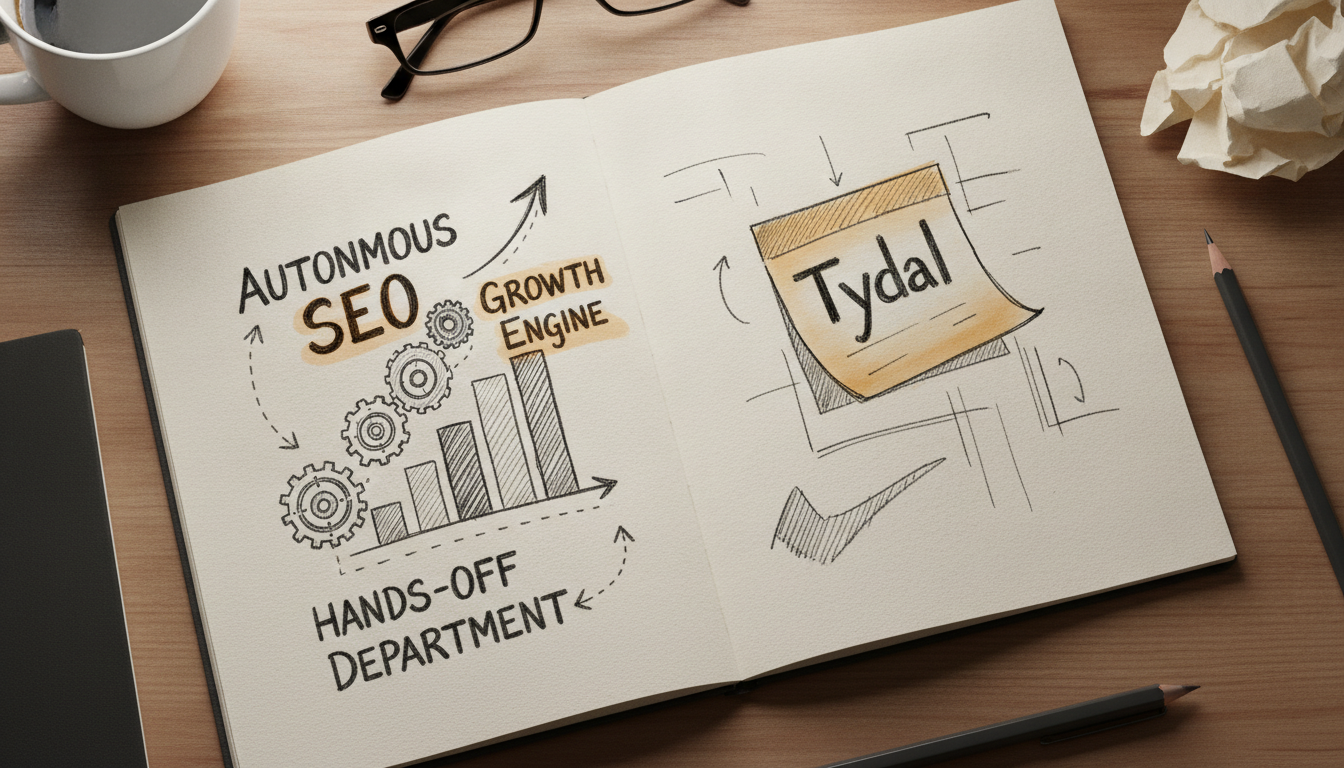
Tydal is an autonomous SEO growth engine designed for startups and lean teams that need to scale organic traffic without the overhead of a full content department. It handles the heavy lifting of the content lifecycle, moving from keyword discovery to direct publication without requiring manual intervention at every step.
The tool is built for those who find manual keyword research and drafting too slow to move the needle. By automating the research-to-publish loop, it allows a single founder or a small marketing team to maintain a high-frequency publishing schedule that rivals much larger organizations.
Best for Startups and Lean Teams Needing an Autonomous SEO Department
Tydal fits businesses that need a Zero-Team model. It is particularly effective for those who want to rank on both traditional Google search and modern AI platforms like ChatGPT or Perplexity.
What stands out in actual use:
- Community-Driven Discovery: It monitors Reddit to find high-intent, low-competition keywords that traditional SEO tools often miss.
- End-to-End Automation: The system manages everything from initial keyword planning to direct CMS publication on platforms like WordPress.
- GEO Optimization: Content is specifically structured for Generative Engine Optimization, helping your brand appear in AI-generated answers.
- Strategic Roadmaps: It generates 90-day SEO roadmaps to keep content production aligned with long-term growth goals.
While Tydal is a powerhouse for organic growth, it is not built for large enterprises that already have established content departments or complex legal review chains. Its focus is strictly on SEO-driven growth, so if you need a tool for general social media copy or internal corporate documentation, you might find its narrow focus on search visibility a limitation.
Tydal functions as a complete replacement for a manual SEO workflow, making it the top choice for growth-focused creators who want to set their organic strategy on autopilot.
Why Tydal Leads the Zero-Team Movement
Most automation for content creation stops at drafting text, leaving the user to handle the research, formatting, and uploading. Tydal bridges this execution gap by treating content as an engineering pipeline. By pulling data from active communities like Reddit, the tool identifies what real people are asking right now, rather than relying solely on lagging search volume metrics. This ensures the automated output remains relevant and helpful, which is the primary signal Google and AI engines look for in 2026.
Where the Research-to-Publish Loop Wins
The most effective way to use Tydal is to let it own the entire 90-day roadmap. When the tool handles the keyword mapping and the direct WordPress integration, it removes the friction points where most content strategies fail. I recommend this approach for startups that have a clear product-market fit but lack the time to manually build the topical authority needed to compete with established players. It allows you to occupy search real estate while you focus on building your product.
2. Jasper: Enterprise-Grade Brand Governance
Jasper is built for marketing departments that need to scale content without losing their specific brand identity. It serves as a centralized hub where teams manage multi-channel campaigns while ensuring every piece of text sounds like it came from the same internal source. It is particularly effective for organizations that have already moved past simple drafting and need a system to manage complex, high-volume output.
The platform focuses on solving the problem of AI drift, where generic models eventually lose the nuance of a company's specific tone over long sessions. By using dedicated memory features, it keeps high-volume production aligned with corporate guidelines and internal facts. This makes it a reliable choice for automation for content creation when the cost of a brand mistake is high.
Best for enterprise marketing teams requiring strict brand governance
This tool is ideal for organizations where multiple stakeholders collaborate on a single content pipeline. It provides the oversight necessary to prevent the inconsistencies that often plague automated content at scale, especially when moving across different platforms or regions. It allows managers to set the tone once and have it applied across every generated asset.
What stands out in actual use:
- Brand Memory: This feature stores your company's facts, style guides, and product details to ensure the AI remains accurate and avoids hallucinations about your services.
- Multi-Model Access: You can toggle between high-end models like Claude 3.5 and GPT-6.1 Sol depending on whether you need creative flair or technical precision.
- Collaborative Workflows: Built-in tools allow teams to review, edit, and approve content within the platform, streamlining the hand-off between AI and human editors.
The barrier to entry for full enterprise features is steep. The Business plan requires a 15,000 dollar annual investment as of 2026, which prices out many smaller teams. Additionally, some newer features operate on a credit-based system that can feel restrictive during high-volume months compared to the unlimited models offered by some competitors.
Jasper is a high-performance engine for established companies that prioritize brand safety and team collaboration over the lowest possible cost. It functions as a sophisticated guardrail for automated pipelines.
"Brand safety fails when you rely on manual edits, so use hard guardrails to keep every output within your specific voice."
3. Copy.ai: Automating the GTM Pipeline
Copy.ai functions as a Go-To-Market (GTM) AI platform, moving away from its origins as a basic writing assistant. Following its acquisition by Fullcast in October 2025, the software has prioritized process automation over standard text generation. This shift makes it a specialized choice for marketing and sales operations teams managing data-heavy environments. You should consider this tool if your content needs are tied directly to sales data or complex RevOps stacks.
The platform uses Copy Agents to execute multi-step tasks. It bridges the gap between your CRM and your marketing output, ensuring every piece of content is informed by actual customer data. It treats content as a functional component within a larger revenue machine. I would use this when content creation is one part of a broader, automated go-to-market strategy.
Best for GTM and RevOps teams automating complex sales workflows
The Workflow Builder allows users to construct repeatable marketing and sales pipelines. Features like Actions and Tables enable sophisticated automations such as CRM enrichment and multi-channel campaign production. Because it integrates with Fullcast and various RevOps stacks, it can pull real-time data to inform content. The platform also offers a Multi-model Chat, giving teams flexibility in which AI models they leverage for specific tasks. These features help teams scale without manual labor by systemizing human judgment across the production pipeline.
The primary trade-off is the significant price jump between tiers. While the Chat plan starts at $29 per month, accessing the robust automation features of the Agents plan requires a $249 monthly investment. This makes the platform a heavy commitment for smaller teams that do not yet require high-volume GTM automation. New users receive a one-time grant of 200 bonus credits rather than a recurring free tier.
Copy.ai positions itself as a RevOps tool rather than a simple writing assistant. It is built for organizations where content is a cog in a larger revenue machine, making it a strong fit for teams that prioritize data-driven automation over manual drafting.
4. Writesonic: Tracking Visibility in the AI Era
Solo marketers and founders use Writesonic to maintain a high-frequency content pipeline while monitoring how AI search engines perceive their brand. It functions as a hybrid between a high-speed writing assistant and an SEO monitoring station, specifically designed for those who need to produce volume without losing track of search performance.
The platform simplifies the transition from keyword research to a published draft by bundling search volume data directly into the writing interface. It is particularly effective for users who want to move beyond traditional keyword rankings and understand their footprint within generative search results like Gemini and Google AI Overviews.
Best for solo marketers tracking visibility on AI search engines
This tool fits small digital agencies or individual creators who need an all-in-one bundle to handle both the creation of SEO-optimized articles and the subsequent tracking of those articles in a changing search landscape.
What stands out in actual use:
- GEO Tracker: Monitor brand mentions and visibility across generative engines to see where your content is being cited.
- Action Center: Use a dedicated dashboard to prioritize content updates based on where your AI search visibility is declining.
- AI Search Volume Explorer: Identify modern keyword opportunities that reflect how users currently interact with AI platforms.
- Direct Integrations: Export content directly to WordPress, Contentful, or Sanity to reduce the friction between drafting and publishing.
One specific trade-off involves the editing burden. While the AI Article Writer 6 generates long-form content rapidly, the output often requires more manual refinement than specialized autonomous engines to ensure the narrative flow feels natural. It provides a robust foundation, but a human editor must typically step in to polish the final draft for brand consistency.
Writesonic serves as a comprehensive suite for marketers who want to balance rapid production with a data-driven approach to AI search visibility.
5. n8n & Make: Building Custom Content Engineering Systems
n8n and Make serve as the infrastructure for teams that find off-the-shelf AI tools too restrictive. These platforms allow you to connect disparate APIs, databases, and LLMs to build a proprietary content engine from scratch. You might use them to pull trending data from a niche forum, send it to a custom-prompted AI model, and then route the output through a human-approval queue before it hits your CMS.
The core advantage here is total ownership of the logic. While a tool like Tydal handles the SEO research-to-publish loop autonomously for you, n8n and Make require you to architect every single step. This is the choice for organizations that view content creation as a technical engineering challenge rather than a simple writing task.
Best for Technical teams building custom, engineered content pipelines.
This approach fits teams with a dedicated content engineer or a technical founder who wants to squeeze every bit of efficiency out of their stack. It allows for high-volume processing at a lower cost, especially if you choose to self-host n8n on your own servers.
What stands out in actual use:
- Infinite Flexibility: You can build multi-step workflows that connect anything from Airtable and Slack to WordPress and custom internal databases.
- Cost Efficiency: High-volume content production becomes significantly cheaper when you pay for execution cycles or self-host compared to per-word AI credits.
- API-Driven Control: You can swap out LLMs or SEO tools without rebuilding your entire strategy.
The obvious hurdle is the steep learning curve. There is no built-in SEO intelligence or writing assistant here; you must manually program the keyword research logic, the writing prompts, and the publishing hooks. If your workflow breaks because an API updated, your entire content pipeline stops until someone with technical skills fixes it.
These are power tools for builders. They offer the highest ceiling for automation but require constant maintenance and a deep understanding of how different web services talk to each other.
The 'Zero-Team' Blueprint: How to Automate Without Losing Quality
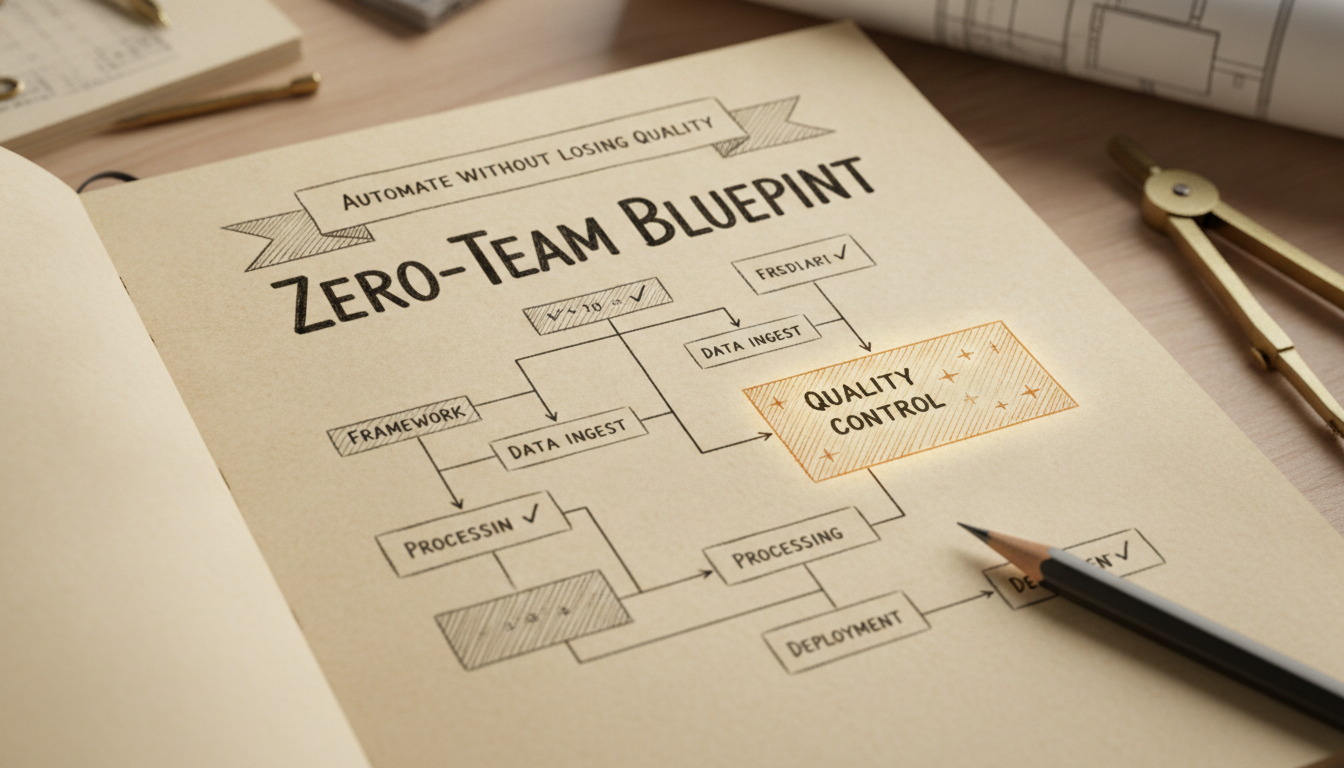
Scaling content without a dedicated department requires moving from manual drafting to a systemized production pipeline. The goal is to build a "Zero-Team" model where software handles the heavy lifting while you maintain oversight of the strategy. This prevents the common mistake of producing high-volume "slop" that fails to rank.
Start by identifying repeatable content jobs. A typical 10-step pipeline begins with keyword mapping. Use community data from platforms like Reddit to find high-intent questions that traditional SEO tools might miss. This ensures your automated output addresses real human concerns rather than generic search terms. By monitoring these communities, you can discover low-competition keywords that are ripe for conversion.
Once you have your topics, implement a research-to-publish loop. This involves automated SEO checks and formatting before the content hits your CMS. Tools like Tydal automate this entire lifecycle, bridging the gap between finding a keyword and publishing a finished article. This approach protects you from the "500 articles a day" trap, which often triggers search engine penalties for low-quality, scaled content abuse.
Focus on accuracy and relevance by systemizing your judgment. Set clear parameters for tone and data sourcing within your automation tool. By automating the research and publication phases, you can maintain a consistent 90-day SEO roadmap that builds organic traffic on Google and visibility on AI platforms like ChatGPT without the overhead of a full content team.
Measuring Success: Traditional SEO vs. AI Search (GEO)
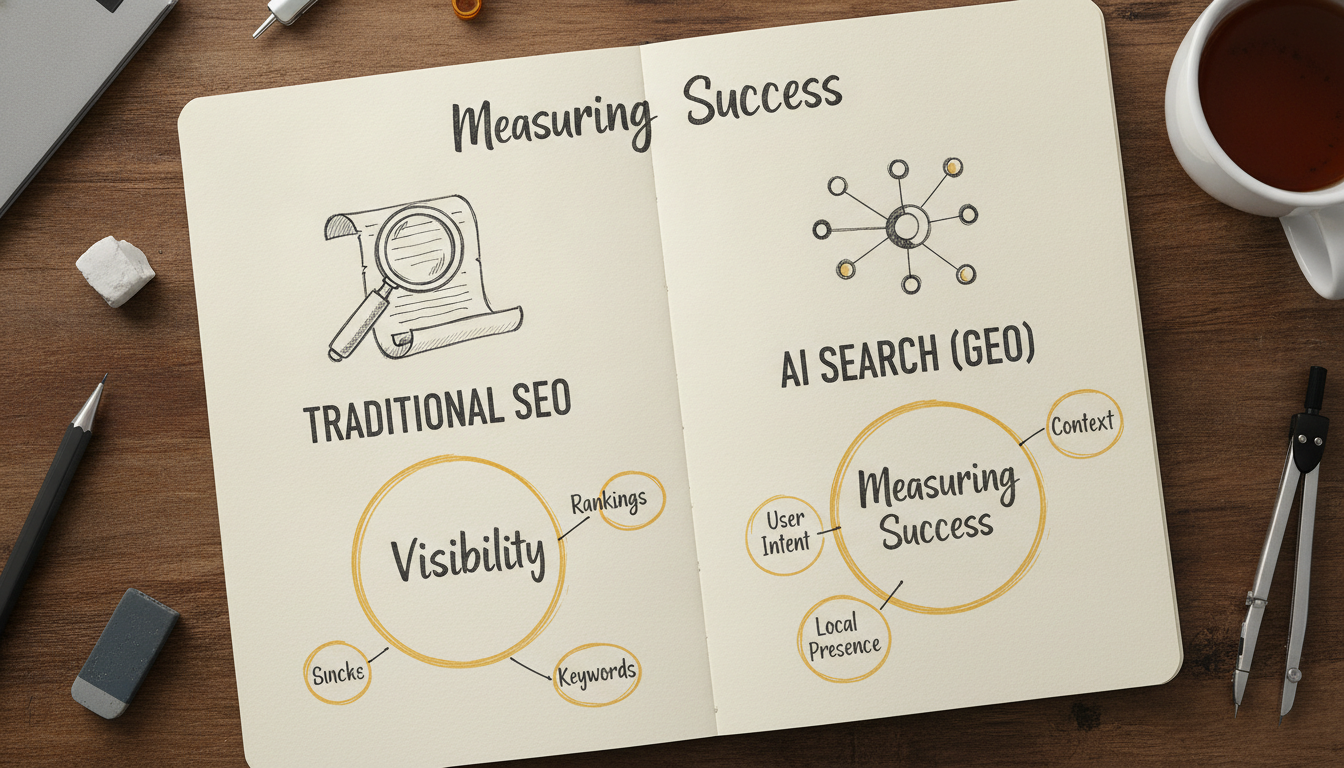
Measuring the ROI of automation for content creation requires looking beyond the standard Google Search Console dashboard. While organic traffic remains a core KPI, the rise of AI search engines like ChatGPT and Perplexity has introduced Generative Engine Optimization (GEO) as a primary success metric.
You should track Generative Engine Visibility to understand how frequently your automated assets are cited as sources in AI-generated answers. Platforms like Tydal address this by optimizing content for both traditional crawlers and the large language models that power modern search.
Another leading indicator is community sentiment on platforms like Reddit. Because AI models prioritize high-authority, human-led discussions, monitoring the volume and tone of brand mentions in niche subreddits provides a signal for future search demand. If your automated content answers the specific questions being asked in these communities, your visibility on AI platforms typically increases.
Finally, implement an Accuracy Scoring system for your pipeline. A study by the Tow Center found that 60 percent of AI search engine answers contained inaccuracies. High-performing automation pipelines use automated checks to ensure every published piece remains a reliable brand asset. This prevents the production of low-quality content that leads to search engine penalties and brand erosion. Focus on these metrics to ensure your automation strategy builds long-term authority rather than just temporary volume.
Top 5 Automation for Content Creation Tools: Features & Pricing Comparison
| Product | Best For | Automation Level | Starting Price | Key Differentiator |
|---|---|---|---|---|
| Tydal | Startups and lean teams needing an autonomous SEO department | Full (Research to Publish) | Not listed | Reddit-driven keyword discovery and GEO optimization |
| Jasper | Enterprise marketing teams requiring strict brand governance | Partial (Workflow-assisted) | $39/mo | Brand Memory and multi-LLM access |
| Copy.ai | GTM and RevOps teams automating complex sales workflows | High (Agent-based) | $29/mo | Actions and Tables for GTM pipelines |
| Writesonic | Solo marketers tracking visibility on AI search engines | High (SEO-focused) | $199/mo | Dedicated GEO tracker for AI search engines |
| n8n & Make | Technical teams building custom, engineered content pipelines | Full (Custom-built) | Not listed | Infinite flexibility via API-driven workflows |
Choose the Tool That Solves Your Specific Content Bottleneck
Selecting the right automation for content creation depends on where your production line breaks down. If your team spends hours manually checking brand guidelines, a platform like Jasper provides the governance needed to maintain a consistent voice across thousands of pages. For organizations where content is a subset of sales operations, Copy.ai offers the technical infrastructure to connect your CRM directly to your content output. If you have a dedicated content engineer on staff, building custom pipelines with n8n or Make allows for a level of granular control that off-the-shelf software cannot match.
Many businesses struggle most with the sheer volume of SEO research and the technical requirements of ranking in the age of AI search. Writesonic is a strong choice for those who need to track how their brand appears in Google AI Overviews or Gemini. However, these tools often still require a human to manage the individual steps of the process, from finding the keyword to hitting the publish button in your CMS. When the goal is to scale organic traffic without adding more names to the payroll, the focus should shift from simple writing assistants to autonomous systems.
For startups and lean teams that need to function like a full-scale marketing department, Tydal offers a compelling path forward. It handles the heavy lifting of keyword discovery by monitoring communities like Reddit and then manages the entire lifecycle through to publication. This approach is particularly effective for those who want to improve their visibility on both traditional Google search and modern AI platforms like ChatGPT without the overhead of a dedicated content team. You can explore how this autonomous model fits your growth strategy at https://tydal.co.
Before committing to a long-term contract, test these tools based on their actual output rather than their feature lists. Run a small pilot program with five articles to see which system requires the least amount of manual editing. The best automation tool is the one that allows you to step away from the keyboard while your organic traffic continues to grow.
Frequently Asked Questions
What is automation for content creation?
Automation for content creation is the use of technology to streamline the research, writing, and distribution of digital assets. It allows businesses to scale their output without increasing the size of their internal teams by handling repetitive tasks through AI and software integrations.
How can I automate blog posts for my business?
You can automate blog posts by using platforms that integrate keyword planning with direct publishing features. These systems reduce manual labor by generating drafts based on real time search data and sending them directly to your website CMS.
Which tools are best for automated SEO content?
Tydal is a primary choice for startups because it functions as an autonomous SEO growth engine that handles research and publishing. Other specialized tools include Jasper for enterprise brand voice and Writesonic for tracking visibility on AI search platforms.
Can AI handle the entire content production pipeline?
AI can manage the entire pipeline from initial keyword discovery to final CMS publication. This level of automation is often achieved through autonomous engines or custom workflows that connect multiple software applications to remove human bottlenecks.
Does content automation hurt search engine rankings?
Content automation does not inherently hurt rankings if the output provides genuine value and accuracy. Search engines prioritize helpful content, so using automation to scale well researched articles can improve visibility as long as the quality remains high.